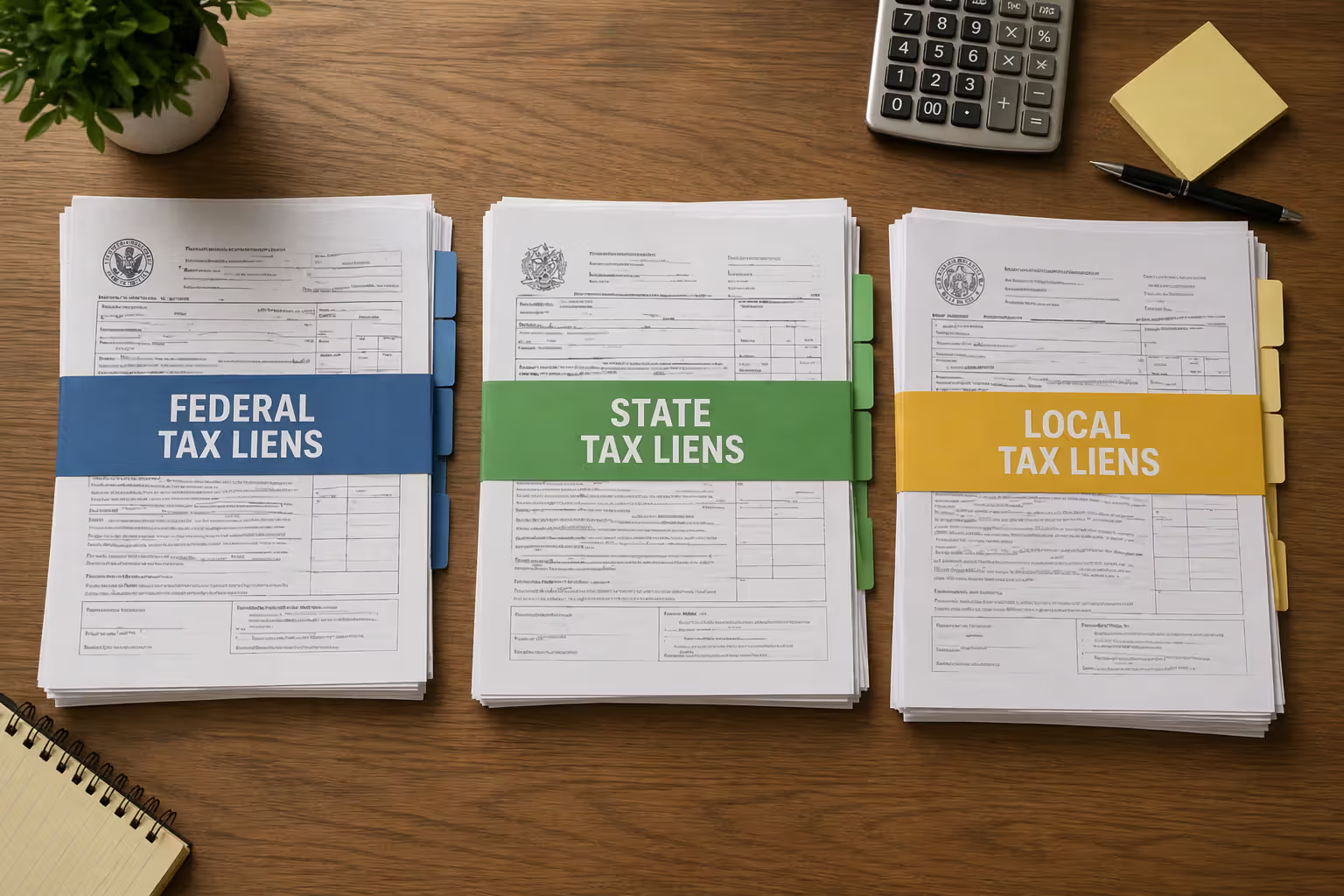
Failing to pay your taxes triggers more than collection letters. Government agencies—whether the IRS, state revenue departments, or county treasurers—protect their claims by recording liens against your assets. These legal instruments can derail refinancing applications, block real estate closings, and shadow your credit profile for years, turning routine financial transactions into complex negotiations.
The mechanics of tax liens vary dramatically depending on whether you're dealing with federal income taxes, state obligations, or local property assessments. Each carries distinct consequences, from administrative foreclosure that can eject you from your home to federal claims that follow you across state lines and attach to every asset you'll ever own.
Navigating this landscape requires understanding not just what liens do, but how different taxing authorities enforce them, when they can seize property, and which resolution strategies actually work.
Understanding Tax Liens
Think of a tax lien as the government's secured position in your assets. When you default on tax obligations, authorities establish a legal interest in your property without physically taking it. You maintain possession and ownership, but the government now has dibs on proceeds if you sell or refinance.
Two distinct categories dominate the tax lien landscape. Obligations stemming from unpaid federal or state income taxes, payroll taxes, or business levies result in income tax liens. The IRS follows a specific sequence: they calculate what you owe, send a bill demanding payment, and—if you ignore them for ten days—file a Notice of Federal Tax Lien with your county recorder. State agencies mirror this approach for state income tax debts.
Real estate tax liens operate on different principles entirely. Property ownership creates an automatic annual obligation to your local taxing district. When you miss those payments, most jurisdictions don't need to file paperwork—the lien springs into existence automatically by statutory authority, typically after a grace period following the original due date.
The scope difference matters enormously. Federal and state income tax liens blanket everything you own: your primary residence, vacation properties, vehicles, investment accounts, business inventory, and anything you acquire after the filing date. Property assessment liens attach exclusively to the parcel generating the unpaid taxes.
Consider how this plays out in practice. A consultant who neglects $18,000 in self-employment taxes discovers the resulting federal lien has clouded title to her condo, her car, and the commercial property she just inherited from her parents. Meanwhile, a homeowner who simply overlooked a $2,800 property tax bill faces a lien only on that specific house—though consequences can still include losing the property at auction.
Federal Tax Lien vs State Tax Lien
Different government levels operate under separate legal frameworks, creating variations in how liens are enforced, prioritized, and ultimately resolved.
Type of Lien
Issuing Authority
What Triggers It
Priority Level
Removal Process
Federal Tax Lien
Internal Revenue Service
Assessed federal tax debt (income, employment, or excise) after formal demand goes unanswered
Typically follows "first to file" priority among general creditors
Full payment, certificate of discharge, formal withdrawal, subordination agreement, or accepted settlement offer
State Tax Lien
State-level revenue department
Delinquent state income, sales, or franchise tax after state assessment procedures
Priority determined by state law; usually defers to earlier-filed federal claims
Payment completion, state-approved settlement, or administrative release following state-specific protocols
Property Tax Lien
Municipal, county, or township taxing district
Overdue real estate taxes past statutory deadline
Super-priority status in most jurisdictions; trumps mortgages and previously filed liens
Tax payment including accumulated penalties and interest; potential redemption rights following tax certificate sale
Federal tax liens transcend state boundaries. File a lien in Michigan, and it automatically attaches to real estate you purchase in Nevada two years later. State tax liens generally operate within their home state, though reciprocal enforcement agreements between states allow some cross-border collection.
Understanding priority determines who receives payment when assets are liquidated. Property assessment liens enjoy super-priority status nearly everywhere—they outrank mortgage holders, federal claims, and virtually all other creditors. Banks can foreclose on a current mortgage, yet still lose to a municipality's tax claim filed afterward.
Between competing federal and state income tax liens, "first in time" typically controls. Whichever agency records their lien first claims the initial position. Property taxes create an exception—they leapfrog ahead regardless of filing sequence.
The IRS records liens with county officials where you reside and where each property sits. This creates public records that credit bureaus access, title companies discover, and potential lenders review. State procedures diverge: certain states use county recorders, others file with the secretary of state's office, and some require both.
Here's a trap taxpayers fall into: believing that state tax debt prevents federal enforcement, or vice versa. The agencies don't communicate or coordinate. You can face simultaneous federal and state liens, each requiring independent resolution.
Author: Olivia Carringt;
Source: redmonpestmgt.com
How Tax Liens Affect Your Property
Property owners with tax liens discover the practical meaning quickly: you retain legal ownership but lose control over transactions. Living in your house continues uninterrupted, but selling it or refinancing the mortgage demands addressing the lien first.
Real estate sales with outstanding liens are feasible but complex. Title insurance companies won't issue clean policies when liens appear in public records, and buyers rarely proceed without that protection. Standard practice involves paying the lien at closing from sale proceeds. Selling a house for $280,000 with a $180,000 mortgage and $25,000 IRS lien means the title company distributes funds in priority order: mortgage payoff, lien satisfaction, closing costs, then your net proceeds.
Complications emerge when equity won't cover everyone. Picture selling for $265,000 while owing $240,000 on your mortgage plus a $35,000 federal tax lien. After a 6% sales commission ($15,900) and $4,000 in closing costs, the math doesn't work. The IRS sometimes grants discharge—removing their claim from this specific asset—when they determine the sale generates no recovery for them and you'll apply proceeds toward the debt. Discharge requires submitting formal applications and isn't guaranteed.
Refinancing hits a wall. Mortgage lenders demand first-position security, and tax liens filed before your application will outrank the new loan. The IRS occasionally agrees to subordination—accepting a lower priority position behind the new lender—but only when refinancing improves their collection prospects, such as generating cash to pay down the tax debt.
Credit consequences cut deep. Federal tax liens stayed on credit reports for seven years post-release until recent bureau policy changes reduced their appearance on standard reports. However, lenders and landlords pulling public records still locate the filings, interpreting them as red flags. Expect loan denials, premium interest rates, and rental application rejections.
Property assessment liens may skip credit reports but carry immediate threats: tax certificate sales. Counties can auction collection rights after just twelve to thirty-six months of delinquency. Unlike mortgage foreclosure requiring judicial process, many states allow administrative tax sales—the county simply schedules an auction and publishes notice.
Business owners face additional damage. Federal contractors must certify tax compliance when bidding. A visible lien disqualifies your company from government contracts. Professional clients conducting due diligence may walk away upon discovering public tax liens, viewing them as instability indicators.
Tax Lien Sale Process and Certificate Investing
Local governments depend on property tax revenue to fund essential services—schools, emergency response, road maintenance. When owners default, municipalities can't afford multi-year collection delays. Tax certificate sales convert delinquent accounts into immediate revenue by transferring collection rights to private investors.
The mechanism works like this: counties conduct auctions, either physically or through online platforms, offering certificates representing unpaid property taxes. Investors compete, sometimes bidding down interest rates (accepting lower returns) or bidding up premiums (paying above face value). The successful bidder remits the tax amount to the county and receives a certificate granting the right to collect that debt—plus statutory interest and penalties—from the property owner.
Property owners then enter a redemption window—duration ranges from six months to three years based on state statutes—allowing them to pay the investor the full amount owed including accumulated interest and reclaim clear title. When owners redeem, investors earn their interest (commonly 8% to 24% annually depending on state law). When owners don't redeem before the deadline expires, investors can typically initiate foreclosure proceedings and acquire ownership.
Tax certificate investing attracts yield-focused investors who value real estate security backing their returns. States including Arizona, Florida, and Illinois offer double-digit statutory rates with priority claims superseding even first mortgages. Risks lurk beneath the surface, though.
Properties appearing at tax auctions often carry problems explaining why owners abandoned them. An investor might foreclose on a $4,200 lien only to discover the lot is landlocked, contaminated with hazardous materials, or requires $35,000 in code violation corrections. Conducting proper due diligence proves challenging when auction information is sparse and property inspections aren't always feasible.
Redemption rates tell an important story: approximately 95% of tax certificates get redeemed. Most investors never acquire real estate—they simply collect interest. Those seeking cheap property acquisitions find tax liens inefficient for that purpose.
Redemption windows vary considerably by jurisdiction. Iowa establishes two-year periods; Arizona extends three years. Certain states allow investors to pay subsequent years' taxes during the redemption period, increasing the total redemption amount the owner must pay to clear title.
Purchasing a tax certificate doesn't grant property access or control. You can't enter the premises, make improvements, or collect rent while the redemption period runs. You're a creditor waiting for payment.
Strategic investors should recognize that institutional funds and hedge funds increasingly dominate auctions in major metropolitan areas, compressing yields through competitive bidding. Individual investors often discover better opportunities in rural counties with thinner auction attendance, accepting trade-offs in property quality and marketability.
Tax Lien vs Tax Levy
These terms get conflated constantly, yet the distinction determines whether you keep your assets. One establishes a claim; the other executes a taking.
Filing a lien means the IRS is asserting legal interest in your property while you continue using and controlling those assets. Executing a levy means the government is physically seizing them—freezing your bank account, garnishing your paycheck, or hauling away your equipment.
Liens precede levies in the enforcement sequence. After assessing your tax, the IRS mails billing statements demanding payment. When those go unanswered, they file the Notice of Federal Tax Lien, typically several weeks or months after the initial assessment. This filing protects the government's interest but generates no payment.
Continued non-response escalates matters to levy. You'll receive a Final Notice of Intent to Levy and Notice of Your Right to a Hearing, providing a 30-day response window. Ignoring this final notice authorizes the IRS to issue levies: bank account freezes transferring balances to the Treasury, wage garnishments directing employers to withhold portions of each paycheck, or seizures of physical property including vehicles, equipment, and real estate.
Observe this scenario in action: An independent contractor accumulates $38,000 in unpaid self-employment taxes. The IRS files a lien, appearing on credit reports and clouding the title to her townhouse. She ignores the filing. Six months pass before the IRS mails the Final Notice. She again fails to respond. The IRS levies her checking account, capturing $9,500. They also serve a wage levy to her primary client, requiring 25% withholding from future payments. The lien remains active, and levies continue until the debt is satisfied or she negotiates resolution.
Obtaining levy release requires demonstrating immediate economic hardship, entering an approved payment arrangement, or proving the levy creates an insurmountable barrier to paying the underlying tax. Release isn't automatic—you must formally request it with supporting financial documentation.
Property tax collectors in certain jurisdictions can also levy, though methods vary. Some counties can seize personal property to satisfy real estate tax debts; others limit enforcement to selling the delinquent property itself.
Timing provides crucial windows. From initial delinquency to levy execution, you typically have ninety days minimum, often considerably longer. Use that interval strategically. Waiting until levies hit eliminates options and forces reactive crisis management.
Author: Olivia Carringt;
Source: redmonpestmgt.com
How to Remove a Tax Lien
Eliminating a tax lien demands either satisfying the underlying debt or meeting specific agency criteria for early removal. The straightforward path: pay everything you owe—principal, penalties, accumulated interest. The IRS releases liens within thirty days of full payment. State and municipal tax authorities follow comparable timelines.
When immediate full payment isn't realistic, installment agreements create payment schedules over time. The IRS streamlines approvals for debts below $50,000, often without demanding extensive financial disclosure. The lien persists throughout the payment plan, but once you complete payments, you receive the release.
Debts exceeding $25,000 may require Direct Debit Installment Agreements—automatic monthly bank withdrawals—before approval. This reduces government collection risk and can expedite approval.
Discharge removes the lien from specific property, typically enabling sales. You submit Form 14135, and the IRS grants discharge when sale proceeds will pay the debt or when the government's financial position is otherwise protected. Discharge clears title on one asset without eliminating the overall debt.
Subordination permits another creditor to move ahead of the IRS claim, usually for refinancing purposes. Demonstrating that subordination will increase ultimate IRS collections—perhaps by freeing cash to make tax payments—can secure approval. Form 14134 initiates the request.
Withdrawal erases the public Notice of Federal Tax Lien as though it was never recorded. Unlike release (occurring post-payment), withdrawal can happen while debt remains. The IRS provides withdrawal when you establish a Direct Debit Installment Agreement for debts under $25,000, or when withdrawal accelerates collection. Withdrawal doesn't eliminate the debt or the underlying lien—it removes the public filing—improving credit access and transaction feasibility.
Offer in Compromise resolves debt for less than full value. Demonstrating that full payment is impossible, or that paying would create severe economic hardship, may convince the IRS to accept reduced settlement. Once accepted and paid, the lien gets released. OICs face rigorous scrutiny—acceptance rates approximate 30%—and require comprehensive financial disclosure.
Here's a misconception: bankruptcy eliminates tax liens. Chapter 7 bankruptcy can discharge certain aged income tax obligations, but liens filed before bankruptcy survive and remain attached to property you owned at filing. Chapter 13 addresses liens through repayment plans, though property assessment liens generally resist discharge altogether.
State and municipal lien removal varies by jurisdiction. Certain states offer amnesty initiatives waiving penalties when you pay principal and interest. Others permit hardship-based settlements below full value. Always verify procedures with the specific taxing authority.
The government's lien authority represents one of its most formidable collection mechanisms, yet taxpayers consistently underestimate its reach.What surprises homeowners most is how an income tax lien affects properties completely unrelated to the tax debt—a federal lien filed in Cook County can prevent refinancing a lake house in Wisconsin or block inheritance of a parent's estate in Florida. Early intervention before the lien gets filed preserves negotiating leverage. I've watched clients forfeit properties worth $400,000 over $60,000 tax debts simply because they delayed action until enforcement became inevitable
— Robert Chen
Frequently Asked Questions About Tax Liens
Can a tax lien force the sale of my home?
Absolutely, though mechanisms differ by lien type. Delinquent property tax liens can trigger tax certificate sales where counties auction collection rights or the property itself—potentially within twelve to thirty-six months of default. Federal and state income tax liens don't automatically initiate sales, but the IRS or state can levy (seize) your residence when other collection methods fail. This remains rare and generally requires large debts with no alternative recovery. The IRS must secure court authorization before seizing principal residences.
How long does a tax lien stay on my credit report?
Starting around 2018, the three major credit bureaus eliminated tax liens from standard consumer reports following National Consumer Assistance Plan reforms. Nevertheless, tax liens remain accessible through county recorder public records and specialized background searches. Mortgage lenders, landlords conducting thorough screening, and employers requiring financial background checks still discover liens through public record searches. After release, the lien stays in public records permanently but shows satisfied status.
Will paying off my tax debt automatically remove the lien?
Payment triggers the release mechanism, but liens don't vanish instantly. The IRS has thirty days post-payment to issue the Certificate of Release. State and local agencies maintain similar processing windows, though some counties file releases within days. The release must be recorded with the same public office that holds the original lien filing. When taxing authorities miss their deadlines, you can formally request the release and escalate through the IRS Taxpayer Advocate Service or comparable state offices if necessary.
Can I sell my house if there's a tax lien on it?
Sales can proceed, but the lien must be resolved at closing. Most commonly, sale proceeds pay the lien, and the title company ensures the release gets filed. When proceeds fall short of covering the lien, you can pursue discharge, which releases the lien from that specific property if the IRS determines the sale won't harm collection efforts. Without paying the lien or obtaining discharge, you cannot transfer clean title, and buyers won't complete the transaction.
What happens if I ignore a tax lien?
Ignoring liens invites escalating enforcement. For income tax liens, expect levies—bank account seizures, wage garnishments, or asset confiscations. Interest and penalties compound continuously, expanding your debt. For property assessment liens, counties will eventually auction your property. Additionally, the lien undermines your capacity to borrow, liquidate assets, or maintain business relationships. The obligation doesn't expire automatically; IRS collection statutes generally run ten years from assessment, but this period extends through certain actions including installment agreements and settlement offers.
Are tax liens public information?
Completely. Federal, state, and property tax liens get filed in public records, usually with the county recorder or clerk serving your residence or property location. Anyone can search these records without restriction. Credit bureaus, employment screening companies, and title insurers routinely access lien filings. This public exposure affects security clearance applications, professional licensing renewals, and commercial opportunities requiring financial credibility.
Tax liens extend consequences throughout your financial ecosystem—blocking refinancing, derailing business transactions, complicating employment opportunities. The encouraging news: prevention is straightforward, and even after filing, strategic resolution is often achievable.
When you recognize potential lien exposure, act before agencies file. The IRS and state departments negotiate more flexibly before formal collection actions appear in public records. Establish payment arrangements, request temporary hardship delays, or explore settlement possibilities. Once the lien becomes public, your bargaining position weakens and available strategies narrow.
Those evaluating tax lien investing should proceed cautiously with capital you can afford to lose entirely. Exceptional yields come paired with substantial risks, and successful investors invest significant effort researching properties, mastering local redemption statutes, and managing foreclosure procedures when properties don't redeem.
Most critically, never ignore tax obligations. Government collection authority exceeds any private creditor's capabilities, and liens represent just the opening move. Whether you owe $2,500 in property taxes or $275,000 to the IRS, resolution begins with understanding your rights, evaluating available options, and taking decisive action before liens escalate to levies and asset seizures.
Foreclosure isn't inevitable. Homeowners who understand their options and act quickly can often save their homes or exit on better terms. Learn the timeline, your rights, and actionable strategies including government programs, bankruptcy protection, and alternative solutions
RESPA violations cost homebuyers thousands through hidden kickbacks and undisclosed arrangements. This guide explains prohibited practices like Section 8 kickbacks, disclosure failures, and unearned fees—plus the legal remedies available when lenders, title companies, or brokers violate federal law
Property owners overpay billions in taxes annually due to inflated assessments. Learn the complete process to challenge your property tax assessment, from filing deadlines and evidence gathering to informal reviews and formal ARB hearings, with strategies for both residential and commercial properties
Mortgage recording tax is a state or local levy imposed when recording a mortgage in public records. Rates vary dramatically by jurisdiction—from nearly 2% in New York to zero in states like Texas. This guide explains how the tax works, who pays it, and how proper deed recording protects your property rights
The content on this website is provided for general informational and educational purposes only. It is intended to explain concepts related to real estate law, property rights, leases, liens, zoning, landlord-tenant disputes, and litigation.
All information on this website, including articles, guides, and examples, is presented for general educational purposes. Legal outcomes may vary depending on jurisdiction, property type, and individual circumstances.
This website does not provide legal advice, and the information presented should not be used as a substitute for consultation with qualified attorneys or real estate professionals.
The website and its authors are not responsible for any errors or omissions, or for any outcomes resulting from decisions made based on the information provided on this website.