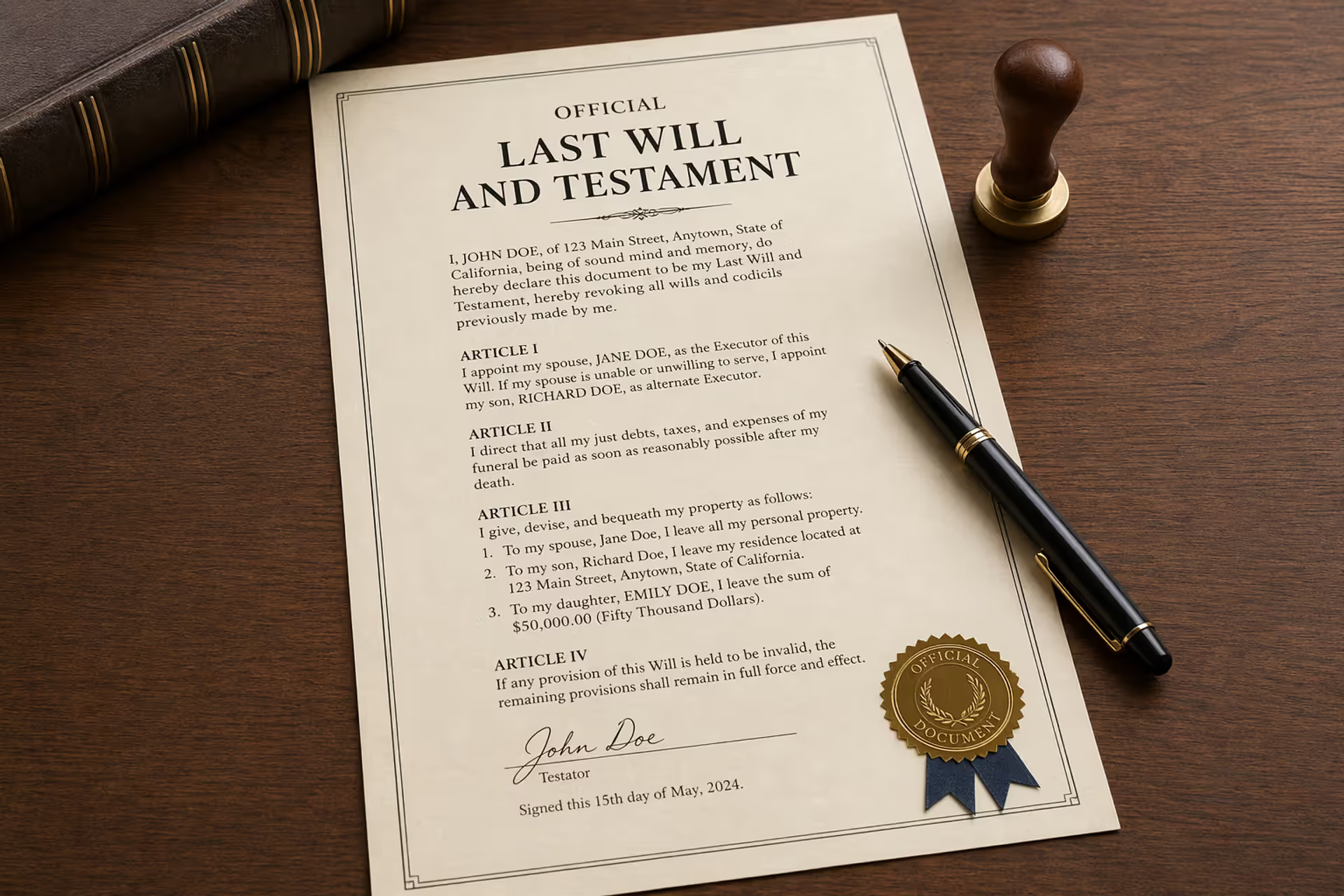
After a death, you'll hear lawyers and court officials use one of two words to describe the estate: testate or intestate. Which category applies determines everything—who gets the assets, who's in charge, whether probate drags on for months or years.
Someone dies "testate" when they've left a valid will spelling out asset distribution. The term traces back to Latin—"testatus"—which meant to bear witness or give testimony. Think of the will as final testimony. It's the deceased saying "here's what I want to happen with my stuff" when they can no longer speak for themselves.
Die without a valid will? That's intestate. Now the state writes your estate plan for you, following laws passed by legislators who never met you and don't know what you wanted.
Testate vs Intestate: Key Differences
Control. That's what separates these two paths.
Die testate and you're still calling the shots from beyond the grave. Your will names who's in charge (the executor). It lists who gets what. You can leave your book collection to the local library, your fishing boat to your brother-in-law, and your retirement savings to your kids—all spelled out clearly.
Die intestate and you've handed control to the state legislature. They've written a formula—usually spouse and kids first, then parents, siblings, more distant relatives. Sounds reasonable until you realize those formulas can't account for nuance.
Here's a real-world example: Your sister helped care for you during your final illness while your brother hasn't called in five years. Under intestacy, they both get equal shares. Your will could've given your sister the larger portion she deserved. Without it, the estranged brother gets the same treatment as the devoted sister.
The probate process differs too. Courts handling testate estates have a roadmap—the will tells them what to do. Intestate estates require additional hearings to figure out who the legal heirs are, who should serve as administrator, whether any unknown relatives exist. More hearings mean more time and attorney fees.
How Testate Succession Works
The executor's first job is finding the original will and getting it to the probate court. Most states want this done within 10 to 30 days of death, though enforcement is spotty.
The court then sets a hearing date—usually 30 to 60 days out—to validate the will and officially appoint the executor. Anyone who might inherit gets notice. This includes people named in the will plus anyone who'd inherit if the will didn't exist. They can attend the hearing and raise objections if they want.
After appointment, the executor steps into significant responsibilities. Every asset needs cataloging: bank accounts, brokerage statements, the house, vehicles, jewelry, tools, everything. Real estate gets professionally appraised. If the deceased owned part of a business, that requires expert valuation. The executor opens an estate checking account, publishes notice to creditors in local newspapers, pays legitimate debts, and handles final tax returns.
Distribution to beneficiaries comes last—only after debts and taxes are settled. The executor must document every transaction because courts hold them personally liable for screw-ups.
Timeframes? All over the map. An estate with $200,000 in bank accounts, no debt, and cooperative beneficiaries might wrap up in six months. An estate with rental properties, business interests, and feuding family members can stay open three years or longer. If federal estate taxes apply (estates over $13.99 million in 2026), add another layer of complexity.
Executors can't rush this. State law mandates a waiting period—typically four to six months—giving creditors time to file claims. Skip it and you're personally on the hook for debts that surface later.
Author: Marcus Delane;
Source: redmonpestmgt.com
What Happens If You Die Without a Will
Intestate succession is estate planning by government committee. It's a generic solution that fits nobody particularly well.
Intestate Property Distribution by State
All 50 states maintain their own intestacy rules, creating a confusing patchwork. Community property states (California, Texas, Arizona, and six others) handle marital assets completely differently than the remaining states.
The surviving spouse's share changes dramatically based on children. If you're married with kids from that marriage, many states give everything to your spouse. But children from a previous relationship? Now your current spouse might get only one-third or one-half, with the rest divided among all your children. Imagine discovering your new spouse of five years has to share your house with your adult kids from your first marriage.
Unmarried partners get nothing. Zero. Doesn't matter if you lived together 20 years or two months. Unless you're in a state recognizing common law marriage (only a handful do), your partner isn't legally family. Your biological relatives inherit instead.
Distant relatives sometimes win the lottery. I've seen estates go to second cousins the deceased met once at a family reunion 30 years ago, simply because closer relatives didn't exist. In extreme cases with no findable relatives, the entire estate "escheats"—fancy legal term for "the state keeps it."
Who Inherits Under Intestate Succession Laws
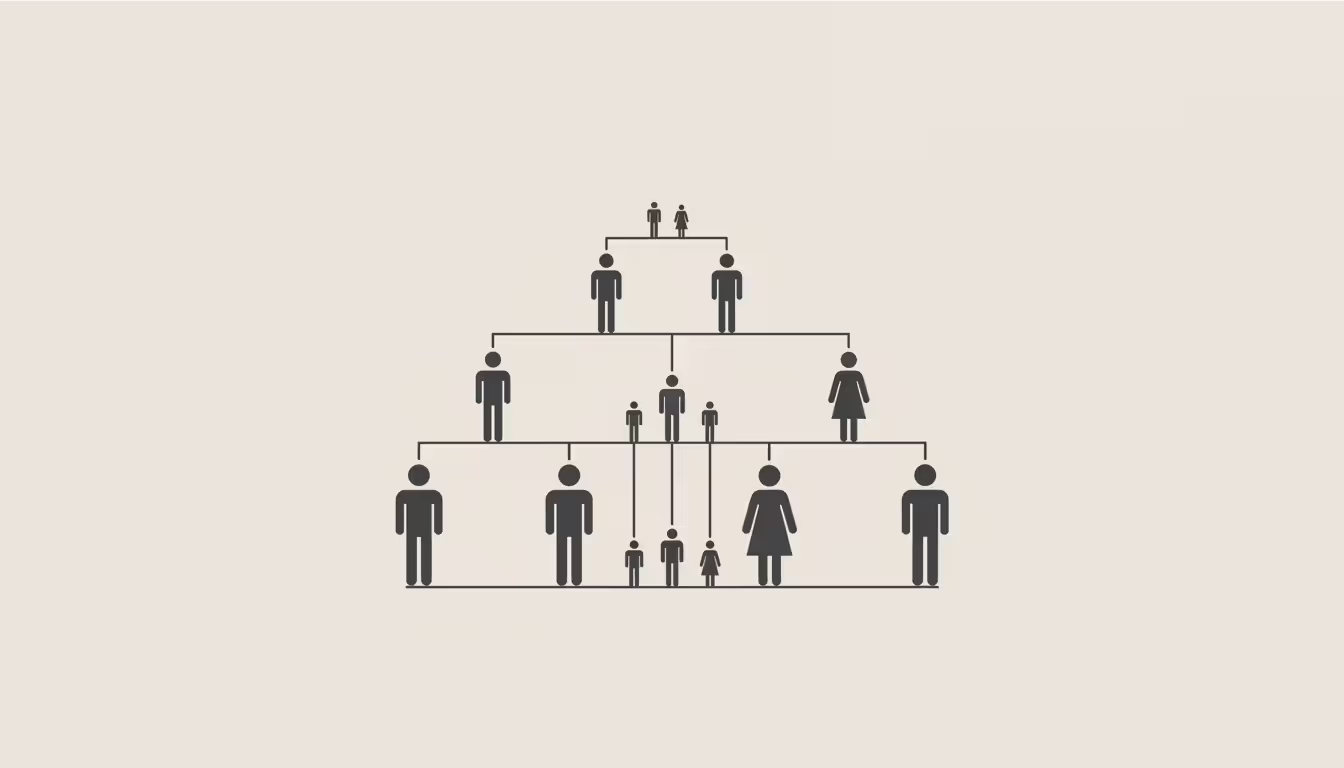
Think of intestate succession as a ladder. Top rungs: spouse and children. No spouse or kids? Parents inherit. No parents? Siblings. Then nieces and nephews, grandparents, aunts, uncles, cousins—on and on until someone qualifies.
Half-siblings usually get half of what full siblings receive. Adopted children inherit the same as biological children. Stepchildren typically get nothing unless someone legally adopted them. Children born outside marriage automatically inherit from their mother; inheriting from their father may require proving paternity.
This rigid system creates absurd results. Everything might go to your financially irresponsible son who'll blow it in six months, while your responsible daughter gets the same amount. It can't give more to the child who cared for you or less to the one who disappeared for a decade. The formula treats everyone identically regardless of circumstances.
Author: Marcus Delane;
Source: redmonpestmgt.com
Beneficiaries vs Heirs: Understanding the Difference
People swap these terms constantly, but they mean different things. Understanding the difference matters when you're dealing with an estate.
Heirs are determined by state law based on family relationships. They're the people who would inherit if you died intestate. Right now, today, you have a specific set of legal heirs whether you've written a will or not.
Beneficiaries are whoever you name in your will, trust, or beneficiary designation forms. You choose them. They can be relatives, friends, your college roommate, your favorite charity, even your cat (through a pet trust).
In testate estates, beneficiaries receive assets per the will's instructions. Blood relationship doesn't matter. You can leave your entire estate to the person who walked your dog every day and nothing to your children if that's what you want.
In intestate estates, only heirs inherit, receiving fixed percentages based on relationship proximity. Courts verify heir status through birth certificates, marriage licenses, and family tree documentation.
Here's the complication: heirs have legal standing to contest a will even when they're not beneficiaries. Your son who you deliberately excluded can challenge your will in court because he's an heir who would've inherited under intestacy. Your best friend named in the will but who isn't an heir? She generally can't contest it.
Priority in testate estates depends entirely on will language. Leave everything to a wildlife charity if you want. In intestate estates, priority follows the statutory ladder—no exceptions, no flexibility.
The Testate Estate Process: What to Expect
I've practiced estate law for 28 years, and the biggest misconception people have is thinking intestacy laws will magically distribute property the way they would've wanted. I watched a widow forced to share her home with her husband's adult children from his first marriage. I've seen life partners of 25 years get nothing because they weren't legally married. I've watched family heirlooms sold at auction to meet statutory distribution requirements. Having a will isn't about paperwork—it's about making sure the people you love are protected and your wishes are actually followed
— Margaret Chen
Testate estates move through predictable stages, though timing varies wildly.
Filing happens first. The executor delivers the original will, death certificate, and probate petition to the courthouse. Filing fees run $200 to $500 in most counties. The court assigns a case number and calendar date for the first hearing.
Validation requires proving the will meets legal standards. Self-proving wills—signed before a notary with special attestation language—sail through without additional evidence. Other wills need witness testimony. At least one person who watched the signing must appear in court or submit a sworn statement confirming the deceased signed voluntarily while mentally competent.
Will contests can derail everything. Common challenges include claims the deceased lacked mental capacity, someone exerted undue influence, fraud occurred, or the will wasn't properly executed. Contests must be filed quickly—90 to 120 days after probate admission in most states.
Distribution happens last. After paying all debts and taxes, the executor distributes assets exactly as the will directs. If it says "my emerald earrings to my granddaughter Emily," the executor can't substitute cash instead without Emily's agreement.
Some assets never touch probate. Life insurance proceeds, retirement accounts with beneficiary designations, payable-on-death accounts, and jointly-owned property with survivorship rights transfer automatically. These bypass the testate estate process even though the deceased had a will.
Author: Marcus Delane;
Source: redmonpestmgt.com
Common roadblocks include:
Beneficiaries who moved without leaving forwarding addresses
Estates heavy on real estate requiring months to sell
Business valuations taking forever to complete
IRS audits extending the timeline by years
Siblings fighting over Mom's china pattern not mentioned in the will
Out-of-state property requiring separate probate proceedings
Executor mistakes extend timelines. Distributing assets before paying debts, missing creditor notice deadlines, or botching tax filings creates personal liability and keeps the estate open longer.
Comparison: Testate vs Intestate Estate Settlement
Aspect
Testate (With Will)
Intestate (Without Will)
Who decides distribution
Deceased person via will instructions
State intestacy formulas
Who inherits
Anyone named as beneficiary
Only legal heirs (family members)
Court involvement
Probate required but will guides process
Probate required plus hearings to identify heirs
Executor/Administrator
Person named in will serves
Court selects from statutory priority list
Timeline
Usually 6-18 months
Often 12-24+ months
Flexibility
Complete; can include conditions, specific gifts
None; rigid formula applies to everyone
Costs
Moderate; clarity reduces conflict
Higher; more hearings and potential family disputes
Frequently Asked Questions About Dying Testate
Can a will be contested even if someone dies testate?
Absolutely. Anyone who qualifies as an heir—meaning they'd inherit under intestacy laws—can challenge will validity in court. They need to file within strict deadlines, typically 90 to 120 days after the will enters probate. Valid grounds are limited: the deceased lacked mental capacity when signing, someone manipulated or pressured them, fraud occurred, or execution requirements weren't met (wrong number of witnesses, for example). You can't contest just because you dislike what the will says. The person challenging bears the burden of proving the will is invalid.
Does dying testate avoid probate entirely?
Not even close. Dying testate means you have a will, but that will must go through probate court for validation and execution. What actually avoids probate are different strategies: revocable living trusts, beneficiary designations on financial accounts, joint ownership with survivorship rights, transfer-on-death deeds. Many people use a will combined with these other tools, letting the will catch any assets that don't have another transfer method.
What happens if a testate will is found invalid?
The estate flips to intestate status. If the will doesn't meet legal requirements—maybe it lacks required witnesses or the person wasn't mentally competent when signing—courts treat the situation as if no will existed at all. State intestacy laws take over and the court appoints an administrator. Sometimes a newer will fails but an older will remains valid; the older version controls in that scenario. This often happens when someone tries updating their will but doesn't follow proper signing procedures.
How long does the testate estate process take?
Simple estates often close in six to twelve months. Complex estates involving businesses, multiple properties, or significant tax issues can stretch two to three years or beyond. Variables include estate size, how liquid the assets are, creditor claims, tax complications, beneficiary cooperation, and whether anyone contests the will. Mandatory creditor claim periods (usually four to six months) must pass before distribution regardless of how simple the estate is.
Can you be partially testate and partially intestate?
Yes, and it happens more than you'd think. If your will covers specific items but lacks a "residuary clause"—the part saying "everything else goes to..."—any assets not mentioned pass through intestacy. Example: your will leaves your house to your daughter but says nothing about your bank accounts. The house passes per your wishes (testate) while accounts distribute under state law (intestate). Well-drafted wills always include residuary clauses preventing this split.
Do all states follow the same testate succession laws?
Not at all. While every state honors valid wills, the details vary significantly. Some states require two witnesses for valid execution; others want three. A few recognize handwritten, unwitnessed wills; most don't. Community property states handle marital assets completely differently than common law states. If you relocate to a different state, have a local attorney review your will to confirm it's still valid and accomplishes your goals under that state's laws.
Dying testate means your voice gets heard after you're gone. It lets you direct assets to people and causes that matter to you, name someone you trust to handle the process, and reduce family conflict when everyone's already grieving.
The alternative—letting intestacy statutes make all decisions—rarely produces results anyone wanted. People who depended on you may face financial struggles. Estranged relatives you haven't spoken to in years may inherit substantial wealth. Probate drags on longer and costs more as courts work through identifying heirs and settling disputes.
You don't need wealth to benefit from a will. Even modest estates gain enormous value from clear instructions. A straightforward will naming beneficiaries, appointing an executor, and including a residuary clause provides infinitely more control than intestacy.
Review your will every few years or after major life changes: marriage, divorce, new children or grandchildren, deaths, significant asset changes, relocating to another state. Laws evolve, situations shift, relationships change. A will that made perfect sense a decade ago might not reflect your current family or wishes.
The peace of mind from dying testate extends beyond your own interests. You spare your family the confusion intestacy creates. You give your executor immediate legal authority. You provide a clear roadmap through probate when loved ones are least equipped to navigate legal complexity.
Testate succession is the difference between your actual wishes being honored and the state imposing a one-size-fits-none solution. The choice is straightforward: spend an afternoon creating or updating your will, or gamble that intestacy laws will somehow match what you would've wanted.
Fee simple absolute represents the highest form of property ownership in American law, granting owners the broadest possible rights. Unlike conditional ownership or leases, this estate gives maximum control over use, transfer, and inheritance of real property with no automatic termination conditions
Right of survivorship automatically transfers a deceased owner's property interest to surviving co-owners, bypassing probate. This guide explains how it works, compares joint tenancy vs tenancy in common, covers tax implications, and shows how survivorship rights override wills
Real estate law governs property ownership, transfer, and use in the United States. This comprehensive guide explains foundational legal principles, transaction structures, common issues, and when to seek legal help for residential and commercial real estate matters
A legal property description is the formal method of identifying real estate with precision that holds up in court. Unlike street addresses, these technical descriptions define exact boundaries using systems like metes and bounds, lot and block, or township and range
The content on this website is provided for general informational and educational purposes only. It is intended to explain concepts related to real estate law, property rights, leases, liens, zoning, landlord-tenant disputes, and litigation.
All information on this website, including articles, guides, and examples, is presented for general educational purposes. Legal outcomes may vary depending on jurisdiction, property type, and individual circumstances.
This website does not provide legal advice, and the information presented should not be used as a substitute for consultation with qualified attorneys or real estate professionals.
The website and its authors are not responsible for any errors or omissions, or for any outcomes resulting from decisions made based on the information provided on this website.