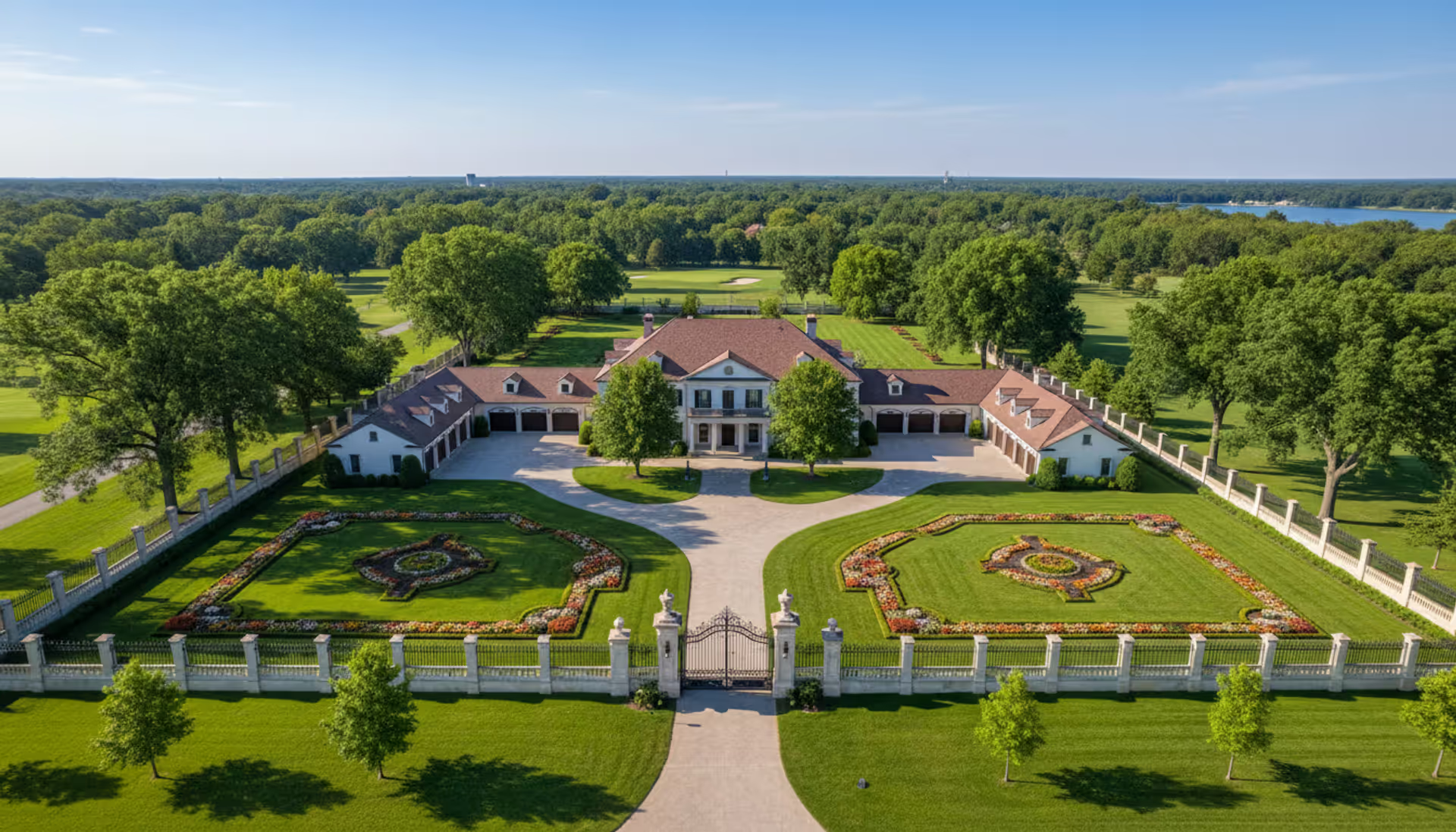
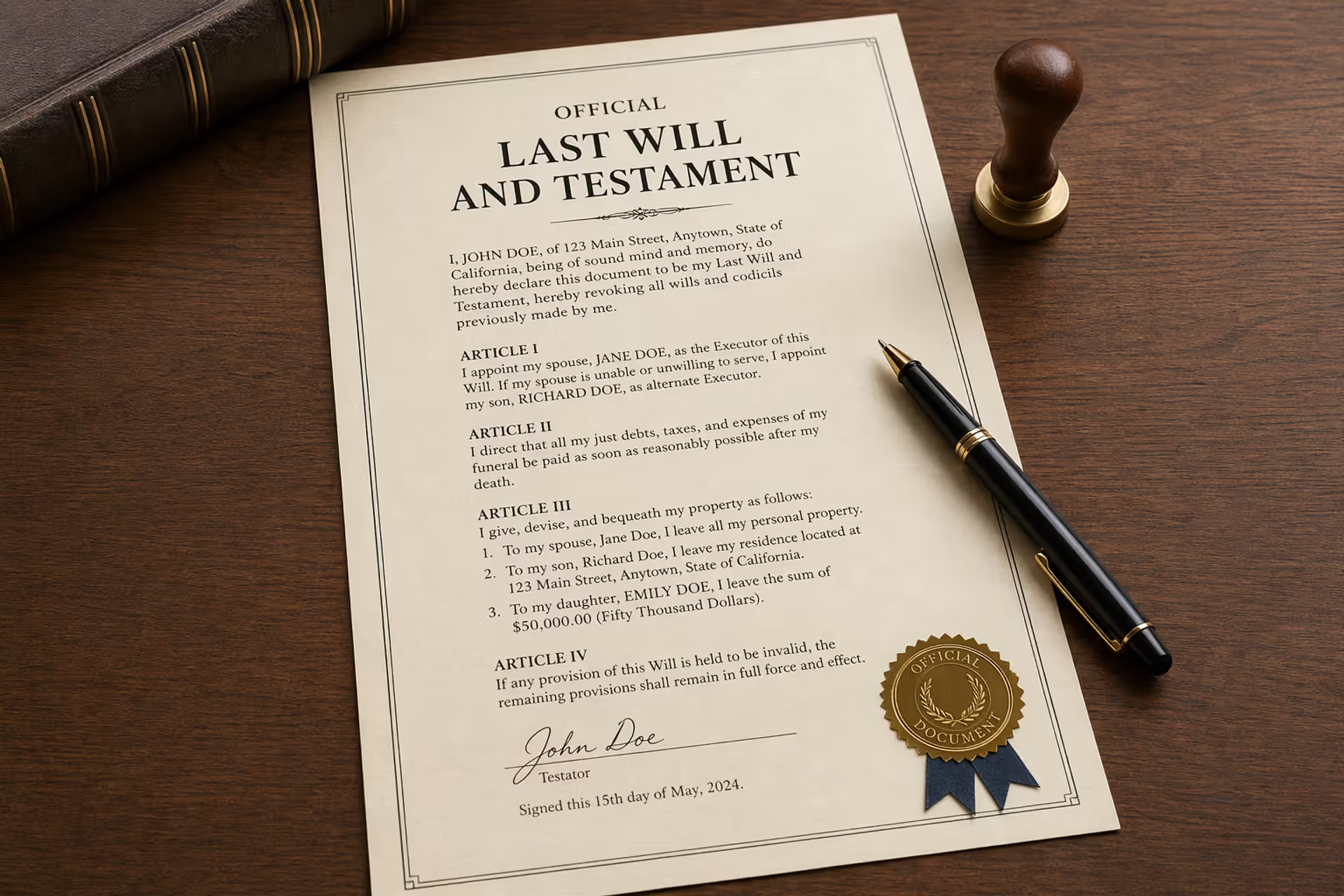
When you purchase a home or land, the type of ownership you receive determines your legal rights to that property for decades to come. Fee simple absolute represents the highest form of property ownership recognized under American law, granting owners the broadest possible bundle of rights. Unlike conditional ownership structures or lease arrangements, this estate gives you maximum control over how you use, transfer, and profit from real property.
Understanding fee simple absolute matters whether you're buying your first home, investing in commercial real estate, or planning your estate. The distinction between this and other ownership types affects everything from your ability to pass property to heirs to how vulnerable you are to losing title under certain conditions.
Fee Simple Absolute Definition and Core Characteristics
Fee simple absolute is an estate in fee simple that grants the owner complete ownership rights to a property with no conditions, limitations on heirs, or predetermined expiration. The term "fee" indicates the estate is inheritable, "simple" means it passes to general heirs without restrictions on bloodline, and "absolute" signifies no conditions can terminate the ownership.
This ownership structure conveys four fundamental rights. First, the right of possession allows you to occupy the property and exclude others from entering. Second, the right of control lets you decide how the property is used within legal boundaries. Third, the right of enjoyment means you can use the property for profit or pleasure. Fourth, the right of disposition enables you to sell, gift, lease, or bequeath the property as you choose.
What makes fee simple absolute the most complete form of ownership is its perpetual duration. The estate continues indefinitely, passing automatically to heirs upon the owner's death. If an owner dies intestate without any identifiable heirs, the property eventually escheats to the state, but this rarely occurs in practice.
Fee simple absolute is the closest approximation to absolute ownership that Anglo-American law recognizes, representing the maximum quantum of property rights a legal system can confer upon a private individual
— John G. Sprankling
The "absolute" designation distinguishes this estate from conditional forms of fee simple ownership. No event, condition, or restriction can automatically terminate fee simple absolute ownership. The owner isn't required to use the property for any particular purpose, and failure to meet certain conditions won't trigger forfeiture.
Rights and Limitations of Fee Simple Ownership
Fee simple absolute rights extend far beyond simple occupancy. Owners can modify structures, subdivide parcels (subject to zoning), extract minerals, harvest timber, grant easements, and create lesser estates like life estates or leaseholds. You can leave the property vacant for years or develop it intensively. The decision rests entirely with you.
However, "absolute" doesn't mean unlimited. Fee simple ownership exists within a framework of government authority and prior encumbrances that constrain how you exercise your rights.
Zoning ordinances restrict property use regardless of ownership type. Your residential lot zoned R-1 can't become a manufacturing facility, even with fee simple absolute title. Building codes dictate construction standards. Environmental regulations may prohibit wetland development or require remediation of contaminated soil.
Author: Olivia Carringt;
Source: redmonpestmgt.com
Eminent domain gives government entities power to take private property for public use with just compensation. Your fee simple absolute ownership won't prevent a highway expansion or utility corridor if the government follows proper condemnation procedures.
Tax liens take priority over ownership rights. Failing to pay property taxes long enough will result in a tax sale, transferring your property to satisfy the debt. Similarly, HOA assessment liens can lead to foreclosure in many states.
Existing easements recorded before you acquired title continue to burden the property. The utility company's right-of-way across your backyard remains valid. Your neighbor's prescriptive easement to access their landlocked parcel doesn't disappear when you buy the servient estate.
Private restrictions in deed covenants or subdivision declarations limit how you use property even with fee simple absolute ownership. These recorded restrictions might prohibit certain architectural styles, require minimum square footage, or ban commercial activities.
What You Can and Cannot Do with Fee Simple Property
Fee simple absolute owners can demolish existing structures and build new ones, subject to permits and setback requirements. You can paint your house purple unless deed restrictions prohibit it. Planting trees, installing pools, or building sheds falls within your rights, though HOA approval might be required in planned communities.
You can extract value by selling timber, leasing grazing rights, or licensing mineral extraction. Creating a life estate for yourself while gifting the remainder interest to children is perfectly valid. Mortgaging the property or taking out home equity loans uses the fee simple estate as collateral.
What you cannot do is violate nuisance laws that harm neighbors—operating a 24-hour drum circle in a residential neighborhood will bring legal action. You can't build structures that violate setback requirements or exceed height limits. Discriminatory deed restrictions (racial covenants) are unenforceable even if recorded, though they may still appear in chain of title.
You cannot prevent government inspection authorized by valid warrants or administrative searches permitted by law. You cannot block access to easements held by others. You cannot refuse to allow utility companies to maintain infrastructure on recorded easements across your property.
Fee Simple Absolute vs Other Freehold Estates
Freehold estates represent ownership interests of indefinite duration, contrasting with leasehold estates that terminate after specific periods. Fee simple absolute sits atop the hierarchy of freehold estates, but several related forms exist with important distinctions.
Fee simple defeasible estates contain conditions or limitations that can terminate ownership. These come in three varieties, each with different mechanisms for ending the estate. Unlike fee simple absolute, defeasible estates create uncertainty about ownership duration.
Fee tail, largely abolished in the United States, restricted inheritance to direct lineal descendants. This English common law concept attempted to keep property within bloodlines indefinitely. Most states converted existing fee tail estates to fee simple absolute by statute, though a few jurisdictions theoretically still recognize modified versions.
Life estates grant ownership only for the duration of a measuring life, typically the life tenant's own lifespan. Upon death, the property passes to the remainderman. Life estates serve estate planning purposes but lack the perpetual nature of fee simple absolute.
Estate Type
Duration
Conditions/Restrictions
What Triggers Loss of Ownership
Common Modern Usage
Fee Simple Absolute
Perpetual, unlimited
None inherent in the estate
Voluntary sale, gift, or governmental taking only
Standard residential and commercial ownership
Fee Simple Determinable
Potentially perpetual but terminates automatically upon occurrence of specified event
Contains durational language ("so long as," "while," "during")
Automatic termination when stated condition ends
Property donated for specific purposes (parks, schools)
Fee Simple Subject to Condition Subsequent
Potentially perpetual but may be terminated at grantor's option
Contains conditional language ("but if," "provided that," "on condition that")
Grantor must take action to reclaim after condition violated
Land sales with use restrictions or reverter clauses
Fee Tail
Limited to lineal descendants
Inheritance restricted to bloodline
Death without lineal heirs
Virtually nonexistent; converted to fee simple in most states
The practical difference between fee simple absolute and these alternatives affects property value and marketability. Title insurance companies scrutinize defeasible estates carefully. Lenders may refuse to finance property held in fee simple determinable due to termination risk.
Fee Simple vs Defeasible Estates Explained
Defeasible estates real property creates conditional ownership that may terminate if specified events occur or fail to occur. These estates split into three distinct categories based on how termination happens and who benefits.
Fee simple determinable automatically ends when a stated condition is violated. The language creating this estate uses durational words: "to the City so long as the property is used as a public park" or "to the School District while operating as an elementary school." When park use ceases or the school closes, ownership automatically reverts to the grantor or their heirs without any action required.
The future interest following a fee simple determinable is called a possibility of reverter. This interest remains with the grantor and their heirs, becoming possessory immediately upon the triggering event. Courts strictly interpret the durational language, and ambiguity typically resolves in favor of fee simple absolute.
Fee simple subject to condition subsequent doesn't terminate automatically. Instead, the grantor reserves a right of entry (also called power of termination) that allows them to reclaim the property if conditions are breached. Language like "to Jane, but if alcohol is ever sold on the premises, Grantor may reenter and reclaim" creates this estate.
The critical distinction is that the grantor must take affirmative action to terminate the estate. Simply violating the condition doesn't end ownership—the grantor must exercise their right of entry, often through legal proceedings. Many courts require prompt action, and unreasonable delay may waive the right.
Fee simple subject to executory limitation terminates automatically like fee simple determinable, but the property passes to a third party rather than reverting to the grantor. "To the Hospital so long as it provides free care to indigent patients, then to the Charity Foundation" creates this arrangement. The Charity Foundation holds an executory interest that becomes possessory when the condition is violated.
Real-world examples illuminate these distinctions. A developer donates land to a city "for use as a fire station" without additional language. Courts likely interpret this as fee simple absolute with a stated purpose but no enforceable condition. Adding "so long as used as a fire station" creates fee simple determinable. Changing to "provided that if ever used for purposes other than a fire station, the grantor may reenter" establishes fee simple subject to condition subsequent.
Churches often receive property in fee simple determinable "for use as a house of worship." When congregations dissolve or relocate, disputes arise with grantor heirs claiming automatic reversion. These cases turn on precise deed language and whether abandonment of the stated use occurred.
Conservation easements sometimes combine fee simple absolute ownership with restrictive covenants rather than creating defeasible estates. The landowner retains fee simple absolute but contractually agrees not to develop the property. This distinction matters for tax purposes and enforceability.
Author: Olivia Carringt;
Source: redmonpestmgt.com
Freehold vs Leasehold Estates
The freehold versus leasehold distinction represents a fundamental divide in property interests. Freehold estates, including fee simple absolute, constitute ownership with indefinite duration. Leasehold estates create possessory rights for defined periods, after which the property reverts to the owner.
Freehold estate holders own the property. Leasehold estate holders (tenants) possess the property temporarily under agreements with the owner (landlord). This difference affects every aspect of the relationship with real estate.
Duration separates the categories most clearly. Fee simple absolute continues perpetually. Even life estates, the shortest freehold interest, last for an entire human lifespan. Leaseholds terminate on specific dates: one year for many residential leases, 99 years for ground leases under commercial buildings, or month-to-month for periodic tenancies.
Inheritance rights differ substantially. Fee simple absolute passes to heirs automatically under intestacy laws or according to will provisions. Leasehold interests may or may not be assignable depending on lease terms, and they don't pass to heirs unless the lease specifically allows.
Control and modification rights heavily favor freehold owners. Fee simple absolute owners can renovate, demolish, or rebuild subject only to permits and regulations. Tenants typically cannot make structural changes without landlord permission. Even minor alterations like painting or installing fixtures may require approval.
Financial implications vary considerably. Freehold owners build equity and benefit from appreciation. Property taxes fall on owners. Maintenance responsibility rests with fee simple holders unless delegated by lease.
Leasehold tenants pay rent without building equity. Ground lease holders may own buildings but lease the land beneath them—common for commercial properties in high-value urban areas. When the ground lease expires, building ownership may revert to the land owner unless the lease provides otherwise.
Some jurisdictions, particularly Hawaii, have significant residential leasehold property where homeowners own structures but lease the underlying land. These arrangements create complexity when ground leases expire or landlords seek dramatic rent increases.
Condominiums create a hybrid structure. Unit owners hold fee simple absolute in the airspace of their unit plus undivided interests in common areas. This differs from apartment tenants who hold only leasehold interests.
Cooperative housing represents another variation where residents own shares in a corporation that holds fee simple absolute to the entire building. Shareholders receive proprietary leases for specific units but don't own their apartments in fee simple.
How Fee Simple Absolute Affects Property Transactions
Fee simple ownership definition becomes critically important during real estate transactions. Purchase agreements typically specify "fee simple absolute" as the type of estate being conveyed. This language assures buyers they're receiving the highest form of ownership without hidden conditions.
Title examination reveals whether the seller actually holds fee simple absolute or a lesser estate. Title companies search public records for defeasible language in prior deeds, restrictions, easements, and encumbrances. Discovering fee simple determinable instead of fee simple absolute may kill deals or require price renegotiation.
Title insurance policies protect against defects in fee simple ownership. Standard coverage insures that you received the estate described in your deed. Enhanced policies may cover additional risks, but they don't expand the estate itself—title insurance on fee simple determinable doesn't convert it to fee simple absolute.
Author: Olivia Carringt;
Source: redmonpestmgt.com
Mortgages require fee simple absolute or equivalent ownership. Lenders won't finance property where ownership might terminate automatically. If you hold fee simple subject to condition subsequent, lenders assess the likelihood of condition violation and may decline the loan or charge higher rates.
Inheritance of fee simple absolute occurs automatically upon death. Property passes to heirs under intestacy statutes if there's no will, or according to will provisions if one exists. The estate doesn't terminate at death—it continues in new hands.
Probate proceedings establish legal ownership transfer, but fee simple absolute property passes to beneficiaries regardless. Joint tenancy with right of survivorship and transfer-on-death deeds avoid probate entirely while maintaining fee simple absolute ownership.
Selling fee simple absolute is straightforward. You convey the entire bundle of rights to the buyer through a warranty deed or quitclaim deed. The buyer steps into your position with the same rights you held.
Gifting property works similarly. You can transfer fee simple absolute to children, charities, or anyone else during your lifetime. Gift tax consequences may apply, but the estate itself transfers completely.
Creating lesser estates from fee simple absolute is common in estate planning. You might grant yourself a life estate while giving the remainder interest to your children. You retain fee simple absolute until executing the deed that splits the estate.
Partition actions allow co-owners of fee simple absolute property to force sale or physical division. If siblings inherit property as tenants in common and disagree about keeping it, any co-owner can file for partition.
Common Questions About Fee Simple Ownership
Is fee simple absolute the same as owning property outright?
Yes, fee simple absolute represents outright ownership in its most complete form. When people say they "own" their home, they typically mean they hold fee simple absolute title. However, "outright" doesn't mean free from all restrictions—zoning laws, tax obligations, and eminent domain still apply. The distinction is that these limitations come from governmental authority, not from conditions built into the estate itself. If you have a mortgage, you still own the property in fee simple absolute; the lender simply has a lien against it as security for the debt.
Can fee simple absolute ownership ever be taken away?
Fee simple absolute can be taken through specific legal mechanisms, but not through automatic termination or condition violation. Eminent domain allows government entities to condemn property for public use with just compensation. Tax sales transfer ownership if you fail to pay property taxes for the statutory period, usually several years. Court judgments can force sale to satisfy debts. Adverse possession by someone openly occupying your property for the statutory period (typically 10-20 years depending on state) can transfer title. However, none of these involve the estate terminating due to how you use the property or failure to meet conditions.
What's the difference between fee simple and fee simple absolute?
In modern usage, "fee simple" and "fee simple absolute" are often used interchangeably to mean the same unlimited estate. Technically, "fee simple" is the broader category that includes fee simple absolute and fee simple defeasible estates. When someone says they own property "in fee simple" without the "absolute" qualifier, they almost always mean fee simple absolute. The distinction matters primarily in legal documents where precision is critical. If you're reviewing a deed or title report, look for qualifying language—if none exists beyond "fee simple," you're dealing with fee simple absolute.
Do I have fee simple absolute if I have a mortgage?
Yes, mortgages don't affect the type of estate you own. You hold fee simple absolute title even with an outstanding mortgage. The lender has a lien on the property as security for the loan, but you remain the owner with all rights of fee simple absolute ownership. You can sell the property (paying off the mortgage from proceeds), lease it to tenants, make improvements, or leave it to heirs in your will. The mortgage creates a security interest, not a limitation on your estate type. If you default, the lender can foreclose and force sale, but this is an exercise of their lien rights, not a termination of your fee simple absolute estate.
How does fee simple absolute transfer when the owner dies?
Fee simple absolute passes according to the owner's will if one exists, or under state intestacy laws if the owner died without a will. The estate doesn't terminate at death—it continues in the hands of heirs or beneficiaries. If the will leaves property to your children, they receive the same fee simple absolute estate you held. Joint tenancy with right of survivorship allows property to pass automatically to the surviving joint tenant outside of probate. Transfer-on-death deeds, available in many states, similarly transfer fee simple absolute to named beneficiaries without probate. The perpetual nature of fee simple absolute means it can pass through unlimited generations.
Can HOA rules limit fee simple absolute ownership?
HOA rules and deed restrictions limit how you exercise fee simple absolute rights, but they don't change the estate type you own. You still hold fee simple absolute title subject to recorded covenants, conditions, and restrictions (CC&Rs). These restrictions run with the land, meaning they bind all future owners regardless of whether they agreed to them. HOAs can enforce architectural standards, prohibit certain uses, and require maintenance standards. Violating HOA rules can result in fines and liens, potentially leading to foreclosure in extreme cases. However, these are contractual limitations you accepted when purchasing property in the HOA, not conditions that automatically terminate your ownership like fee simple determinable.
Fee simple absolute remains the gold standard of property ownership in American real estate, offering owners the maximum bundle of rights our legal system recognizes. This estate grants perpetual ownership that passes to heirs indefinitely, free from conditions that might terminate the interest automatically.
Understanding the distinction between fee simple absolute and defeasible estates protects you from unexpected loss of property rights. Recognizing that "absolute" doesn't mean unlimited helps set realistic expectations about governmental restrictions and prior encumbrances. Whether you're buying your first home, investing in commercial property, or planning your estate, confirming you're receiving or conveying fee simple absolute title ensures the transaction meets your expectations.
The simplicity of fee simple absolute—no conditions, no automatic termination, no restrictions on heirs—makes it the preferred estate for both buyers and lenders. While other ownership structures serve specific purposes, fee simple absolute provides the security and flexibility most property owners need.
When someone dies, their estate is either testate or intestate. Dying testate means leaving a valid will that directs asset distribution. Dying intestate means state law decides everything. Understanding this distinction determines who controls your legacy
Right of survivorship automatically transfers a deceased owner's property interest to surviving co-owners, bypassing probate. This guide explains how it works, compares joint tenancy vs tenancy in common, covers tax implications, and shows how survivorship rights override wills
Real estate law governs property ownership, transfer, and use in the United States. This comprehensive guide explains foundational legal principles, transaction structures, common issues, and when to seek legal help for residential and commercial real estate matters
A legal property description is the formal method of identifying real estate with precision that holds up in court. Unlike street addresses, these technical descriptions define exact boundaries using systems like metes and bounds, lot and block, or township and range
The content on this website is provided for general informational and educational purposes only. It is intended to explain concepts related to real estate law, property rights, leases, liens, zoning, landlord-tenant disputes, and litigation.
All information on this website, including articles, guides, and examples, is presented for general educational purposes. Legal outcomes may vary depending on jurisdiction, property type, and individual circumstances.
This website does not provide legal advice, and the information presented should not be used as a substitute for consultation with qualified attorneys or real estate professionals.
The website and its authors are not responsible for any errors or omissions, or for any outcomes resulting from decisions made based on the information provided on this website.