When you buy real estate, you expect to receive clear ownership rights. But what happens when someone else claims they owned the property first, or had rights you never knew about? The legal doctrine of the bona fide purchaser exists precisely to answer this question and protect buyers who act in good faith.
Property transactions involve substantial money and rely on trust in the recording system. Without protections for honest buyers, real estate markets would grind to a halt as purchasers faced endless uncertainty about whether their ownership could be challenged years later. The bona fide purchaser doctrine balances competing interests: protecting those who purchase property honestly while respecting prior ownership claims.
Understanding bona fide purchaser status matters whether you're buying your first home or your tenth investment property. The difference between qualifying for this protection or not can mean keeping your property or losing it to someone with an earlier claim.
What Is a Bona Fide Purchaser?
A bona fide purchaser (often abbreviated as BFP) is someone who buys property for value, in good faith, and without notice of any competing claims or defects in the seller's title. This legal status provides powerful protection: in many situations, a bona fide purchaser's ownership rights will prevail over earlier unrecorded interests, even if those prior claims would normally take precedence.
The bona fide purchaser definition emerged from centuries of common law and has been codified through recording statutes in every U.S. state. The underlying principle is straightforward—buyers who exercise reasonable diligence and pay fair value deserve protection against hidden claims they couldn't reasonably discover.
Consider a simple example: Sarah agrees to sell her house to Michael in January, but they don't record the deed. In March, Sarah fraudulently sells the same house to Jennifer, who has no idea about the earlier sale to Michael. Jennifer pays full price and records her deed immediately. If Jennifer qualifies as a bona fide purchaser, she keeps the house, and Michael's remedy is a lawsuit against Sarah for fraud—not evicting Jennifer.
The good faith purchaser rule serves critical policy goals. It encourages buyers to rely on public records, promotes commercial certainty, and ensures that property can change hands efficiently. Without it, every buyer would need to investigate not just recorded documents but also conduct exhaustive interviews with neighbors, prior owners, and anyone who might claim an interest.
Author: Samantha Holloway;
Source: redmonpestmgt.com
Courts apply the bona fide purchaser doctrine strictly. You must satisfy every element. Missing even one requirement means you don't receive protection, regardless of how sympathetic your situation might be.
The recording acts are designed to protect subsequent purchasers who have no actual notice of prior unrecorded interests. The bona fide purchaser for value occupies a favored position in the law because of the public policy interest in protecting the security of land transactions and encouraging reliance on the public records
— Real Property
Requirements to Qualify as a Bona Fide Purchaser for Value
Three distinct elements determine whether you qualify as a bona fide purchaser for value. Each requirement serves a specific purpose, and courts examine them independently. Satisfying two out of three isn't enough—you need all three.
The Good Faith Requirement
Good faith means honesty in fact during the transaction. You cannot act as a bona fide purchaser if you engage in fraud, collusion with the seller to defeat prior claims, or deliberately ignore obvious red flags that would alert a reasonable person to problems.
Good faith is subjective to a degree. Courts examine what you actually knew and whether your conduct demonstrates honest dealing. If you're buying property from your business partner who you know is facing lawsuits, and the sale price is suspiciously low, a court might question your good faith even if you claim ignorance of specific claims.
Common good faith problems include: - Purchasing property specifically to defeat a known creditor's claim - Buying from a seller you know lacks proper authority - Completing a transaction with unusual haste to beat another claimant - Accepting explanations for title problems that no reasonable person would believe
Good faith doesn't require perfect judgment. You can make mistakes about value or the property's condition and still act in good faith. The question is whether you dealt honestly and fairly, not whether you made a smart investment.
Purchasing for Value
"Value" means something more than nominal consideration. You must pay a substantial amount—typically market rate or close to it. Courts distinguish between purchasers who give value and donees (gift recipients) or heirs who pay nothing.
The value requirement serves an important purpose: it separates commercial transactions deserving protection from gratuitous transfers. Someone who receives property as a gift has less need for protection than someone who depletes their savings to buy a home.
Value doesn't necessarily mean full market price. You can qualify even if you negotiated a discount, as long as the consideration is substantial. A purchase for $300,000 of property worth $350,000 would typically satisfy the value requirement. A purchase for $1,000 of property worth $350,000 would not.
Value can take forms other than cash. Assuming a mortgage, exchanging other property, or providing services can all constitute value if substantial. However, a promise to pay in the future generally doesn't qualify until you actually pay. If you sign a contract to buy property but haven't closed yet, you're not yet a bona fide purchaser for value.
One frequent mistake: assuming that paying off the seller's debts counts as giving value to the seller. If you buy property and use the purchase money to pay the seller's existing mortgage, that's still value. But if you simply agree to take property subject to existing liens without paying the seller anything additional, you may not have given sufficient value.
Without Notice of Prior Claims
The notice requirement is the most complex element. You cannot qualify as a bona fide purchaser if you had actual, constructive, or inquiry notice of competing claims when you acquired the property.
This element protects prior claimants who have made their interests discoverable. If you could have learned about a prior claim through reasonable investigation, the law treats you as if you knew about it. The notice requirement creates strong incentives to search public records and inspect property before buying.
Notice exists at the moment you acquire rights in the property. For most buyers, this means at closing when the deed is delivered. What you learn afterward doesn't affect your bona fide purchaser status, though it may create other legal issues.
Understanding Notice in Real Estate Transactions
The three types of notice—actual, constructive, and inquiry—each operate differently but have the same effect: if you have any type of notice of a prior claim, you cannot be a bona fide purchaser.
Type of Notice
Definition
Common Examples
Effect on BFP Status
Actual Notice
Direct knowledge of a prior claim or defect
Seller tells you about an unrecorded lease; you read a prior deed in the seller's files; you receive a letter from someone claiming ownership
Automatically disqualifies you from BFP protection
Constructive Notice
Legal presumption of knowledge based on public records
Properly recorded deeds, mortgages, easements, and liens in the chain of title
Deemed to have notice whether you actually searched records or not
Inquiry Notice
Facts visible or known that would prompt a reasonable person to investigate further
Someone living on the property who isn't the seller; unusual structures suggesting easements; references in recorded documents to unrecorded agreements
Charged with knowledge of what reasonable investigation would reveal
Actual Notice vs Constructive Notice
Actual notice is straightforward: you personally know about the prior claim. Perhaps the seller mentioned it, you saw documents referring to it, or a third party informed you. The source doesn't matter—if you actually knew, you had actual notice.
Constructive notice is a legal fiction. The law presumes you know about properly recorded documents in your property's chain of title, whether you actually searched the records or not. This presumption makes the recording system work. If buyers could claim ignorance of recorded documents, the entire purpose of public records would collapse.
Constructive notice applies only to documents properly recorded in the chain of title. A deed recorded in the wrong county, under the wrong property description, or so defectively that it doesn't meet recording requirements may not provide constructive notice. Similarly, a "wild deed" (recorded by someone with no apparent connection to the property) typically doesn't give constructive notice because a reasonable title search wouldn't discover it.
The practical difference matters significantly. You can avoid actual notice by not asking questions or reading documents the seller offers. You cannot avoid constructive notice—recorded documents affect you regardless of whether you hire a title company or search records yourself.
Inquiry Notice and Due Diligence
Inquiry notice occupies a middle ground. You don't have actual knowledge, and there may be no recorded document, but circumstances exist that would cause a reasonable buyer to investigate further. The law charges you with knowledge of whatever that investigation would have revealed.
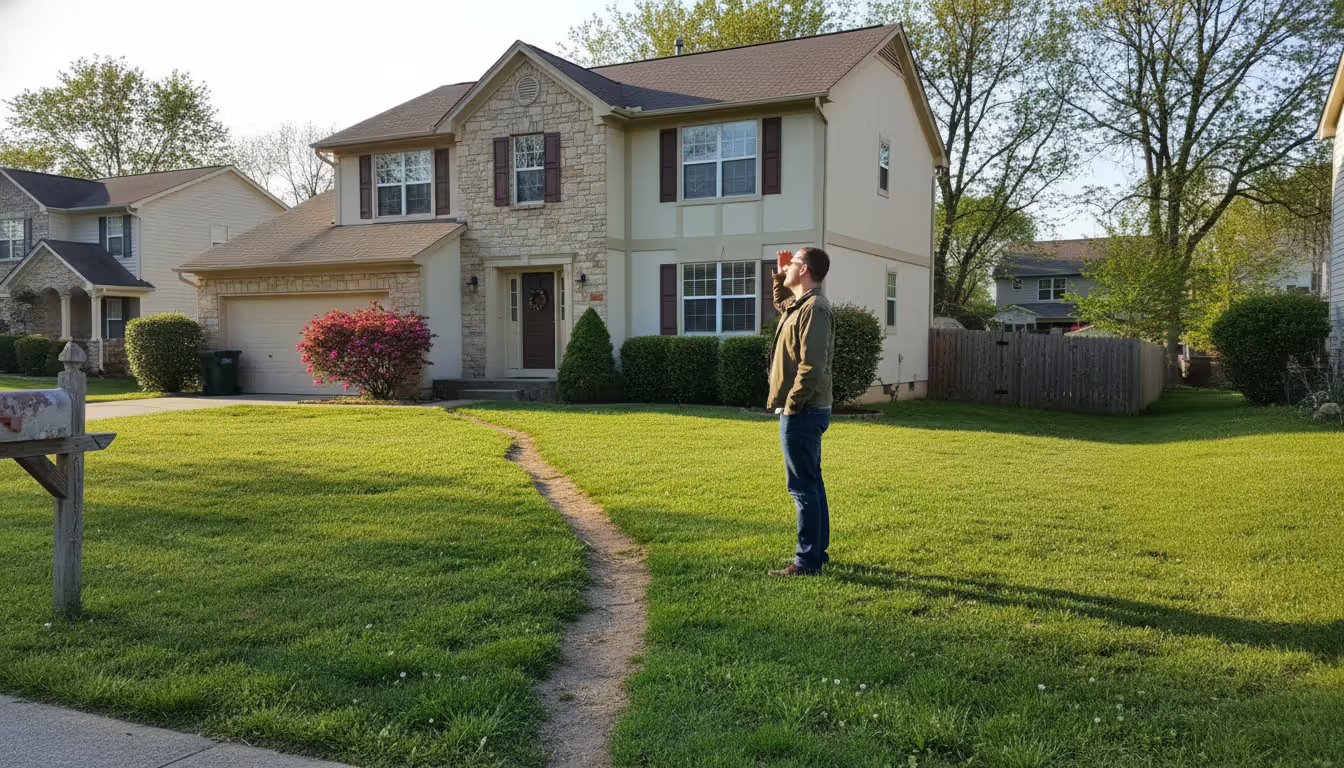
Classic inquiry notice scenarios: - Possession by third parties: If someone other than the seller is living on the property, you must ask about their rights. They might be tenants, adverse possessors, or owners under an unrecorded deed. - Visible easements: A well-worn path across the property or utility lines suggest easement rights that may not be recorded. - References to other documents: If a recorded deed mentions "subject to restrictions in the unrecorded agreement dated January 15, 2020," you have inquiry notice of that agreement's contents.
Courts apply a reasonableness standard. You're not required to conduct investigations that wouldn't occur to a sensible buyer, but you cannot deliberately avoid obvious questions. Walking through a property and seeing a tenant doesn't require you to hire a private investigator to research their claims, but it does require you to ask the seller and the tenant about their arrangement.
The inquiry notice doctrine prevents buyers from benefiting from willful ignorance. You cannot close your eyes to obvious problems and then claim you didn't know.
Author: Samantha Holloway;
Source: redmonpestmgt.com
Constructive Notice Through Recording
Recording statutes create constructive notice by making documents publicly available. When properly recorded in the correct county's land records, a document provides notice to the entire world, including people who never actually view it.
Requirements for effective recording vary by state but generally include: - Recording in the county where the property is located - Proper acknowledgment (notarization) of signatures - Sufficient property description to identify the land - Indexing under the correct grantor and grantee names
A document that meets these requirements gives constructive notice from the moment of recording. This is why the race to the courthouse matters in some jurisdictions—the first to record may establish constructive notice that defeats later purchasers.
Recording doesn't validate an invalid document. A forged deed that's recorded still doesn't convey ownership. But recording does provide notice of the claim, which prevents subsequent buyers from qualifying as bona fide purchasers without notice.
How Recording Acts Protect Bona Fide Purchasers
Every state has enacted recording statutes that modify common law property rules. At common law, the first person to receive an interest in property owned it, regardless of recording. Recording acts change this outcome to protect bona fide purchasers in specific circumstances.
States use three different approaches, each creating different incentives and protections:
Statute Type
Who Prevails in Competing Claims
What Matters for Protection
Example States
Race Statute
First to record wins
Only recording matters; notice is irrelevant
North Carolina, Louisiana
Notice Statute
Last BFP without notice wins
Being a BFP without notice; recording by the BFP doesn't matter
Alabama, Massachusetts, Vermont
Race-Notice Statute
Last BFP without notice who records first wins
Being a BFP without notice AND recording before prior claimants
California, Florida, New York, Texas
Race Statute Jurisdictions
Race statutes are the simplest: whoever records first wins, regardless of notice or good faith. If you buy property and record your deed before anyone with an earlier interest records theirs, you own the property—even if you knew about their claim.
Pure race jurisdictions are rare. North Carolina is the primary example. The race approach prioritizes certainty and encourages prompt recording. There's no need to prove what you knew or when you knew it; only the recording date matters.
Author: Samantha Holloway;
Source: redmonpestmgt.com
The race system has advantages. It eliminates disputes about notice, which can be difficult to prove. It strongly incentivizes recording immediately after closing. However, it can produce harsh results, allowing even bad-faith purchasers to prevail if they record first.
Notice Statute Jurisdictions
Notice statutes protect the most recent bona fide purchaser without notice, even if they haven't recorded. If you buy property without notice of prior claims, you own it—whether you record or not.
This approach prioritizes protecting innocent purchasers over encouraging recording. The subsequent BFP prevails against prior unrecorded interests because they had no way to discover those interests.
However, notice statutes create a practical problem: if you're a BFP but don't record, someone else might later purchase from your seller (or from someone else in the chain) and become a subsequent BFP themselves. For this reason, buyers in notice jurisdictions still record promptly, even though it's not technically required for protection.
Race-Notice Statute Jurisdictions
Race-notice statutes combine elements of both approaches. To prevail, you must be a bona fide purchaser without notice AND record before prior claimants record.
This is the most common system, used by a majority of states. It balances protecting innocent purchasers with encouraging prompt recording. You must both act in good faith and win the race to the recorder's office.
In a race-notice state, consider this scenario: You buy property on Monday without notice of any prior claims, but don't record until Friday. On Wednesday, someone with an earlier unrecorded interest records their deed. They win, even though you were a BFP, because they recorded first. Had you recorded on Monday, you would have prevailed.
Chain of Title and Bona Fide Purchaser Protection
The chain of title is the sequence of ownership transfers from the original sovereign grant to the current owner. A title search examines this chain to identify recorded interests and verify that each transfer was valid.
Understanding the chain of title and bona fide purchaser protection requires recognizing what title searches reveal and what they miss. A proper title search examines: - Every deed in the chain of ownership - Mortgages, liens, and other encumbrances - Easements and covenants - Judgments against prior owners - Tax liens and assessments
Title searchers typically examine records going back 40-60 years, though requirements vary by state and transaction type. The search must be thorough enough to discover all recorded documents that could affect the property.
Common title defects that affect bona fide purchaser status include: - Breaks in the chain: Missing deeds or gaps in ownership - Forged signatures: Invalid transfers that convey no title - Undisclosed heirs: Claims by people who should have inherited but weren't included in estate proceedings - Errors in legal descriptions: Uncertainty about what land was actually conveyed - Unreleased liens: Debts that were paid but not properly cleared from the record
Even a thorough title search may miss some problems. Wild deeds, documents recorded outside the chain of title, won't appear in a standard search. Claims by adverse possessors who haven't recorded anything won't show up. Forgeries may be impossible to detect from examining recorded documents.
This is where title insurance becomes valuable. While bona fide purchaser status protects you against prior unrecorded interests, title insurance protects you against defects in recorded title that weren't discovered during the search.
The Shelter Rule in Property Law
The shelter rule property law doctrine extends bona fide purchaser protection to people who wouldn't otherwise qualify. Under this rule, anyone who purchases from a bona fide purchaser receives the same protection the BFP had, even if the subsequent buyer doesn't meet all BFP requirements.
The policy rationale is practical: bona fide purchasers need to be able to sell property without their buyers losing protection. If BFP status didn't transfer to subsequent purchasers, the BFP's property would be less marketable, undermining the very protection the law provides.
Author: Samantha Holloway;
Source: redmonpestmgt.com
Here's how it works: Michael buys property as a bona fide purchaser, defeating an earlier unrecorded claim by Sarah. Michael then sells to Jennifer. Jennifer receives the property as a gift (no value given) or has actual notice of Sarah's claim. Normally, Jennifer couldn't be a BFP. But under the shelter rule, Jennifer "takes shelter" under Michael's BFP status and receives the same protection he had.
The shelter rule has important limitations: - It doesn't create new protection, only transfers existing protection - It doesn't apply to someone who previously owned the property and is trying to reacquire it - It doesn't protect against claims that arose after the BFP acquired the property - Some courts refuse to apply it when the subsequent buyer colluded with the BFP to defeat known claims
A common scenario involves heirs. Your grandmother bought a house in 1985 as a bona fide purchaser. When she dies in 2026 and you inherit, you're not a BFP (you didn't give value). But you take shelter under her BFP status and receive the same protection she had against any claims she defeated.
The shelter rule can span multiple transfers. If A sells to B (a BFP), B sells to C (who takes shelter), and C sells to D (who also takes shelter), D has the same protection B originally had, as long as each transfer was legitimate and didn't involve fraud or collusion.
Frequently Asked Questions About Bona Fide Purchasers
Can you be a bona fide purchaser if you inherit property?
No. Heirs and devisees (people who receive property through a will) don't give value, which is a required element of bona fide purchaser status. However, heirs can benefit from the shelter rule if the person they inherited from was a bona fide purchaser. You receive the same protection your ancestor had, even though you don't independently qualify as a BFP.
Does title insurance protect you the same way as bona fide purchaser status?
Not exactly. Bona fide purchaser status is a legal doctrine that determines whether you own the property against competing claimants. Title insurance is a contractual agreement to compensate you for certain title defects. BFP status means you keep the property; title insurance means you receive money if you lose it. Ideally, you have both: BFP status protects your ownership, and title insurance covers defects that slip through despite your protected status. Title insurance also covers some risks that BFP status doesn't address, like forgeries in the chain of title.
What happens if you discover a defect after closing?
Your bona fide purchaser status is determined at the moment you acquired the property (usually at closing). Discovering a defect afterward doesn't change whether you were a BFP, but it may affect your rights going forward. If you were a BFP when you closed, you're protected against prior unrecorded claims. If you later try to sell the property, your buyer's BFP status will be determined based on what they know at their closing—and now there's a known defect that might give them notice. This is another reason title insurance matters: it can provide coverage even when defects are discovered post-closing.
Are commercial buyers held to a higher standard than residential buyers?
Courts sometimes apply more stringent inquiry notice standards to commercial and sophisticated buyers. A developer or real estate investor might be expected to investigate circumstances that wouldn't trigger inquiry for a first-time homebuyer. However, the basic legal requirements for BFP status remain the same regardless of buyer sophistication. The difference lies in what constitutes "reasonable" investigation for inquiry notice purposes. A commercial buyer claiming they didn't notice obvious red flags may face more skepticism than a residential buyer in the same situation.
How does the shelter rule benefit someone who isn't a bona fide purchaser?
The shelter rule allows non-BFPs to receive the same protection a BFP had. This matters most for people who receive property by gift, inheritance, or with notice of claims. For example, if you buy property knowing about an unrecorded easement (which would normally prevent BFP status), but you're buying from someone who was a BFP and defeated that easement claim, you take shelter under their status. You receive protection you couldn't have obtained on your own. This makes property more marketable and ensures that BFP protection doesn't evaporate with each subsequent transfer.
Can a lender qualify as a bona fide purchaser?
Yes, but the lender must meet all BFP requirements. A bank that makes a mortgage loan for value, in good faith, and without notice of prior claims receives the same protection as a purchaser. This matters when competing mortgages or liens exist. The first mortgage to be recorded doesn't always have priority if a later lender qualifies as a bona fide purchaser for value. However, lenders are often held to high standards for inquiry notice because they typically conduct thorough due diligence before lending. A lender who fails to discover facts a reasonable title search would reveal may not qualify.
Bona fide purchaser protection represents one of property law's most important balancing acts. The doctrine protects honest buyers who exercise reasonable diligence while preserving the rights of prior claimants who make their interests discoverable.
Qualifying for BFP status requires satisfying three strict requirements: good faith, payment of value, and lack of notice. Each element serves a distinct purpose, and courts apply them rigorously. Understanding the differences between actual, constructive, and inquiry notice can mean the difference between secure ownership and losing property to a prior claimant.
Recording statutes modify these common law principles in different ways depending on your state. Whether you're in a race, notice, or race-notice jurisdiction affects both what you must do to protect yourself and how you'll fare against competing claims. Regardless of jurisdiction, recording your deed promptly after closing remains essential.
The practical lesson is clear: conduct thorough due diligence before buying property. Search public records, physically inspect the property, ask questions about anything unusual, and consider purchasing title insurance. These steps both help you qualify as a bona fide purchaser and protect you against risks that BFP status doesn't address.
Property transactions involve substantial investments and complex legal rules. Understanding bona fide purchaser principles helps you navigate these transactions more confidently and protect your ownership rights for years to come.
Fee simple absolute represents the highest form of property ownership in American law, granting owners the broadest possible rights. Unlike conditional ownership or leases, this estate gives maximum control over use, transfer, and inheritance of real property with no automatic termination conditions
When someone dies, their estate is either testate or intestate. Dying testate means leaving a valid will that directs asset distribution. Dying intestate means state law decides everything. Understanding this distinction determines who controls your legacy
Right of survivorship automatically transfers a deceased owner's property interest to surviving co-owners, bypassing probate. This guide explains how it works, compares joint tenancy vs tenancy in common, covers tax implications, and shows how survivorship rights override wills
Real estate law governs property ownership, transfer, and use in the United States. This comprehensive guide explains foundational legal principles, transaction structures, common issues, and when to seek legal help for residential and commercial real estate matters
The content on this website is provided for general informational and educational purposes only. It is intended to explain concepts related to real estate law, property rights, leases, liens, zoning, landlord-tenant disputes, and litigation.
All information on this website, including articles, guides, and examples, is presented for general educational purposes. Legal outcomes may vary depending on jurisdiction, property type, and individual circumstances.
This website does not provide legal advice, and the information presented should not be used as a substitute for consultation with qualified attorneys or real estate professionals.
The website and its authors are not responsible for any errors or omissions, or for any outcomes resulting from decisions made based on the information provided on this website.