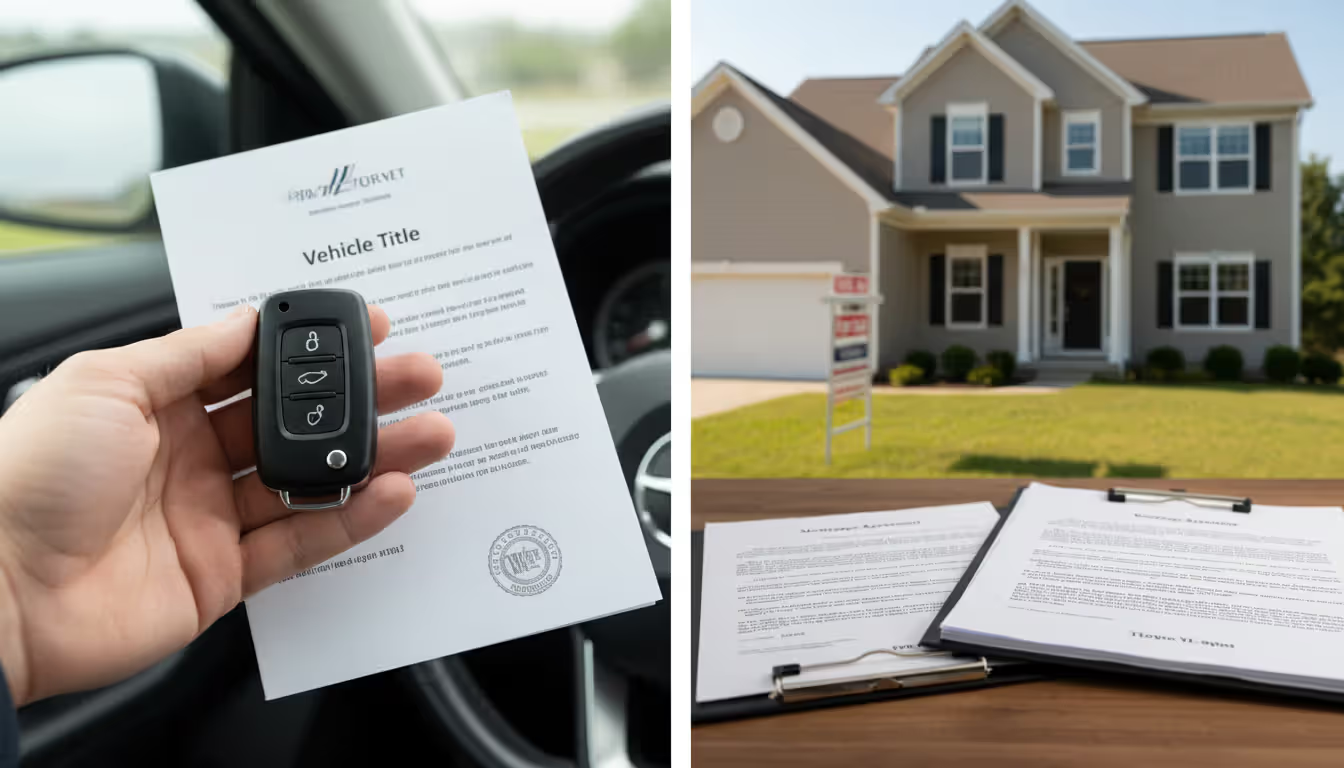
Buying property in the US? You'll encounter a stack of paperwork that can confuse even experienced investors. Among these documents, the certificate of title plays a starring role—but here's the thing: most first-time buyers can't explain what it actually does or why they need it. Some people think it's the same as a deed. Others assume it's just another form to sign at closing. Neither is correct.
Let's clear this up. This guide walks through everything you need to know about property title certificates, from what they contain to how they differ from deeds and abstracts. You'll also learn what problems can derail the process and how to avoid expensive surprises.
What Is a Certificate of Title?
Your certificate of title serves as an official statement about who legally owns a piece of property. Government offices or title companies issue these documents after digging through public records to verify ownership. For real estate, this means someone has researched the property's history and confirmed who has the right to sell it.
What's actually on this document? You'll find the property's legal description (which looks nothing like "123 Main Street"—think survey coordinates and lot numbers instead), the owner's full legal name, recorded liens or debts attached to the property, easements that give others limited rights to use portions of the land, and often current tax status. It's essentially a report card for the property at one specific moment.
Now here's where people get tripped up. Vehicle titles and property titles work completely differently. When you own a car, you get a physical certificate you stick in a drawer and pull out when you sell. It's proof positive you own that Honda. Property certificates don't work that way. They're created during real estate transactions to prove the seller actually owns what they're selling. You don't carry it around or lock it in a safe.
Why does this matter legally? Imagine buying a house from someone who seems like the owner but actually isn't. Maybe their ex-spouse still has ownership rights. Maybe they inherited the property but never properly settled the estate. Without verifying the title, you could hand over $300,000 and end up in a legal nightmare. The certificate protects everyone—buyers won't inherit hidden problems, sellers prove they have the right to sell, and lenders confirm their loan is secured by property the borrower actually owns.
Author: Marcus Delane;
Source: redmonpestmgt.com
Who creates these certificates varies wildly across the country. In Texas, title companies handle the whole process under state-specific regulations. Head to Massachusetts, and you'll likely work with a real estate attorney. Some counties have their records digitized going back decades, making searches quick. Others still rely on dusty deed books in courthouse basements. If you're relocating from California to Georgia, don't assume the process works the same way.
Certificate of Title vs Title Deed: Key Differences
These two documents get confused constantly, but they do completely different jobs. Your deed is what actually moves property from one person to another. When you buy a house, the seller signs a deed—maybe a warranty deed, maybe a quitclaim deed—that legally transfers their ownership interest to you. This gets filed with the county, creating a permanent public record.
The certificate? It doesn't transfer anything. It's a report. It tells you what the current situation looks like based on what's in the public records. Think of deeds as the delivery truck and certificates as the inventory list.
Here's how this plays out in real life: Let's say Jennifer sells her condo to David. Jennifer will sign a warranty deed transferring ownership to David. But before closing, a title company issues a certificate showing Jennifer is the legal owner and revealing any problems—maybe an unpaid HOA fee or an old contractor's lien. David gets the deed after closing as proof he now owns the condo. The certificate was his insurance policy before he committed to the purchase.
The biggest mistake? Thinking a deed guarantees you're getting clean ownership. It doesn't. A deed transfers whatever rights the seller has—but what if they don't have full rights? What if there's a co-owner who didn't sign? What if their deceased parent's estate was never properly settled? The deed won't fix those problems. That's why you need the certificate first, to spot the landmines before you step on them.
One more difference: deeds are forever documents. Your 2020 deed will always show that 2020 transfer. But a certificate is a snapshot. Order one today, and it reflects current conditions, including any liens filed last month. Order one next year, and you'll get updated information.
How to Get a Certificate of Title
Most buyers encounter this process as part of their home purchase. Your lender will absolutely require a title search and certificate before approving your loan—it's non-negotiable. Paying cash? You might be tempted to skip this step. Don't. Spending a few hundred dollars now beats spending tens of thousands fixing title problems later.
Start by finding a title company or real estate attorney licensed in the county where the property sits. Hand them the property's legal description or parcel number (you'll find this on tax assessment records). They'll launch into researching decades of public records to trace who owned the property and whether anyone has claims against it.
What paperwork do you need? Bring a copy of the current deed, recent property tax statements, your purchase contract if you're buying, and government-issued ID for everyone involved in the transaction. Some states want extra documentation—estates and trusts especially generate additional requirements.
Cost-wise, budget $200 to $600 for standard residential properties in most markets. Complex situations drive prices higher. Got a property that's changed hands fifteen times in thirty years? Expect to pay more. High-value markets like Manhattan or San Francisco routinely charge over $1,000. Rural properties with spotty record-keeping? Also more expensive because the research takes longer.
Timeline? That's the frustrating part—it varies dramatically. Clean properties in well-organized counties might clear in three to five business days. I've seen simple suburban homes in Dallas County, Texas get cleared in 48 hours. But properties with complicated histories, rural locations where records aren't digitized, or situations needing defect resolution can drag on for a month or more.
State differences matter more than you'd think. Texas title companies operate under uniform state regulations. Iowa uses an abstract system instead of title insurance, completely changing how certificates work. Some East Coast states still rely heavily on attorney involvement. Check your state's specific requirements early—preferably before you even make an offer.
Title Search Process Explained
Behind every certificate of title sits hours of detective work called a title search. A trained examiner digs through public records, typically going back 30 to 50 years (sometimes further depending on state law and how often the property changed hands).
The examiner tracks deed records to build the ownership chain, verifying every transfer was executed and recorded correctly. They pull mortgage records to catch any outstanding loans secured by the property. Court records get scrutinized for judgments, liens, or lawsuits affecting the property. Tax records reveal whether bills are current or if tax liens exist.
Author: Marcus Delane;
Source: redmonpestmgt.com
But that's not all. Examiners hunt for easements—rights that utilities or neighbors have to cross or use parts of the property. They check for deed restrictions limiting how you can use the land. They look for encroachments where structures accidentally cross property lines. Every finding goes into the title report accompanying your certificate.
Modern searches blend technology with old-fashioned legwork. Counties have digitized records going back 20 to 30 years, making database searches quick. Earlier documents? You're looking at microfilm or bound ledgers stored in courthouse archives. This is why rural properties or those in counties that haven't modernized their records take weeks instead of days.
Common Title Defects That Delay Issuance
Several gremlins regularly derail title certificates. Unreleased liens lead the pack. Picture this: the previous owner paid off their mortgage in 2018, but the bank never filed the satisfaction document. Legally, that mortgage still clouds the title until someone tracks down the lender and gets the release recorded.
Estate problems create massive headaches. Someone three owners back died, the property went through probate, but the estate was never formally closed or heirs weren't properly identified in the records. Now the current "owner" might not have clear title. Fixing this sometimes means reopening decades-old probate cases.
Author: Marcus Delane;
Source: redmonpestmgt.com
Legal description errors throw wrenches into the works. If deeds in the ownership chain describe the property differently—maybe one uses a metes-and-bounds description, another references a different survey—the examiner can't confirm with certainty that all the deeds refer to the same piece of land. You might need a new professional survey costing $500 to $2,000.
Missing spousal signatures cause trouble, especially in community property states like California, Arizona, or Texas. Both spouses typically must consent to property sales. If a deed from 1995 was signed by the husband alone, tracking down the wife (or her heirs if she's deceased) becomes necessary before title clears.
Forged documents are rare but devastating when discovered. Untangling forged deeds can take months and often requires quiet title lawsuits where a judge officially determines who owns the property.
Understanding Clear Title and Marketable Title
Clear title means you own the property free from liens, encumbrances, or legal disputes about ownership. Nobody else has valid claims that could challenge your ownership or restrict how you use and sell the property.
Marketable title is slightly different—and this distinction matters. Marketable title means ownership is clean enough that a reasonable buyer would accept it without worrying about future legal challenges. Here's the key: marketable doesn't require absolute perfection. Minor defects that don't materially impact ownership or value might still leave title marketable.
Let me illustrate: You own ten acres with a small utility easement across one corner letting the power company access their lines. That easement is technically an encumbrance, so your title isn't 100% "clear" in the purest sense. But it's absolutely marketable because the easement is properly recorded, doesn't significantly limit property use, and buyers routinely accept such easements as normal.
Mortgage lenders have strict standards about acceptable title. They want rock-solid assurance that their lien on the property takes priority over other claims. Most lenders require title insurance policies protecting their interest up to the full loan amount. They won't close with unresolved title defects—even seemingly minor ones that might not bother a cash buyer.
What makes title marketable? Generally: ownership can be traced through an unbroken chain of valid deeds; no outstanding liens exist except those the buyer explicitly agrees to accept; no pending lawsuits affect the property; and the legal description remains consistent throughout the ownership chain.
Remember, "clear" and "marketable" involve judgment calls. One title examiner might consider something a trivial defect. Another flags it as a serious problem requiring resolution. This subjectivity is exactly why title insurance exists—protecting you financially against both known issues and problems nobody discovered during the search.
Title Problems That Affect Property Ownership
A cloud on title means any claim, lien, encumbrance, or legal question casting doubt on ownership rights. These clouds can range from paperwork hiccups you'll resolve in a week to serious challenges making property essentially unsellable until fixed.
Liens create common clouds. Mechanics liens get filed by contractors claiming they weren't paid for work. Judgment liens result from court judgments against previous owners—maybe someone lost a lawsuit and the winner placed a lien on their property. Tax liens come from unpaid federal or state taxes. HOA liens stem from unpaid homeowners association dues. Each one must be addressed before most buyers will proceed.
Encumbrances encompass more than just liens. All liens are encumbrances, but not every encumbrance is a lien. Easements give someone else limited rights to use your property—utilities accessing power lines, neighbors crossing your land to reach theirs. Deed restrictions limit how you use property—subdivision covenants might prohibit commercial activities or require architectural approval for changes.
How do these problems surface? Through the title search process. Once identified, they need resolution. Liens get paid off or negotiated down. Recording errors get fixed through corrective affidavits or new deeds. Adverse claims sometimes require quiet title lawsuits where a judge officially determines ownership.
I've watched deals collapse because sellers didn't know their title had problems. Finding a $15,000 contractor's lien during the title search beats discovering it after you've bought the property. That certificate isn't bureaucratic busywork—it's your advance warning system
— Jennifer Morrison
Chain of Title in Real Estate Transactions
Chain of title means the complete ownership history for a property—every transfer, mortgage, and legal change from the current owner back through previous owners, ideally to the original government grant.
Picture literal chain links. Each link represents a document affecting ownership—a deed, a mortgage, a release, an inheritance. The chain stretches from today backward through time. Title examiners follow this chain link by link, verifying each transfer was legally valid and the current owner legitimately inherited rights from everyone before them.
Broken chains spell trouble. If a deed wasn't properly recorded, if someone acquired property through an invalid transfer, if a signature was forged—these create weak links. Every gap needs repair before title certifies as clear.
How far back must examiners search? It depends. Some states have "marketable title acts" limiting searches to 30 or 40 years. These laws essentially erase ancient claims that haven't been asserted within the statutory timeframe. Other states require deeper searches, particularly for properties rarely sold. Florida's marketable title law cuts off old claims after 30 years. New York requires more extensive searches due to different legal traditions.
Author: Marcus Delane;
Source: redmonpestmgt.com
Abstract of Title Explained
An abstract of title is basically a condensed history of every recorded document affecting a property. Rather than photocopying every deed, mortgage, and lien from the past 50 years, abstracts summarize each document's essential details chronologically.
Before title insurance became standard, abstracts were the primary verification tool. Some Midwestern states still rely heavily on them. Iowa famously uses an "abstract and attorney's opinion" system where lawyers examine abstracts and render professional opinions about title marketability instead of issuing insurance policies.
Comprehensive abstracts include: summaries of all ownership transfer deeds; mortgage records plus their satisfactions; court judgments and liens; easements and use restrictions; tax information and assessments. Each entry notes the document type, recording date, involved parties, and critical terms.
What's the difference between an abstract and a certificate? The abstract provides historical documentation without making judgments. The certificate draws conclusions about current ownership. Think of abstracts as raw research data and certificates as the expert's interpretation of that data.
Modern title companies create documents called "title commitments" or "preliminary title reports" serving similar functions to traditional abstracts. These list everything affecting title and specify which items must be cleared before the company will issue insurance.
Common Questions About Certificates of Title
Do I need a certificate of title to sell my home?
Technically, no law prevents you from listing and marketing your property without one. Realistically? You'll need it to actually close the sale. Any buyer getting a mortgage will have a lender demanding title searches and insurance before funding the loan. Even cash buyers should insist on title verification—it's basic self-protection. Smart move: get a preliminary search done before listing. Discovering problems early gives you time to fix them instead of panicking when they surface three days before your scheduled closing.
How long does it take to get a certificate of title?
Straightforward properties typically take one to two weeks. I've seen simple suburban homes with short ownership histories clear in 72 hours when the county has excellent digital records. But plan for longer with complicated situations. Properties owned by the same family for 60 years? Allow three weeks minimum. Rural properties where half the records are still in handwritten ledgers? Budget a month. Estate sales where previous owners died and probate wasn't cleanly finalized? Sometimes two months. Multiple parcels being sold together? Add extra time for each one.
What happens if there's a cloud on my title?
First, don't panic. Your title company or attorney identifies the specific problem and researches solutions. Many clouds clear relatively easily. Unpaid liens get satisfied by cutting a check. Old mortgages that were paid off but never released? The title company contacts the lender and gets the satisfaction document recorded. Clerical errors in deeds? A corrective deed fixes it. Tougher problems—like missing heirs, boundary disputes, or fraudulent documents—might require negotiating with multiple parties or filing quiet title lawsuits. In purchase transactions, sellers typically must clear title problems before closing, though sometimes buyers negotiate price reductions to accept certain encumbrances.
Can I get a certificate of title without a lawyer?
Depends where you live. Most states let you work directly with title companies without hiring an attorney. Arizona, California, Texas? Attorney optional. But several East Coast states traditionally require or strongly expect attorney involvement. Massachusetts, New York, and parts of New Jersey typically use attorneys for title work. Even where attorneys aren't required, hiring one makes sense if the title search reveals defects or if your transaction involves trusts, estates, or commercial property. For straightforward residential purchases in attorney-optional states, reputable title companies handle everything competently.
How much does a title search cost?
Ballpark $200 to $400 for basic residential searches in average markets. High-cost areas and complicated properties push fees to $600 or even $1,000-plus. Several factors affect pricing: property value (more expensive properties cost more to search), location (Manhattan costs more than rural Oklahoma), and complexity (properties with long histories or multiple parcels cost more). These fees are separate from title insurance premiums, which are calculated as a percentage of purchase price and typically run $500 to $2,000 for owner's policies. Some companies bundle search and insurance; others charge separately. Always request itemized quotes showing exactly what you're paying for.
What's the difference between title insurance and a certificate of title?
The certificate is a snapshot—it shows ownership status based on public records at one specific time. Title insurance is a financial safety net protecting you if problems emerge later, including problems nobody discovered during the initial search. The certificate tells you what's known right now. Insurance protects against known issues (with specific exceptions listed in your policy) plus unknown defects that might surface years later—forged signatures, missing heirs who suddenly appear, recording errors. Lenders require both: a certificate showing clean title at closing and an insurance policy protecting their loan. Buyers should purchase owner's title insurance too, even if not required, because it protects your equity in the property.
Knowing how certificates of title work transforms you from a confused buyer signing whatever documents appear at closing into someone who spots problems before they become expensive disasters.
When you're purchasing property, demand to see the title commitment or preliminary report days before closing—not the morning of. Read through every exception and encumbrance listed. Don't nod politely when something seems confusing. Ask questions. A title company that gets annoyed by questions isn't a company you want handling your transaction. Spending two hours understanding title documents can prevent spending years in legal battles.
Selling? Order a preliminary title search several months before listing. That mechanics lien from roof work in 2019? That unreleased mortgage from your 2021 refinance? Better to discover and fix these problems now than have them blow up your closing. Buyers will absolutely walk away if title problems surface at the last minute, and they have every right to.
Title insurance complements careful examination—it doesn't replace it. Your policy protects you financially from many problems, but preventing issues beats filing insurance claims. Work with experienced professionals who've handled hundreds of transactions. Ask them to explain anything flagged in the title report. Never rush through closing documents because you're excited or overwhelmed.
That certificate you receive represents centuries of property law evolution and hours of research into your specific property's past. Treat it as the valuable protection it is, and you'll join millions of property owners who sleep soundly knowing their ownership rights rest on solid legal ground.
Fee simple absolute represents the highest form of property ownership in American law, granting owners the broadest possible rights. Unlike conditional ownership or leases, this estate gives maximum control over use, transfer, and inheritance of real property with no automatic termination conditions
When someone dies, their estate is either testate or intestate. Dying testate means leaving a valid will that directs asset distribution. Dying intestate means state law decides everything. Understanding this distinction determines who controls your legacy
Right of survivorship automatically transfers a deceased owner's property interest to surviving co-owners, bypassing probate. This guide explains how it works, compares joint tenancy vs tenancy in common, covers tax implications, and shows how survivorship rights override wills
Real estate law governs property ownership, transfer, and use in the United States. This comprehensive guide explains foundational legal principles, transaction structures, common issues, and when to seek legal help for residential and commercial real estate matters
The content on this website is provided for general informational and educational purposes only. It is intended to explain concepts related to real estate law, property rights, leases, liens, zoning, landlord-tenant disputes, and litigation.
All information on this website, including articles, guides, and examples, is presented for general educational purposes. Legal outcomes may vary depending on jurisdiction, property type, and individual circumstances.
This website does not provide legal advice, and the information presented should not be used as a substitute for consultation with qualified attorneys or real estate professionals.
The website and its authors are not responsible for any errors or omissions, or for any outcomes resulting from decisions made based on the information provided on this website.