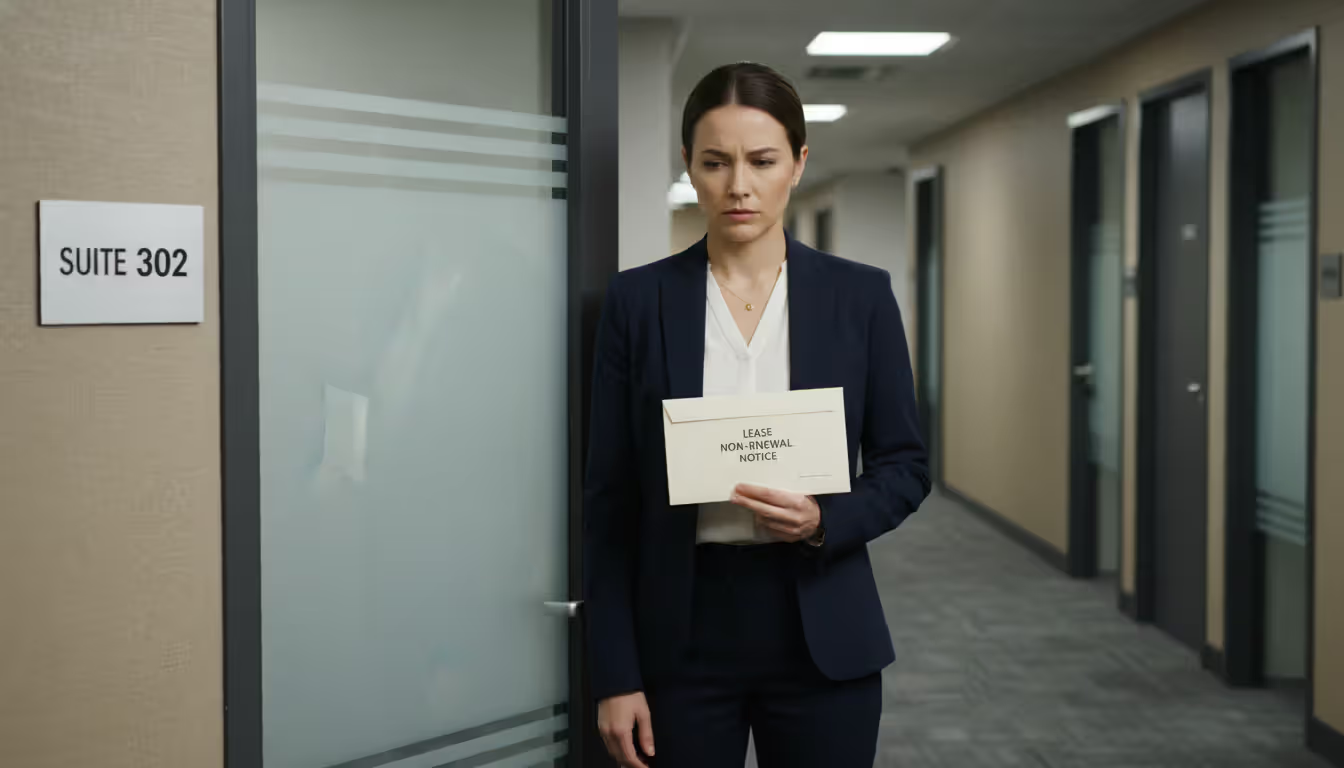
A commercial lease agreement is a legally binding contract between a property owner (landlord) and a business entity (tenant) that grants the tenant the right to occupy and use a commercial property for business purposes. Unlike residential leases, which are heavily regulated by consumer protection laws, commercial leases operate under the principle that both parties are sophisticated actors capable of negotiating their own terms.
The legal purpose of a commercial lease extends beyond simple occupancy rights. It establishes the framework for rent payments, defines maintenance responsibilities, allocates operating expenses, and sets the duration of tenancy. Commercial properties covered under these agreements include retail storefronts, office buildings, industrial warehouses, medical facilities, and restaurant spaces.
The fundamental difference between commercial and residential leases lies in the level of legal protection afforded to tenants. Residential tenants benefit from extensive statutory protections regarding habitability, eviction procedures, and security deposit handling. Commercial tenants, conversely, are presumed to have equal bargaining power and must negotiate their own protections. Courts generally enforce commercial lease terms as written, even when they appear one-sided.
Essential components of a commercial lease agreement include the premises description with exact square footage, lease term and commencement date, base rent amount and payment schedule, permitted use restrictions, maintenance and repair obligations, insurance requirements, and default remedies. Most commercial leases also address tenant improvements, signage rights, parking allocations, and renewal options.
A common mistake business owners make is assuming commercial leases mirror residential agreements. One restaurant owner signed a five-year lease without reading the use clause, only to discover the landlord could prohibit outdoor seating—a critical revenue source for the business model. The lease was enforced as written.
Types of Commercial Lease Agreements
Understanding commercial lease types determines how much you'll actually pay beyond base rent and who handles property expenses. The structure you choose affects your monthly cash flow, budgeting predictability, and operational control.
Gross Lease vs Net Lease
A gross lease (also called a full-service lease) requires the landlord to pay all property operating expenses, including property taxes, insurance, maintenance, and utilities. The tenant pays a single rent amount that covers everything. This structure offers maximum predictability for tenants since monthly costs remain stable, though base rent is typically higher to compensate landlords for assuming expense risk.
Net leases shift some or all operating expenses to the tenant in addition to base rent. The tenant reimburses the landlord for specified property costs, which can fluctuate year to year. While base rent is lower, total occupancy costs vary based on actual expenses incurred.
The gross lease model appeals to small businesses and startups that need budget certainty and lack expertise in property management. Net leases suit established businesses comfortable managing variable expenses in exchange for lower base rent and greater transparency into actual building costs.
Author: Samantha Holloway;
Source: redmonpestmgt.com
Triple Net Lease Explained
A triple net lease (NNN) represents the most tenant-responsible lease structure in commercial real estate. Under this arrangement, the tenant pays base rent plus all three "nets": property taxes, building insurance, and common area maintenance (CAM). Essentially, the tenant assumes nearly all costs associated with the property, leaving the landlord with minimal operational responsibilities.
Triple net leases are standard for single-tenant retail buildings, freestanding restaurants, and bank branches. National retailers often prefer NNN leases because they gain control over maintenance quality and timing. A pharmacy chain, for example, can ensure parking lot repairs happen immediately rather than waiting for a landlord's schedule.
The financial impact can be significant. A tenant paying $25 per square foot in base rent might pay an additional $8-12 per square foot for the three nets, depending on the property's age, location, and tax jurisdiction. Property tax reassessments following a sale can dramatically increase a tenant's costs even though base rent remains unchanged.
One critical negotiation point in NNN leases involves expense caps or limitations on controllable versus uncontrollable expenses. Smart tenants negotiate caps on CAM increases (often 3-5% annually) while accepting that property taxes and insurance fluctuate with market conditions.
Modified Gross and Percentage Leases
A modified gross lease blends elements of gross and net structures. Typically, the landlord pays property taxes and insurance while the tenant pays utilities and their proportionate share of CAM charges. Alternatively, some modified gross leases include all expenses in the base rent for the first year, with the tenant responsible for increases in subsequent years.
This structure works well for multi-tenant office buildings where individual metering of utilities makes sense but centralizing tax and insurance payments simplifies administration. The key is reading the lease carefully to understand exactly which expenses fall on each party.
Percentage leases add a variable rent component based on the tenant's gross sales. Common in retail settings, these leases charge base rent plus a percentage of sales exceeding a specified breakpoint. A clothing boutique might pay $3,000 monthly base rent plus 6% of gross sales over $600,000 annually.
Landlords benefit when tenant businesses thrive, creating aligned incentives. Tenants gain lower base rent, reducing fixed costs during slow periods. The trade-off is providing sales reporting to the landlord and potentially paying significantly more during successful years. Percentage rent typically ranges from 4-8% depending on the business type and profit margins.
Key Terms Every Commercial Tenant Should Understand
Commercial leases contain specialized terminology that directly impacts your financial obligations and operational flexibility. Misunderstanding these terms leads to unexpected costs and restrictions.
Rent escalation clauses increase your rent over the lease term. Fixed escalations specify exact increases (e.g., 3% annually), while CPI-based escalations tie increases to the Consumer Price Index. Fair market value escalations reset rent to current market rates at specified intervals, which can result in dramatic increases in appreciating markets. A tenant who signed a ten-year lease in 2020 with 3% annual escalations pays 34% more in year ten than year one.
Common Area Maintenance (CAM) charges cover expenses for shared spaces in multi-tenant properties: parking lot maintenance, landscaping, snow removal, common area utilities, and property management fees. Landlords typically estimate CAM charges and bill tenants monthly, then reconcile actual expenses annually. Tenants should negotiate the right to audit CAM statements and exclude capital improvements from CAM calculations.
Use clauses restrict how you can operate your business on the premises. A lease might specify "women's clothing retail only" or "general office use." Violating use restrictions gives landlords grounds for lease termination. Before signing, verify the permitted use accommodates your current business model and anticipated expansions. A coffee shop that later wants to serve wine needs a use clause broad enough to cover alcohol service.
Exclusivity clauses prevent landlords from leasing to competing businesses within the same property. A fitness studio might negotiate exclusivity preventing other gyms from opening in the shopping center. These clauses protect your market position but require specific, clear language. "No other fitness facilities" is stronger than "no competing businesses," which invites interpretation disputes.
Maintenance responsibilities divide repair obligations between landlord and tenant. Commercial leases often make tenants responsible for all interior maintenance and repairs, even structural elements like HVAC systems. A medical practice discovered their lease required them to replace a failed $40,000 rooftop HVAC unit, despite the system being original to the 30-year-old building. Negotiate landlord responsibility for structural, roof, and major system repairs.
Insurance requirements mandate specific coverage types and minimum limits. Landlords typically require commercial general liability insurance ($1-2 million is common), property insurance covering tenant improvements and inventory, and business interruption insurance. Many leases also require tenants to name the landlord as an additional insured on liability policies. Review insurance requirements with your broker before signing to confirm coverage is available at reasonable cost.
Commercial Lease Negotiation Strategies
Nearly every commercial lease term is negotiable, yet many tenants accept initial proposals without discussion. Landlords expect negotiation and often include terms they're willing to concede.
Start negotiations by understanding your leverage. Vacant properties, especially during economic downturns, give tenants significant bargaining power. A building with 40% vacancy motivates landlords to offer concessions. Properties with multiple interested tenants limit your negotiating position. Timing matters too—landlords facing mortgage deadlines or fiscal year-end pressures may accept terms they'd otherwise reject.
Author: Samantha Holloway;
Source: redmonpestmgt.com
Tenant improvement allowances provide capital for customizing the space to your needs. Landlords might offer $20-60 per square foot for build-out costs, depending on market conditions and lease length. Negotiate the allowance amount, what expenses qualify (design fees, permits, furniture), and whether unused allowances convert to rent credits. A physical therapy clinic negotiated a $50 per square foot allowance covering specialized flooring, treatment room build-outs, and ADA-compliant restrooms.
Rent-free periods defer rent payments while you build out and open your business. Abatement periods of 1-6 months are common, depending on construction complexity and lease duration. Clarify whether "rent-free" includes only base rent or also excludes operating expenses and utilities. Some landlords offer free base rent but require NNN payment during abatement.
Renewal options grant you the right to extend the lease term at predetermined conditions. A five-year lease with two five-year renewal options gives you potential 15-year occupancy with locked-in terms. Negotiate renewal rent rates in advance (fixed increase or fair market value formula) and reasonable notice periods (6-12 months is typical). Options benefit tenants by providing flexibility without long-term commitment, but you must exercise them properly and timely or lose the right.
Personal guarantee limitations protect your personal assets if the business fails. Landlords often require business owners to personally guarantee lease obligations, making you liable even after corporate bankruptcy. Negotiate "good guy guarantees" that terminate personal liability if you voluntarily vacate and pay rent through departure. Some tenants negotiate guarantee burn-off provisions that eliminate personal liability after meeting specific conditions (e.g., 24 months of timely payments).
Request caps on landlord's remedies in default scenarios. Instead of liability for all remaining rent through lease end, negotiate a termination fee equal to 6-12 months' rent. This limits your exposure while giving landlords meaningful recourse.
Commercial Tenant Rights and Landlord Obligations
Commercial tenant rights are significantly narrower than residential protections, but important legal safeguards still exist.
The covenant of quiet enjoyment is implied in every commercial lease, guaranteeing your right to use the premises without interference from the landlord or anyone claiming superior title. If a landlord repeatedly enters your space without notice or fails to address another tenant creating excessive noise, you may have grounds to claim breach of quiet enjoyment. However, this covenant doesn't protect you from interference by other tenants unless the landlord has specific control obligations in the lease.
Landlords must provide the premises in the condition promised in the lease. If the lease specifies the space will have functioning HVAC, plumbing, and electrical systems, the landlord must deliver accordingly. Unlike residential law, no implied warranty of habitability exists for commercial properties. If the lease is silent on condition, you might receive the space "as-is" with no landlord repair obligations.
ADA compliance responsibility depends on lease language and the scope of work. The Americans with Disabilities Act requires places of public accommodation to be accessible. Generally, landlords must ensure common areas and building entrances comply with ADA standards, while tenants handle compliance within their leased premises. However, if tenant improvements trigger ADA upgrades beyond the leased space (like parking lot modifications), negotiate who bears that cost before signing.
Discrimination protections under the Civil Rights Act and Fair Housing Act apply to commercial leasing, prohibiting landlords from refusing to lease based on race, color, religion, national origin, sex, familial status, or disability. Some states and municipalities extend protections to additional categories like sexual orientation, gender identity, and source of income.
State-specific variations significantly affect tenant rights. California provides stronger tenant protections than many states, including limitations on late fees and specific requirements for security deposit handling even in commercial contexts. Texas, conversely, enforces commercial leases with minimal statutory intervention. Understanding your state's commercial tenancy laws prevents surprise liability.
Commercial Lease Renewal and Termination
Lease expiration doesn't always mean relationship termination. Understanding renewal mechanics and exit strategies prevents costly mistakes.
Renewal clauses come in two forms: options and automatic renewals. Renewal options give tenants the right, but not the obligation, to extend the lease term by providing timely notice. A lease might grant two five-year renewal options exercisable by written notice 180 days before expiration. Missing the notice deadline by even one day typically extinguishes your renewal right, forcing you to negotiate a new lease at current market rates or vacate.
Author: Samantha Holloway;
Source: redmonpestmgt.com
Automatic renewal clauses extend the lease term unless either party provides notice of non-renewal. These clauses favor landlords because tenant inaction results in continued obligation. A business owner who assumed their lease expired after five years discovered an automatic renewal clause had committed them to another five years at increased rent.
Notice periods for non-renewal typically range from 90 to 180 days before lease expiration. Both tenants and landlords must comply with notice requirements. Sending notice by certified mail with return receipt provides proof of delivery if disputes arise. Some leases specify notice methods (certified mail, hand delivery, overnight courier) that must be followed exactly.
Early termination rights are rare in commercial leases unless specifically negotiated. Unlike residential leases, commercial tenants can't simply break a lease by forfeiting a security deposit. You remain liable for rent through the lease term, though landlords have a duty to mitigate damages by attempting to re-lease the space.
Negotiate early termination rights during initial lease discussions. Expansion/contraction clauses let you terminate if your business outgrows or shrinks beyond the space. Co-tenancy clauses in retail leases allow termination if anchor tenants vacate. One restaurant negotiated the right to terminate if a competing restaurant opened within two blocks.
Lease buyouts offer a negotiated exit when early termination rights don't exist. You might pay the landlord 6-12 months' rent to be released from obligations. This approach works when relocating to a better location or when business failure is imminent. Landlords often accept buyouts rather than pursuing lengthy eviction and collection processes.
Default and eviction procedures differ substantially from residential processes. Commercial landlords can typically lock out tenants after minimal notice (sometimes 3-5 days) for non-payment. Some states require judicial eviction even for commercial tenants, while others permit self-help remedies. Defaulting on a commercial lease damages your business credit and triggers personal guarantee liability if you've signed one.
Assignment of Commercial Lease and Subleasing
Assignment transfers your entire lease interest to a new tenant who assumes all obligations. Subleasing grants a third party the right to occupy all or part of the space while you remain liable to the landlord. Most commercial leases prohibit assignment and subleasing without landlord consent, though many include "not to be unreasonably withheld" language.
Landlords evaluate proposed assignees and subtenants based on creditworthiness, business type compatibility, and operational track record. Providing detailed financial information and business plans for the proposed occupant facilitates approval. Even with assignment, landlords often require you to remain secondarily liable if the assignee defaults.
Subleasing makes sense when you need less space but can't terminate your lease. A law firm leased 10,000 square feet but shifted to hybrid work, needing only 6,000. Subleasing 4,000 square feet to a compatible professional services firm offset costs. The firm remained responsible for the master lease but collected sublease rent to cover a portion of their obligation.
Assignment works well when selling your business and the buyer wants your location. The buyer assumes the lease, and if the landlord releases you from liability, you exit cleanly. However, landlords often require assignment fees (one month's rent is common) and may increase rent to current market rates as a condition of approving assignment.
Commercial Lease Due Diligence Checklist
The biggest mistake I see tenants make is focusing exclusively on the base rent number while ignoring the total occupancy cost. A lease with $20 per square foot base rent and uncapped operating expenses can easily exceed a $28 per square foot gross lease. Read every page of the lease, understand your true financial obligation, and negotiate protections before signing—not after problems emerge
— Jennifer Martinez
Thorough due diligence before signing a commercial lease prevents expensive surprises and legal complications.
Zoning verification confirms the property's zoning classification permits your intended use. A property zoned for retail might prohibit medical offices or light manufacturing. Contact the local planning department to verify current zoning and confirm your business use is allowed. Also check for pending zoning changes that could affect operations. One brewery signed a lease only to discover a pending zoning change would prohibit alcohol production in that district.
Environmental assessments identify contamination risks, especially for industrial properties or sites with prior manufacturing use. Phase I Environmental Site Assessments review historical records and conduct site inspections to flag potential contamination. If Phase I reveals concerns, Phase II includes soil and groundwater testing. Tenants can be held liable for environmental cleanup even if contamination predates their occupancy, making this assessment critical.
Title review verifies the landlord actually owns the property and holds the right to lease it. Title searches reveal ownership, existing mortgages, liens, and easements affecting the property. If the property is heavily mortgaged, the lender might have rights that supersede your lease in foreclosure situations. Requesting a subordination, non-disturbance, and attornment (SNDA) agreement protects your lease rights even if the property is foreclosed.
Existing liens and encumbrances can affect your occupancy. Mechanic's liens from unpaid contractors or tax liens from delinquent property taxes might give third parties rights to the property. A title company can identify these issues before you commit.
Personal guarantee implications deserve careful consideration. Signing a personal guarantee pledges your personal assets—home, savings, investments—to satisfy lease obligations if your business fails. Before agreeing to a guarantee, consult with an attorney and consider:
Limiting guarantee duration (e.g., first three years only)
Capping guarantee amount (maximum of 12 months' rent)
Negotiating "good guy" provisions that terminate personal liability upon voluntary vacate
Excluding specific personal assets from guarantee reach
Adding sunset clauses that eliminate guarantees after meeting financial milestones
Author: Samantha Holloway;
Source: redmonpestmgt.com
Review the lease with both an attorney and an accountant. Attorneys identify legal risks and unfavorable terms, while accountants model the total occupancy cost including rent escalations, operating expenses, and CAM charges. This dual review costs $2,000-5,000 but often saves tens of thousands by catching problematic provisions before signing.
Inspect the physical space thoroughly. Check HVAC functionality, plumbing, electrical capacity, roof condition, and ADA accessibility. Hire professionals for systems beyond your expertise. A restaurant tenant discovered after signing that electrical service was insufficient for their kitchen equipment, requiring a $30,000 upgrade they had to fund.
Comparison of Commercial Lease Types
Lease Type
Base Rent
Property Taxes
Insurance
Maintenance
Utilities
CAM Charges
Gross Lease
Tenant
Landlord
Landlord
Landlord
Landlord
Landlord
Net Lease (Single Net)
Tenant
Tenant
Landlord
Landlord
Varies
Landlord
Double Net (NN)
Tenant
Tenant
Tenant
Landlord
Tenant
Landlord
Triple Net (NNN)
Tenant
Tenant
Tenant
Tenant
Tenant
Tenant
Modified Gross
Tenant
Varies
Varies
Varies
Tenant
Tenant (increases only)
Frequently Asked Questions
What is the difference between a commercial and residential lease?
Commercial leases govern business property rentals and offer minimal statutory tenant protections, treating both parties as sophisticated negotiators. Residential leases are heavily regulated with mandatory habitability standards, strict eviction procedures, and security deposit protections. Commercial tenants must negotiate their own protections, while residential tenants receive automatic legal safeguards. Courts enforce commercial lease terms as written, even when one-sided, whereas residential lease provisions violating tenant protection laws are typically unenforceable.
Can I negotiate a commercial lease agreement?
Yes, virtually every commercial lease term is negotiable. Landlords expect negotiation and often include terms they're willing to modify. Common negotiation points include rent amount and escalations, tenant improvement allowances, rent-free periods, renewal options, maintenance responsibilities, personal guarantee limitations, and early termination rights. Your negotiating leverage depends on market conditions, property vacancy rates, lease duration, and your creditworthiness. Even in landlord-favorable markets, professional negotiation typically yields concessions worth thousands of dollars over the lease term.
What happens if I need to break my commercial lease early?
Without an early termination clause, you remain liable for rent through the entire lease term. The landlord must make reasonable efforts to re-lease the space (duty to mitigate), and you're responsible for the difference between your rent and what the landlord obtains from a new tenant, plus re-leasing costs. Options include negotiating a lease buyout (typically 6-12 months' rent), finding an acceptable assignee to assume your lease, or subleasing the space while remaining liable on the master lease. Personal guarantees make you individually liable even if your business entity declares bankruptcy.
Do I have to sign a personal guarantee on a commercial lease?
Landlords commonly request personal guarantees, especially from small businesses and startups, but they're negotiable. Alternatives include providing additional security deposits, offering stronger financial statements from the business entity, or accepting higher rent in exchange for eliminating the guarantee. If you must sign a guarantee, negotiate limitations: cap the guarantee amount, limit the duration (e.g., first three years only), include "good guy" provisions that terminate liability if you voluntarily vacate and pay through departure, or add burn-off clauses that eliminate the guarantee after meeting specific performance milestones.
How long does a typical commercial lease last?
Commercial lease terms typically range from three to ten years, significantly longer than residential leases. Retail leases often run five to ten years because tenants invest heavily in build-outs and need time to recoup those costs. Office leases commonly span three to seven years. Industrial and warehouse leases vary from five to fifteen years. Longer terms benefit tenants through rent stability and amortization of improvement costs, while benefiting landlords through reduced vacancy and turnover expenses. Many leases include renewal options extending the potential occupancy period.
Can a landlord increase rent during my lease term?
Only if the lease includes rent escalation clauses. Most multi-year commercial leases contain escalation provisions that increase rent annually through fixed percentages (e.g., 3% per year), CPI adjustments tied to inflation, or fair market value resets at specified intervals. The lease controls whether and how rent can increase. Without escalation language, rent remains fixed through the lease term. Review escalation clauses carefully during negotiation, as they significantly impact long-term costs. A 3% annual escalation on a ten-year lease increases rent by 34% from year one to year ten.
Commercial lease agreements represent significant financial commitments that shape your business's operational success and profitability. Unlike residential leases with their extensive statutory protections, commercial leases place the burden on you to negotiate favorable terms and understand your obligations before signing.
The lease structure you choose—whether gross, net, or triple net—fundamentally affects your monthly cash flow and budget predictability. Understanding the difference between base rent and total occupancy costs prevents financial surprises. Carefully reviewing key terms like CAM charges, use restrictions, maintenance responsibilities, and escalation clauses reveals your true obligations.
Effective negotiation yields substantial value through tenant improvement allowances, rent-free periods, renewal options, and personal guarantee limitations. Even in challenging markets, professional negotiation typically produces meaningful concessions. Conducting thorough due diligence—verifying zoning, reviewing title, assessing environmental risks, and inspecting physical systems—protects you from costly problems after occupancy begins.
Commercial tenant rights exist but require proactive assertion. Understanding your state's specific laws, the covenant of quiet enjoyment, and ADA compliance responsibilities helps you enforce your rights when issues arise. Planning for lease renewal or termination well in advance preserves your options and prevents automatic renewals or missed notice deadlines from forcing unfavorable outcomes.
Investing time and professional resources in reviewing and negotiating your commercial lease agreement pays dividends throughout your tenancy. The lease governs your relationship with the landlord for years, affects your business's financial health, and determines your operational flexibility. Approach it with the seriousness it deserves, and you'll establish a foundation for business success.
Property taxes in land contracts confuse many buyers and sellers. While contracts typically assign responsibility to buyers, sellers remain legally liable until the deed transfers. Understanding this split obligation and the consequences of unpaid taxes is critical for protecting your investment
A sublease agreement creates a legal bridge between your existing lease obligations and someone else's temporary housing needs. Understanding the three-party relationship, securing landlord approval, and drafting comprehensive agreements protects your security deposit and rental history
A residential lease agreement creates legally binding obligations for both tenants and landlords. This comprehensive guide explains standard lease clauses, rights and responsibilities, security deposit rules, renewal processes, subletting options, and how to break a lease legally while avoiding costly mistakes
Persistent noise, odors, or encroachment from neighbors can cross the line into legal nuisance. Understand what qualifies as actionable nuisance under US law, the difference between private and public nuisance, and the legal steps to resolve disputes—from documentation to court remedies
The content on this website is provided for general informational and educational purposes only. It is intended to explain concepts related to real estate law, property rights, leases, liens, zoning, landlord-tenant disputes, and litigation.
All information on this website, including articles, guides, and examples, is presented for general educational purposes. Legal outcomes may vary depending on jurisdiction, property type, and individual circumstances.
This website does not provide legal advice, and the information presented should not be used as a substitute for consultation with qualified attorneys or real estate professionals.
The website and its authors are not responsible for any errors or omissions, or for any outcomes resulting from decisions made based on the information provided on this website.