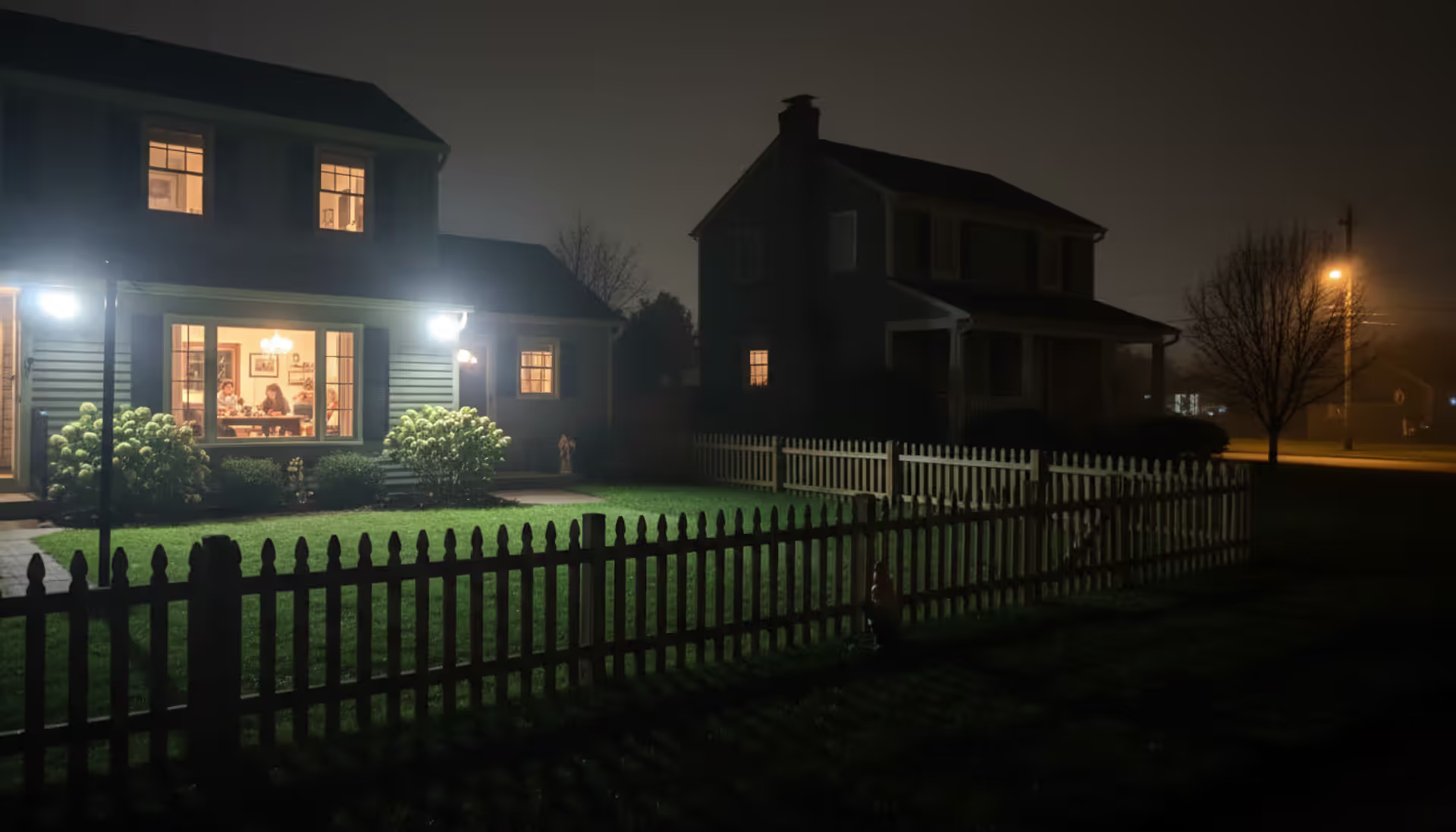
Your neighbor's dogs started barking at midnight again. For the third week straight, their outdoor parties don't wrap up until 2 a.m., and you've got work in the morning. Or maybe it's the constant marijuana smoke drifting into your kids' bedroom, the junk cars piling up along your shared fence line, or the floodlights they installed that turn your backyard into a stadium at night.
At what point does annoying become illegal? US property law says you've got a right to peaceful enjoyment of your home—but there's a difference between behavior that bugs you and conduct a court will actually do something about.
What Qualifies as a Nuisance Neighbor Under US Law
Here's the thing: your neighbor can paint their house neon purple, park a rusty pickup in their driveway, and hang political signs you hate. You might despise it. Your property value might even take a hit. But none of that makes it a legal nuisance.
Courts use something called the "reasonable person" test. Would someone with normal sensitivities—not someone who's particularly fussy or sensitive—find the problem substantial and unreasonable? One loud party? Probably not actionable. Every Saturday night for six months? Now we're talking.
Three things have to line up for legal nuisance. First, the interference can't be minor—it needs to be substantial. Second, it must happen repeatedly or continuously, not just once. Third, it has to be unreasonable given the circumstances. Your neighbor running a woodworking business from their garage might make noise, but if they stick to business hours and follow zoning rules, judges often won't intervene.
Think about nuisance law real estate principles this way: owning property gives you rights, but those rights have limits. You can't do whatever you want if it seriously harms your neighbor's ability to use their own land.
Documentation transforms subjective complaints into objective evidence. Courts need to see patterns, not isolated incidents. The reasonable person standard means judges evaluate whether the average homeowner—not someone with unusual sensitivity—would find the interference intolerable. Keep detailed logs with dates, times, duration, and specific impacts on your property use
— Michael Chen
The practical difference between "annoying" and "nuisance" matters enormously. Your neighbor's terrible taste in lawn ornaments, their weird guests, or their overgrown grass—courts generally won't touch these unless specific ordinances are violated. Property owners get broad freedom to use their land. Courts only step in when that use creates real, measurable harm to others.
Private Nuisance vs Public Nuisance in Neighbor Disputes
Who can sue, what you can recover, and which court handles your case—all of this depends on whether you're dealing with private or public nuisance. Understanding what is a private nuisance compared to public nuisance shapes your entire legal strategy.
Private Nuisance Between Neighbors
Private nuisance hits your specific property rights. When tree branches from next door punch holes in your roof during storms, when their pit bull charges your fence every time you step outside, when their security lights blast through your bedroom window all night—that's private nuisance. You're the one affected, so you're the one who can sue.
The interference has to connect directly to your property interest. Let's say your neighbor throws parties you find obnoxious. If you just don't like their friends, you can't sue. But if those guests block your driveway every weekend or trample through your garden as a shortcut, now you've got standing.
Author: Daniel Crosswell;
Source: redmonpestmgt.com
Private nuisance vs public nuisance cases get evaluated totally differently. With private nuisance, courts zoom in on your particular harm. They'll look at what kind of neighborhood you're in (a rooster might fly in farm country but not in suburbs), how often and how severely you're affected, and whether your neighbor has any legitimate reason for what they're doing.
Context matters hugely. Industrial noise in a mixed-use zone gets judged differently than the same noise in a residential neighborhood. Courts recognize that people who choose to live near commercial areas accept some level of disturbance.
When Neighbor Behavior Becomes a Public Nuisance
Public nuisance affects the whole community or a significant chunk of it. Your neighbor running a meth lab, hoarding garbage until it draws rats that infest the whole block, or creating dangerous conditions that spill onto public streets—that's crossed into public nuisance territory.
Here's the key split: public nuisance harms community rights, not just individual property. Typically, only government prosecutors or city attorneys bring these cases. However, there's an exception. If you suffer "special injury"—harm that's different in type, not just degree, from what everyone else experiences—you might be able to sue as a private citizen.
Picture a neighbor who collects junked cars that leak oil and transmission fluid into the street. That's a public nuisance because it creates environmental and safety hazards affecting everyone. But if those fluids also drain specifically onto your lawn, killing your grass and contaminating your soil, you've suffered special injury beyond the general public harm. You could potentially bring your own lawsuit while the city pursues enforcement separately.
Common Types of Neighbor Nuisance Claims
Certain neighbor problems show up in court over and over. Recognizing these patterns helps you figure out whether what you're experiencing crosses legal lines.
Noise complaints dominate neighbor litigation. But noise nuisance property law distinguishes between regular life sounds and unreasonable disturbance. Footsteps from the apartment upstairs, kids playing in the yard during afternoon hours, occasional music at reasonable volume—courts consider this normal. Amplified bass at midnight, commercial machinery running in residential areas, or dogs barking nonstop for hours? That's potentially actionable. Many cities set specific decibel limits and designated quiet hours (often 10 p.m. to 7 a.m.), which makes proving violations more straightforward.
Odor complaints need evidence that smells are offensive to normally-sensitive people and actually interfere with using your property. Your neighbor grilling burgers once a week doesn't qualify. A neighbor raising 40 chickens whose stench makes it impossible to open your windows might. Agricultural zones often have "right to farm" laws protecting farmers from nuisance suits, which complicates rural cases.
Encroachment happens when physical things cross your property line. Tree roots buckling your driveway, branches dropping leaves and debris on your roof, fences built six inches over the boundary—these create both nuisance and trespass issues. You might need a property survey (expect to pay $400-$1,200) to prove exactly where the line sits.
Light pollution from commercial signage, excessive security lighting, or badly-aimed floodlights can constitute nuisance when it genuinely disrupts sleep or makes rooms unusable. Courts weigh the light's intensity and duration against whether it serves legitimate security needs. A motion-activated light that clicks on when animals pass by probably won't meet the threshold; permanently-lit stadium lights pointing at your windows might.
Pet problems go beyond noise. Animal waste, threatening behavior, unsanitary conditions all count. One dog occasionally barking differs vastly from six dogs creating constant disturbance or health hazards.
The nuisance per se definition covers activities that violate existing statutes or ordinances. If your neighbor operates a commercial auto body shop in a residentially-zoned area, that zoning violation might constitute nuisance per se—you don't need to prove actual harm because the law already prohibits it. Most neighbor disputes, though, involve "nuisance in fact," where you must demonstrate that specific conduct causes substantial interference.
Court order stopping the noise, money for sleep deprivation and reduced property value
3-8 months
Noxious odors
Diary tracking frequency and intensity, photos when visible, doctor visits for health impacts
Court-ordered elimination of source, compensation for medical costs and decreased enjoyment
4-10 months
Encroachment
Professional survey establishing boundary, dated photographs, contractor estimates for repairs
Forced removal of intrusion, reimbursement for damage already caused
2-6 months
Light pollution
Night photos showing severity, sleep diary, doctor's note if causing health issues
Restrictions on operating hours or light direction, requirement to install shielding
3-7 months
Dangerous pets
Animal control reports, medical records from bites, statements from other neighbors
Order removing animal from property, payment for injuries and vet bills
2-9 months
Property maintenance
Municipal code violations, time-series photos, appraisal showing value impact
Court-mandated cleanup, city fines, compensation for value loss
4-12 months
Steps to Take Before Filing a Legal Complaint
Figuring out how to deal with nuisance neighbor legally starts long before you ever see a courtroom. Judges expect you to try reasonable solutions first—and they'll ask what you did before filing suit.
Start documenting immediately. Grab a notebook or create a spreadsheet. Every single incident gets an entry: date, start time, end time, what happened, how it affected you. "March 15, 2024, 11:47 p.m. - 2:20 a.m.: Loud bass music from backyard, couldn't sleep, windows rattling." Take photos or videos showing the problem. For noise issues, download a decibel meter app (many are free). Save every text, email, or letter exchanged. This log becomes your most powerful evidence.
Try talking to your neighbor first. Yeah, it might feel awkward. Many people genuinely don't realize they're causing problems—especially with noise, since they're not on the receiving end. Keep it short, calm, and specific. "Hey, the music after 11 on weeknights makes it tough for my kids to sleep before school. Could you wrap up earlier or move the speakers?" Skip the accusations or lectures. Sometimes this actually works.
Author: Daniel Crosswell;
Source: redmonpestmgt.com
If conversation goes nowhere, send a formal letter. The nuisance neighbor complaint process typically requires proving you gave notice. Type a letter (not handwritten) describing exactly what's happening, when, how it affects you, and asking them to stop. Send it certified mail with return receipt. Keep copies of everything. This letter serves multiple functions: it shows you tried to resolve things, it proves the neighbor knows about the problem, and some legal remedies require this notice before you can proceed.
Check your HOA rules if you've got one. Pull out your CC&Rs (those covenants, conditions, and restrictions you got when you bought the place). HOAs typically have enforcement procedures for noise, maintenance, pet violations, and more. Filing an HOA complaint might solve your problem without lawyers. Also review municipal codes. Most cities have noise ordinances, property maintenance requirements, animal regulations, and zoning rules. Code enforcement complaints sometimes get results faster than lawsuits.
Talk to a property lawyer before things escalate further. Many offer consultations for $150-$300. They'll tell you honestly whether your situation meets legal standards, what it'll cost to pursue, and whether you've got better options. Sometimes just having an attorney send a demand letter ($500-$800) prompts settlement without ever filing suit.
Consider mediation seriously. Many courts actually require it before hearing nuisance cases. A neutral mediator (typically $100-$300 per party for a session) helps you and your neighbor negotiate solutions. Mediation costs way less than litigation, resolves faster, stays confidential, and keeps the relationship salvageable. Even unsuccessful mediation shows the court you made good-faith efforts.
Here's what not to do: don't confront your neighbor while angry (you'll look unreasonable), don't threaten them, and don't retaliate with your own nuisance. These mistakes trash your credibility and could get you sued.
Legal Remedies for Nuisance Neighbors
When talking fails and mediation goes nowhere, courts offer several tools. Picking the right one depends on whether you want the behavior stopped, money for damages, or both.
Abating a Nuisance Through Court Action
Abating a nuisance means making the problem go away. Courts order defendants to take action: tear down that shed built over the property line, move those speakers away from shared walls, trim dangerous tree branches, stop running commercial operations from their garage. Abatement focuses forward—stopping future harm instead of paying for past damage.
Judges issue these orders when cash alone won't fix your problem. If your neighbor's dead tree is about to crash through your roof, money doesn't help—removing the tree does. Courts craft abatement orders as equitable remedies, meaning judges use discretion to balance both sides' interests.
Breaking an abatement order triggers contempt charges. We're talking potential fines or jail time. This makes abatement incredibly effective against stubborn neighbors who ignore polite requests. Courts won't order abatement for trivial complaints or situations where fixing the problem would cost the defendant vastly more than it benefits you.
Suing Your Neighbor for Damages
Suing neighbor for nuisance to collect money addresses harm you've already suffered. Damages can include your property's decreased value (needs an appraiser's report, typically $300-$500), repair costs (save every receipt), medical bills if the nuisance affected your health, lost wages, and sometimes compensation for your annoyance and lost enjoyment.
You've got to prove actual damages with real evidence. Bringing an appraiser who testifies your home value dropped $25,000 because of the neighbor's junkyard carries weight. Saying "I think my house is worth less" doesn't. Receipts for foundation repairs caused by tree roots, medical bills for stress-related conditions—concrete documentation wins cases.
A few states allow punitive damages when defendants act maliciously or with complete disregard for your rights. These extra damages punish especially bad behavior and discourage repeat offenses. But the bar for getting punitive damages sits quite high—you need proof of intentional or reckless conduct, not just negligence.
Damage awards can hit six figures when nuisance severely impacts property value or causes major harm. However, attorney fees and court costs often exceed the damages you'd win in smaller cases. For claims under $10,000, small claims court (where lawyers often aren't allowed) or mediation makes more economic sense.
Getting an Injunction to Stop the Behavior
An injunction against nuisance neighbor is a court order commanding them to stop specific behavior. Temporary restraining orders (TROs) provide emergency relief lasting days or weeks. Preliminary injunctions keep things stable while the lawsuit proceeds. Permanent injunctions end the case by permanently restricting what the defendant can do.
Getting an injunction requires proving four elements: (1) you'll suffer harm that can't be undone if the court doesn't act, (2) money damages won't adequately fix the situation, (3) you'll probably win the underlying case, and (4) granting the injunction serves the public interest.
Author: Daniel Crosswell;
Source: redmonpestmgt.com
Injunctions work powerfully because they prevent ongoing harm. A neighbor who's enjoined from running power tools after 9 p.m. faces contempt if they fire up the table saw at midnight. This threat makes injunctions highly effective for continuous nuisances where paying damages won't stop the behavior.
Courts write injunctions narrowly while still giving you relief. Instead of ordering a neighbor to remove all outdoor lights, a judge might require redirecting fixtures away from your windows or limiting hours to before 11 p.m.
How Nuisance Law Affects Property Rights and Real Estate
Nuisance law real estate consequences reach beyond immediate neighbor fights, touching property values, sales transactions, and landlord-tenant dynamics.
Property values take real hits from neighboring nuisances. Constant noise, persistent smells, or eyesore conditions reduce market appeal and sale prices. When appraisers evaluate homes, they factor in neighborhood conditions. Documented nuisance that demonstrably decreased your property's value creates recoverable damages. One homeowner in suburban Atlanta recovered $40,000 after proving a neighbor's poorly-maintained rental properties reduced nearby home values.
Sellers face disclosure obligations that shift by state, but most require revealing known material defects and conditions affecting value. If you know about a neighbor nuisance and hide it from buyers, they can sue you for fraud after closing. Courts in California, Florida, and New York have awarded rescission (unwinding the sale) or substantial damages when sellers concealed ongoing neighbor problems.
Landlords carry liability when their tenants create nuisances. If a landlord knows—or reasonably should know—their tenant is disturbing neighbors and does nothing, the landlord faces potential lawsuits from affected properties. This particularly applies when tenants repeatedly violate lease terms and landlords fail to enforce them. Smart landlords include anti-nuisance clauses in leases and respond quickly to complaints by issuing warnings or starting eviction when warranted.
Easements and nuisance intersect in complicated ways. An easement grants someone rights to use your property for specific purposes—a shared driveway, for instance. Easement holders must exercise those rights reasonably, though. Using a driveway easement for occasional access is one thing; running heavy commercial trucks through it 20 times daily might constitute nuisance. Conversely, blocking a valid easement can create a nuisance claim by the easement holder.
Title insurance won't typically cover nuisance claims because these involve conduct, not title defects. If you discover physical encroachments during title searches, those might get addressed before closing. But ongoing behavioral nuisances fall outside standard title insurance coverage.
Zoning and land use regulations prevent many nuisances before they start. Residential zoning prohibits commercial activities that generate noise, traffic, or disturbances. When neighbors violate zoning laws, affected property owners can complain to zoning enforcement or pursue judicial relief through mandamus actions.
Frequently Asked Questions About Nuisance Neighbors
How long do I have to file a nuisance claim against my neighbor?
Time limits for nuisance lawsuits depend on your state—anywhere from two years (Tennessee, Louisiana) to six years (Maine, North Dakota). The clock typically begins when you discover the problem, or reasonably should have discovered it. But here's where it gets tricky: ongoing nuisances create new causes of action each day they continue. You might file suit five years after the nuisance started and still recover damages for the statute of limitations period before filing, even though you can't reach back to day one. Don't wait, though—evidence gets harder to gather and witnesses' memories fade.
What evidence do I need to prove a nuisance?
Build your case with detailed incident logs showing dates, times, duration, and exactly what happened each time. Add photographs or videos capturing the problem in action. Collect statements from other affected neighbors (they make credible witnesses since they've got no financial stake in your case). Grab copies of police reports or code enforcement complaints you've filed. Hire experts when needed—acoustical engineers for noise cases ($2,000-$5,000), property appraisers for value impacts ($400-$700), environmental consultants for odor or contamination issues ($1,500-$4,000). If the nuisance is affecting your health, get medical documentation. Save copies of every letter, email, or text where you notified the neighbor. The more objective, measurable evidence you gather, the stronger your position. Judges give substantial weight to systematic documentation over vague complaints.
Can I be sued for retaliating against a nuisance neighbor?
Absolutely. Fighting fire with fire creates legal exposure even when your neighbor started it. Playing your own loud music in response, intentionally creating odors, harassing them, or damaging their property opens you to counterclaims. Courts expect you to use legal channels, not self-help remedies. Retaliation destroys your credibility with judges—you'll look just as bad as (or worse than) your neighbor. Some plaintiffs have actually lost otherwise-valid nuisance cases because their retaliatory conduct convinced judges both parties were equally at fault. Document their violations, send formal notices, file complaints with appropriate authorities, and let the legal system handle it.
Is mediation required before suing a neighbor for nuisance?
This depends on where you live and sometimes which court you file in. Some jurisdictions make mediation mandatory for neighbor disputes before trial. Others strongly encourage it without requiring it. Even when optional, mediation offers real advantages: you'll spend $500-$1,500 total instead of $10,000-$50,000 on litigation, reach resolution in weeks instead of years, keep discussions confidential (unlike public court proceedings), and preserve at least the possibility of civil coexistence afterward. Courts can only award money or issue orders; mediators help craft creative solutions like staggered schedules or physical modifications. Many nuisance disputes settle once a neutral third party helps both sides see the situation realistically. Check your local court rules or ask an attorney whether your jurisdiction has pre-suit requirements.
What damages can I recover in a nuisance lawsuit?
You can collect money for your property value decrease caused by the nuisance (proven through appraisal), costs fixing physical damage, medical expenses if the nuisance hurt your health, lost rental income if the problem made your property unrentable, and depending on your state, compensation for annoyance, discomfort, and loss of enjoyment. Some states allow recovering attorney's fees and costs if you win, either under specific statutes or "prevailing party" provisions. Punitive damages become available in egregious cases involving malicious or reckless behavior—one Texas jury awarded $200,000 in punitive damages against a neighbor who deliberately played loud music for months after multiple court warnings. Track every financial loss meticulously with receipts, bills, and professional evaluations.
Does homeowner's insurance cover nuisance claims?
Policy language controls this, but here's the general pattern. Standard homeowner's policies exclude intentional acts, so deliberately creating a nuisance won't be covered. Nuisance claims arising from negligent property maintenance or accidental conditions might trigger your liability coverage. If you're suing a neighbor for nuisance, your own insurance typically won't cover your costs—though some umbrella policies include legal expense coverage for claims you bring. If someone sues you for nuisance, notify your carrier immediately since policies require prompt notice (usually within 30 days). Your insurer might defend you or declare no coverage depending on whether the claim alleges intentional or negligent conduct. Don't assume coverage exists—read your specific policy or talk to your agent before relying on insurance to handle nuisance claims.
Handling nuisance neighbors takes patience, solid documentation, and clear understanding of legal boundaries. Not every annoying habit qualifies as actionable nuisance—judges intervene only when interference is substantial, unreasonable, and continuing.
Before you hire lawyers and file suits, exhaust reasonable alternatives. Talk directly with your neighbor (yeah, it's uncomfortable, but it sometimes works). Send formal written notice. File HOA complaints or code enforcement reports. Try mediation. Courts will ask what you did before suing, and "nothing" isn't a good answer.
When you do need legal action, match remedies to your goals. Want the behavior stopped? Seek abatement or an injunction. Need compensation for harm already suffered? Sue for damages. Each remedy follows different procedures, costs different amounts, and takes different timeframes.
You've got legitimate rights to peaceful enjoyment of your property, but your neighbor has rights too. Courts apply that reasonable person standard, examine all the circumstances, and when possible create solutions that minimize harm to everyone involved.
Strong evidence wins cases. Generic complaints lose them. Those detailed logs, time-stamped photos, witness statements, expert reports, and formal correspondence create the factual foundation judges need to rule in your favor. Start this documentation early—before you're certain you'll sue—because it captures patterns that isolated incidents can't show.
Neighbor nuisance fights create stress and can spiral out of control fast. Getting legal advice early helps you understand whether your situation actually meets legal thresholds, which remedies make sense, and what pursuing them will realistically cost in time and money. Many cases settle once attorneys give both sides objective assessments of likely trial outcomes.
Your home should give you peace, not constant conflict. When a neighbor's conduct crosses from irritating to legally actionable, knowing your rights and available remedies puts you in position to protect your property and restore your peace of mind.
Property taxes in land contracts confuse many buyers and sellers. While contracts typically assign responsibility to buyers, sellers remain legally liable until the deed transfers. Understanding this split obligation and the consequences of unpaid taxes is critical for protecting your investment
A sublease agreement creates a legal bridge between your existing lease obligations and someone else's temporary housing needs. Understanding the three-party relationship, securing landlord approval, and drafting comprehensive agreements protects your security deposit and rental history
A residential lease agreement creates legally binding obligations for both tenants and landlords. This comprehensive guide explains standard lease clauses, rights and responsibilities, security deposit rules, renewal processes, subletting options, and how to break a lease legally while avoiding costly mistakes
Security deposits create confusion and conflict when tenants and landlords don't understand the rules. This comprehensive guide explains state laws, return timelines, allowable deductions, and how to resolve disputes—with practical examples and expert insights for both parties
The content on this website is provided for general informational and educational purposes only. It is intended to explain concepts related to real estate law, property rights, leases, liens, zoning, landlord-tenant disputes, and litigation.
All information on this website, including articles, guides, and examples, is presented for general educational purposes. Legal outcomes may vary depending on jurisdiction, property type, and individual circumstances.
This website does not provide legal advice, and the information presented should not be used as a substitute for consultation with qualified attorneys or real estate professionals.
The website and its authors are not responsible for any errors or omissions, or for any outcomes resulting from decisions made based on the information provided on this website.