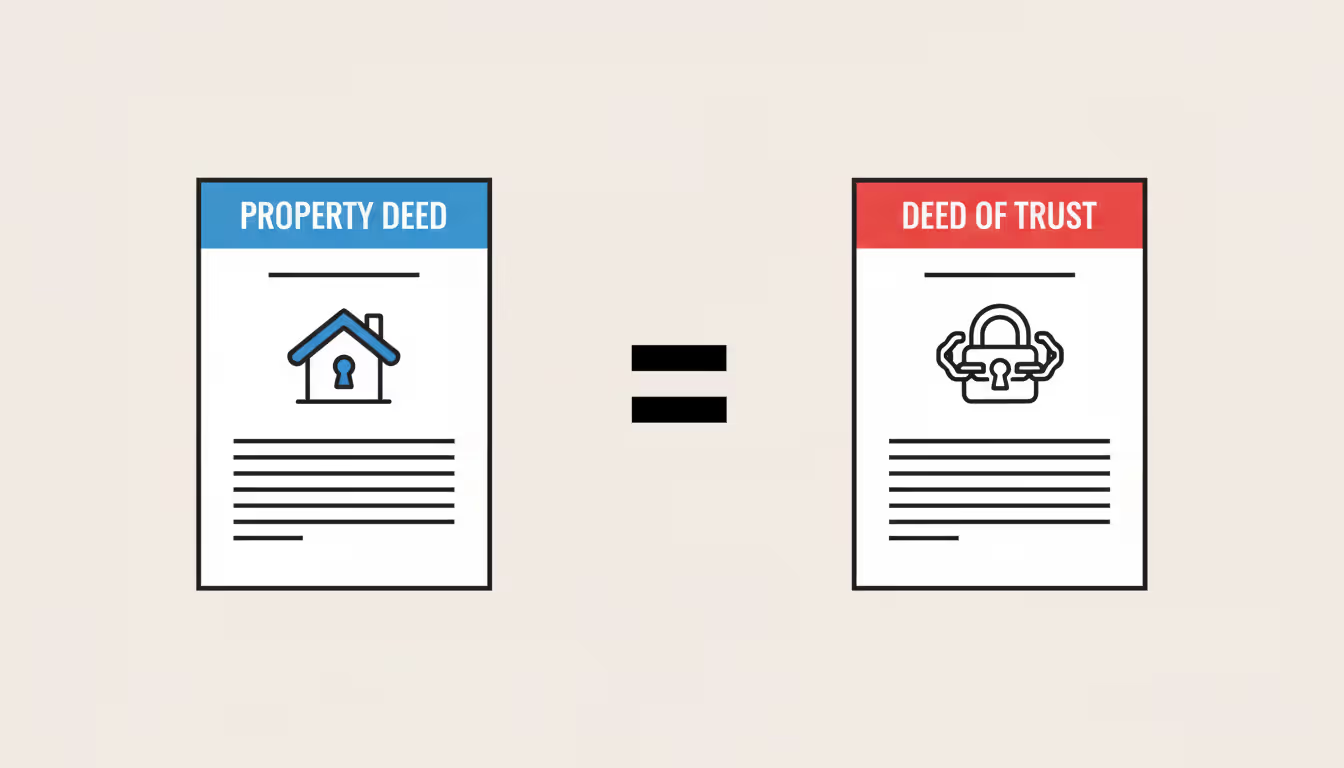
Sitting at the closing table, you'll sign multiple documents—and one of them is likely a deed of trust. Many borrowers assume this paperwork confirms their ownership of the property. Here's what actually happens: the deed of trust serves as a security instrument for your loan, not documentation of your ownership rights. The title deed sitting in your closing packet serves that purpose instead.
This mix-up creates real problems. Borrowers sometimes believe their lender owns their home, or they don't understand why they need to clear the deed of trust when selling. The documents look similar, both get filed at the county office, and both include your property's legal description. Yet they accomplish completely separate legal objectives in your real estate transaction.
What a Deed of Trust Actually Is
Think of a deed of trust as your lender's insurance policy. This three-party security arrangement protects the lending institution's financial stake in your property throughout your repayment period. Unlike states using traditional mortgages, approximately 30 states employ this system because it streamlines the foreclosure process should borrowers default.
Here's the mechanics: when you finance a home purchase in deed of trust states, you transfer bare legal title to a neutral third party called the trustee. This party holds that limited title for your lender's benefit until you've completed all loan payments. Meanwhile, you retain what lawyers call "equitable title"—meaning you possess every practical ownership benefit including residency rights, improvement privileges, and equity accumulation.
The arrangement remains conditional throughout your loan term. You maintain complete control over the property for living, renting, renovating, or any legal purpose. Your lender maintains a secured claim, authorizing the trustee to conduct foreclosure proceedings if you breach the loan agreement. The deed of trust contract specifies your payment obligations, property maintenance requirements, and the remedies available to your lender when defaults occur.
County recording creates a public lien against your real estate. This encumbrance prevents you from selling or refinancing without settling the debt, but the recording doesn't transform this security instrument into an ownership certificate. It establishes public notice that your lending institution holds enforceable claims against the property until you satisfy the outstanding balance.
States preferring this system include California, Texas, Virginia, Colorado, Arizona, Nevada, and most jurisdictions west of the Mississippi River. The foreclosure advantages drive this preference—trustees can complete the process in weeks rather than the months or years required in mortgage states.
Who Holds What: Trustor, Trustee, and Beneficiary Roles
Three distinct participants create the legal framework that separates deeds of trust from traditional two-party mortgages.
The Trustor's Position
As the borrower, you assume the trustor role in this arrangement. You've conveyed limited legal title to the trustee while keeping equitable ownership and every meaningful property right. Your name appears on the warranty deed or grant deed—the actual ownership document—identifying you as the rightful owner.
Your daily experience reflects complete ownership. You decide whether to occupy the home personally or generate rental income. You choose which improvements to make, claim mortgage interest tax deductions, benefit from property appreciation, and control when to sell. The deed of trust doesn't restrict these ownership privileges—it simply creates consequences if you violate specific obligations.
Those obligations center on financial performance and property preservation. Timely loan payments, continuous insurance coverage, current property tax payments, and adequate property maintenance all fall under your responsibilities. Breaking these commitments triggers the default provisions written into your deed of trust contract.
The Trustee's Function
A neutral third party—typically a title company, escrow firm, or licensed attorney—serves as trustee. This entity doesn't represent your interests or your lender's agenda. Instead, the trustee holds bare legal title on behalf of both parties and executes actions prescribed by the deed of trust terms and state foreclosure statutes.
During normal loan performance, trustees remain completely inactive. They don't process your monthly payments, mail account statements, answer servicing questions, or participate in loan management. The trustee springs into action only when your lender declares default and requests foreclosure proceedings. At that point, the trustee initiates and conducts the non-judicial foreclosure process culminating in a public auction.
State regulations governing trustee qualifications vary significantly. California permits title companies, attorneys, banks, and certain trust corporations to serve in this capacity. Georgia requires attorneys. The trustee must execute strict procedural compliance during foreclosure—missing required notices or timeline requirements can void the entire sale and expose the trustee to liability.
The Beneficiary's Rights
Your lending institution occupies the beneficiary position because they benefit from the security arrangement protecting their loan. The beneficiary holds your promissory note representing your debt obligation and receives your monthly payments. When you default, the beneficiary instructs the trustee to begin foreclosure.
Critical point: the beneficiary never holds title to your property in any form. They possess a lien—a security interest granting rights to your property only as loan collateral. This distinction matters substantially if you enter bankruptcy or face creditor judgments. The lender can claim rights only to the collateral securing their debt, not to the property as an ownership interest.
Authority to conduct foreclosure sale upon beneficiary's request following default
Beneficiary
Lender, Loan Servicer, Mortgagee
Financial institution providing loan funds
Secured interest in collateral, payment collection rights, foreclosure instruction authority
Deed of Trust vs Title: Which One Proves Ownership?
The confusion disappears once you understand that your property title deed establishes ownership while the deed of trust establishes a debt secured by that property.
Author: Daniel Crosswell;
Source: redmonpestmgt.com
During your home purchase, you receive a warranty deed, grant deed, or similar instrument transferring ownership from the seller directly to you. This ownership transfer document gets recorded first in county records, establishing your legal status as the property owner. You appear as the "grantee" receiving ownership, while the seller appears as the "grantor" transferring it. The language typically includes phrases like "conveys and warrants title" or "grants all interest in the property."
Moments later during the same recording session, the deed of trust enters public records. This creates a lien against the property you just acquired through the ownership deed. The deed of trust references your property's legal description but executes an entirely different function—creating collateral security for your lender rather than transferring ownership to anyone.
Compare the actual documents at your county recorder's website. The ownership deed shows the seller granting property to you with warranty language protecting against title defects. The deed of trust identifies you as the trustor conveying limited title to the trustee, with your lender named as beneficiary. The text focuses on securing repayment obligations rather than transferring complete ownership interests.
When someone researches "Who owns 123 Main Street?" the answer comes exclusively from title records tracing ownership deeds, never from deeds of trust. Title insurance policies, preliminary title reports, and property tax assessments all cite the ownership deed as the authoritative source. Deeds of trust appear only in the encumbrances section—items affecting the property without changing its ownership.
This matters practically when you sell. Buyers don't inherit or assume your deed of trust. Instead, your closing agent uses sale proceeds to pay off the loan balance, the trustee files a reconveyance releasing the lien, and buyers who need financing obtain their own deed of trust from their lender. Your ownership interest transfers to the buyer via a new ownership deed while the old deed of trust simply disappears through payoff and reconveyance.
How a Deed of Trust Works Through the Loan Lifecycle
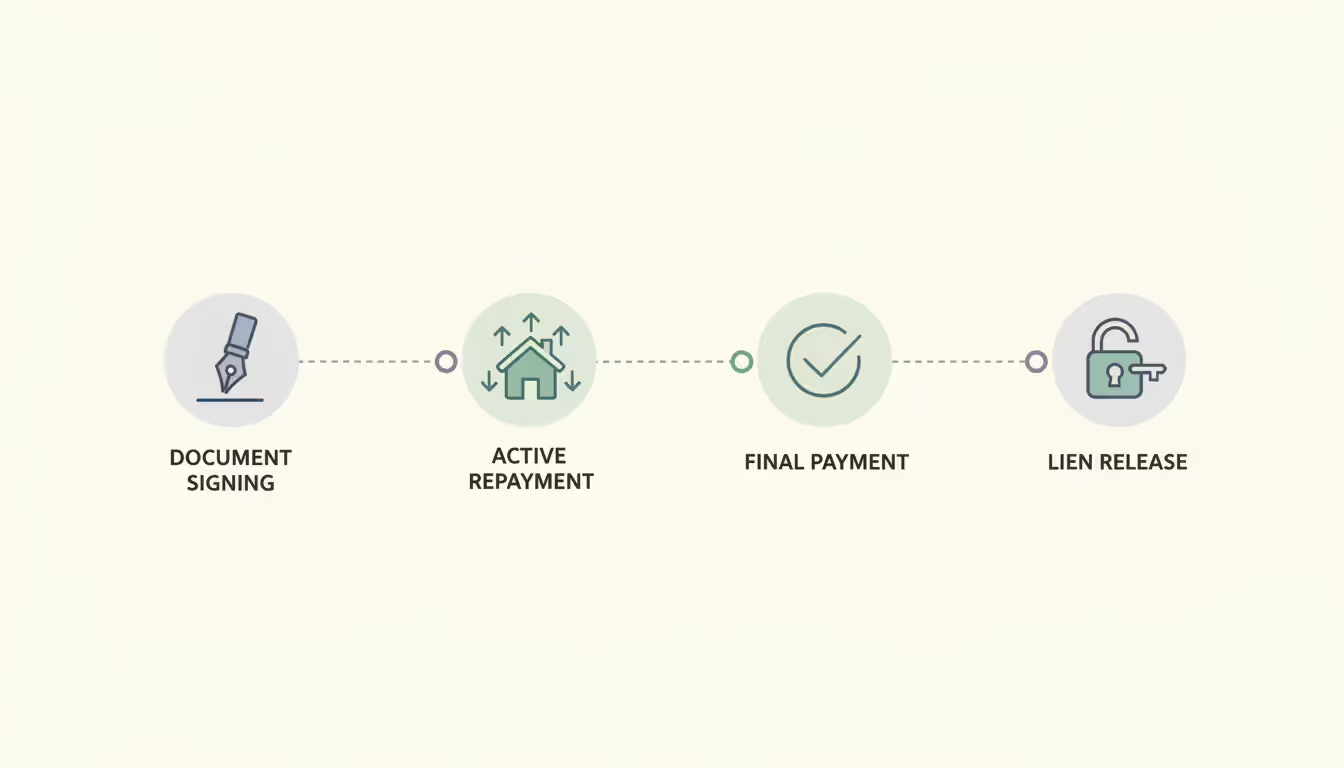
Following the timeline clarifies what this security instrument does across different stages.
Origination phase: Your closing includes signing the promissory note establishing your repayment obligation and the deed of trust securing that obligation. The settlement company files the deed of trust in public records, establishing the lien. Your lender receives no possession rights—you leave closing with house keys and complete usage authority over your new property.
Lien priority considerations: Multiple loans against one property create competing security interests. Perhaps you obtained an 80% first loan and a 10% second loan to avoid PMI. Recording sequence typically determines priority position. The first-recorded deed of trust holds senior position, entitling that lender to first payment from foreclosure proceeds. Second-position lenders accept higher risk, explaining their elevated interest rates. You might have multiple deeds of trust encumbering your property simultaneously, but only one ownership deed establishing who owns it.
Active loan period: Throughout the repayment years, your deed of trust sits in county files creating a cloud on your title. You can't complete a sale or refinance without addressing this encumbrance. Prospective buyers won't purchase property carrying existing liens, and title insurers won't issue policies until previous liens clear.
Refinancing requires paying off your original loan so the original trustee can file a reconveyance deed removing that lien. Simultaneously, your new lender records a fresh deed of trust securing the refinance loan. You remain the continuous owner—only the security instruments change.
Author: Daniel Crosswell;
Source: redmonpestmgt.com
Loan satisfaction and release: After your final payment, the lender directs the trustee to reconvey the limited title back to you. The trustee records a deed of reconveyance eliminating the lien from public records. This doesn't transfer ownership because you owned the property throughout the loan term. It simply acknowledges debt satisfaction and security interest termination.
Reconveyance sometimes gets delayed when lenders or trustees fail to record promptly. California mandates reconveyance within 21 days post-payoff. Other states impose 30-90 day deadlines. If your reconveyance doesn't appear in county records within 60-90 days after paying off the loan, contact your lender immediately. Uncleared liens complicate future transactions even though you've satisfied the underlying debt.
Deed of Trust vs Mortgage: Key Differences
The mortgage is not the house. The house is yours; the mortgage is just the mechanism that helped you get it
— Suze Orman
Both instruments secure real estate financing, yet they operate through different mechanisms creating different outcomes.
Party structure: Traditional mortgages involve just you (the mortgagor) and your lender (the mortgagee). You grant the lender a direct lien without any third-party involvement. Deeds of trust introduce the trustee as a neutral third party holding temporary legal title.
Foreclosure mechanisms: This represents the most significant practical distinction. Mortgages generally require judicial foreclosure—your lender must file a lawsuit, obtain a court judgment, prove default, and have the sheriff conduct the foreclosure auction. This court process consumes months or years and generates substantial legal expenses.
Deeds of trust permit non-judicial foreclosure in most states authorizing their use. The trustee can foreclose following state statutes and the deed of trust contract without court involvement. California's process runs approximately 120 days from initial default notice. Texas allows completion in roughly 41 days, though most lenders extend the timeline. This speed and cost efficiency explains lender preference.
Geographic distribution: Mortgage states include Florida, New York, New Jersey, Illinois, Pennsylvania, Ohio, and most Eastern jurisdictions. Deed of trust states include California, Texas, Arizona, Colorado, Nevada, Virginia, Washington, Oregon, and most Western states. Several states permit both forms, allowing lenders to select their preferred instrument.
Trustee involvement: Mortgages eliminate the trustee role entirely. If foreclosure becomes necessary, the lender pursues it through their attorneys and the court system. Deeds of trust place foreclosure execution in the trustee's hands, theoretically providing neutral oversight protecting both parties' interests.
Lien release procedures: Satisfying a mortgage triggers a "satisfaction of mortgage" or "mortgage discharge" that the lender records. Deeds of trust require the trustee to file a deed of reconveyance. Both accomplish identical outcomes—removing the lien—through different documentation.
Element
Deed of Trust System
Mortgage System
Participating parties
Three parties: trustor, trustee, beneficiary
Two parties: mortgagor, mortgagee
Foreclosure method
Non-judicial process in most jurisdictions
Court-supervised judicial process
Typical foreclosure duration
60-120 days on average
Six months to two years or longer
Court proceedings required
Generally unnecessary in deed of trust states
Required in mortgage states
Common usage states
California, Texas, Arizona, Nevada, Colorado, Virginia, Washington, Oregon, plus others
Florida, New York, New Jersey, Pennsylvania, Ohio, Illinois, plus others
Trustee responsibilities
Maintains legal title, executes foreclosure sale
Position doesn't exist in mortgage structure
Debt satisfaction process
Trustee files deed of reconveyance
Lender files satisfaction or discharge of mortgage
What Happens During Foreclosure with a Deed of Trust
The foreclosure sequence demonstrates why lenders favor deeds of trust in jurisdictions permitting them.
Default notification: After you've missed payments for 90-120 days typically, your lender instructs the trustee to file a notice of default in county records. This public filing starts the foreclosure timeline and notifies you about the default, the amount needed to cure it, and your legal rights during the process.
Reinstatement opportunity: Most states provide a window for reinstating your loan by catching up on missed payments plus accumulated fees and trustee costs. California grants at least 90 days from the notice of default. Throughout this reinstatement period, you can halt foreclosure by paying the arrears. Once this window closes, you typically must pay the complete loan balance to prevent the sale.
Sale notification: If you don't reinstate, the trustee files and distributes a notice of trustee's sale establishing the auction date. State law requires newspaper publication, property posting, and public location posting. Minimum notice periods vary—usually 20-30 days depending on jurisdiction.
Public auction: On the scheduled date, the trustee conducts a public auction usually at the courthouse or the trustee's office. The property sells to the highest bidder above the opening bid. Lenders commonly bid the outstanding loan balance; if no third party bids higher, the lender acquires the property as REO (real estate owned inventory).
Post-sale transfer: The winning bidder receives a trustee's deed conveying ownership. You must vacate. Some jurisdictions provide post-sale redemption rights allowing you to reclaim the property by paying the sale amount plus costs, but most deed of trust states eliminate this option.
Deficiency liability: When the sale proceeds fall short of your total debt, the lender might pursue a deficiency judgment for the shortfall. State laws vary dramatically. California prohibits deficiency judgments on purchase-money loans for primary residences but permits them on refinances and investment properties. Other states allow deficiencies broadly or prohibit them entirely.
Non-judicial foreclosure's speed and reduced cost benefit lenders but can disadvantage borrowers who lose the opportunity for judicial review of the foreclosure's validity. However, you retain the right to file a lawsuit seeking to stop the sale if the lender or trustee violated procedures, lacks proper authority to foreclose, or committed fraud.
Author: Daniel Crosswell;
Source: redmonpestmgt.com
Frequently Asked Questions About Deeds of Trust
Does signing a deed of trust mean the property belongs to me?
Not exactly. Your ownership comes from the separate property deed (warranty deed or grant deed) filed when you purchased the home. The deed of trust creates a security agreement giving your lender enforceable claims against the property until you've repaid the loan, but it doesn't establish or document your ownership rights.
Whose name appears as owner on a deed of trust?
The deed of trust identifies you as the trustor rather than listing you as the owner. The trustee appears as the party receiving temporary legal title, while your lender appears as the beneficiary. Your ownership status comes from the completely separate property deed filed during your purchase transaction.
Can I complete a sale even with an active deed of trust on my property?
Absolutely. Most residential sales involve paying off existing deeds of trust at closing. The settlement agent uses your sale proceeds to satisfy the loan balance first, the trustee files a reconveyance clearing the lien, and you receive the remaining proceeds. Buyers typically obtain their own financing rather than assuming your existing deed of trust.
What occurs with the deed of trust after I've completed all loan payments?
Your lender directs the trustee to file a deed of reconveyance (sometimes called a release deed) in county records, eliminating the lien from your property. This filing should appear in public records within 30-90 days after your final payment depending on your state's requirements. You've owned the property continuously—the reconveyance simply removes the security interest.
Are property deeds and deeds of trust identical documents?
No—they serve opposite functions. Your property deed (grant deed, warranty deed, quitclaim deed, or similar instrument) transfers ownership between parties. The deed of trust establishes collateral security for your loan. The property deed makes you the legal owner; the deed of trust grants your lender foreclosure rights if you default on repayment obligations.
How can I determine whether a deed of trust affects my property?
Visit your county recorder's website or office and search using your name or property address. You'll find all recorded documents including ownership deeds, deeds of trust, judgment liens, tax liens, and reconveyances. Title companies can also provide comprehensive property reports or title commitments listing every encumbrance affecting your real estate.
The deed of trust documents your debt obligation rather than establishing your ownership. Your property deed makes you the legal owner, while the deed of trust secures your lender's financial interest until you've satisfied the loan. Mixing up these instruments leads to misunderstandings about what rights you hold as a property owner.
The three-party arrangement creates distinct roles: you maintain equitable ownership and all practical property rights; the trustee holds bare legal title temporarily in trust; your lender holds security interest in the collateral. This structure enables faster, lower-cost foreclosure during default situations, explaining why lenders prefer it in states recognizing these instruments.
Upon loan payoff, the trustee files a reconveyance returning the limited legal title and eliminating the lien. You've held ownership continuously throughout—the reconveyance simply confirms debt satisfaction and security interest termination.
Grasping what your deed of trust represents empowers you to make informed choices about refinancing, selling, or managing your real estate. It doesn't prove ownership, but it remains a crucial instrument affecting your property rights until you've repaid every dollar of your loan.
Fee simple absolute represents the highest form of property ownership in American law, granting owners the broadest possible rights. Unlike conditional ownership or leases, this estate gives maximum control over use, transfer, and inheritance of real property with no automatic termination conditions
When someone dies, their estate is either testate or intestate. Dying testate means leaving a valid will that directs asset distribution. Dying intestate means state law decides everything. Understanding this distinction determines who controls your legacy
Right of survivorship automatically transfers a deceased owner's property interest to surviving co-owners, bypassing probate. This guide explains how it works, compares joint tenancy vs tenancy in common, covers tax implications, and shows how survivorship rights override wills
Real estate law governs property ownership, transfer, and use in the United States. This comprehensive guide explains foundational legal principles, transaction structures, common issues, and when to seek legal help for residential and commercial real estate matters
The content on this website is provided for general informational and educational purposes only. It is intended to explain concepts related to real estate law, property rights, leases, liens, zoning, landlord-tenant disputes, and litigation.
All information on this website, including articles, guides, and examples, is presented for general educational purposes. Legal outcomes may vary depending on jurisdiction, property type, and individual circumstances.
This website does not provide legal advice, and the information presented should not be used as a substitute for consultation with qualified attorneys or real estate professionals.
The website and its authors are not responsible for any errors or omissions, or for any outcomes resulting from decisions made based on the information provided on this website.