When you buy a house, you'll receive a stack of paperwork at closing—but one document matters more than all the others combined. Your property deed doesn't just confirm you made a purchase. It spells out exactly what you own (sometimes that doesn't include mineral rights under your lawn), draws the legal lines around your land (which might surprise you), and explains what happens if someone challenges your ownership five years from now.
First-time buyers often toss their deed in a drawer without reading it. Big mistake. Whether you're purchasing your starter home, splitting property in a divorce, or inheriting your parents' house, you need to grasp how deeds work. Otherwise? You could end up owning less than you paid for—or defending an expensive lawsuit because you used the wrong deed type.
What Is a Property Deed?
Think of a property deed as the paperwork that hands over real estate from the seller (called the grantor in legal speak) to the buyer (the grantee). Here's the thing though: a purchase contract is just a promise to transfer property later. The deed actually completes that transfer once everyone signs, you hand it over, and the county records it.
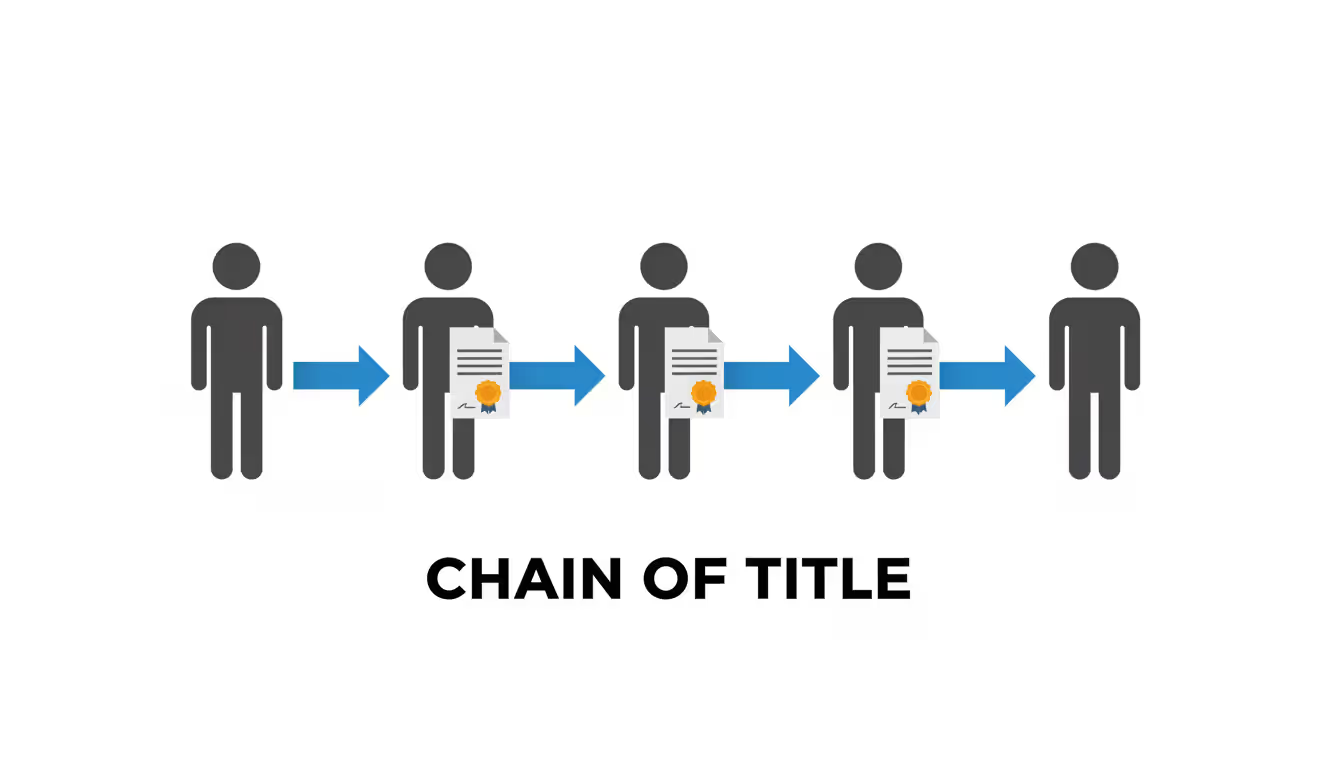
Why does this document matter so much? Three big reasons. First, it creates a permanent government record that anyone can check decades after you buy. Second, it spells out exactly which ownership rights you're getting and what promises the seller makes about potential problems with the property's legal status. Third, it adds your name to the ownership timeline—that unbroken chain proving how the property passed from person to person over the years.
Your deed won't hold up in court unless it includes certain parts. You need the complete legal names of both the seller and buyer—no nicknames or initials. A street address won't cut it for the property description either. You need the surveyor-grade legal description showing precise boundaries from county records. The document must include clear language showing the seller intends to hand over ownership right now—words like "grants," "conveys," or "quitclaim to." And the seller has to sign it, usually in front of a notary who verifies their identity.
Author: Marcus Delane;
Source: redmonpestmgt.com
Here's what catches people off guard: your deed might give you ownership of the surface while someone else owns what's underneath. Maybe the previous owner kept mineral rights, or there's an easement letting the electric company run lines across your backyard. Each type of deed (we'll cover these shortly) provides wildly different protection if ownership problems pop up later.
Deed vs. Title: Understanding the Difference
People mix these up constantly, but they're completely different things in real estate law.
Title isn't a document you can hold. It's the concept of ownership itself—your legal right to live in the property, renovate it, sell it, rent it out, or use it as mortgage collateral. When someone says you have "clear title," they mean your ownership rights are legitimate and nobody can successfully dispute them.
The deed? That's the actual piece of paper (or digital file these days) transferring title from the previous owner to you. Think of it this way: title is the prize, the deed is how you receive it. After you close on a house, you walk away with the deed proving title now belongs to you.
This creates some interesting situations. Let's say you lose your deed in a move. Your ownership stays intact because the county clerk's office has the recorded copy proving your rights. Flip that around: someone might hand you a beautifully prepared deed, but if they never actually owned the property in the first place, that deed gives you nothing despite the official-looking paperwork.
Title insurance protects your ownership rights if problems emerge. Your deed type determines what guarantees the seller made about those ownership rights being solid. When you eventually sell, you'll sign a fresh deed moving your title to whoever buys from you—meanwhile, your original deed stays in the permanent county records showing how you became owner.
Author: Marcus Delane;
Source: redmonpestmgt.com
Types of Property Deeds and When to Use Each
Not all deeds protect buyers equally. Pick the wrong type and you might inherit hidden title problems with zero recourse. Sellers need to understand this too, because some deed forms create liability lasting years after the sale.
General Warranty Deed
This gives buyers maximum protection possible. The seller makes rock-solid legal promises (lawyers call them covenants) covering the property's entire history—not just their time as owner, but reaching back through every previous owner too.
What do these promises include? The seller confirms they legitimately own the property (the covenant of seisin). They guarantee no hidden liens or easements exist except ones they disclosed (covenant against encumbrances). They promise nobody will successfully challenge your ownership (covenant of quiet enjoyment). And they commit to defending you against title disputes and covering your damages (covenant of warranty forever).
Standard home sales use these deeds nearly every time. When you're paying $400,000 for a house, you deserve ironclad protection. Picture this: seven years after buying, someone discovers that a previous owner's ex-spouse never properly released their ownership claim during their 1998 divorce. Even though this happened long before your seller owned the property, that seller must fix the problem and cover your costs—because they gave you a general warranty deed.
The catch? Sellers accept huge ongoing liability. That's exactly why sellers routinely buy title insurance policies when they issue general warranty deeds—to protect themselves from claims.
Special Warranty Deed
This splits the difference on protection. The seller guarantees title quality only during the time they owned the property. They make zero promises about what previous owners did.
Buy property with a special warranty deed and discover a lien from when your seller owned it? They have to handle it. Find out about a problem from before they bought it? You're on your own.
You'll see these frequently in commercial real estate and foreclosure sales. Banks that foreclose on properties use special warranty deeds all the time—they'll confirm they didn't mess up the title during the brief period they owned it, but won't guarantee the defaulted borrower kept the title clean.
Estate representatives lean toward special warranty deeds too. The executor administering grandma's estate might have no clue about title issues from 30 years ago and doesn't want personal liability for problems they didn't cause.
Quitclaim Deed
Zero guarantees. None. The seller releases whatever ownership interest they might have—which could be absolutely nothing. They don't promise they own any piece of the property. They don't promise the title is clean.
The name explains it perfectly: the seller "quits" whatever claim they may have. They own nothing? You get nothing. Hidden tax liens exist? Those problems become yours with no ability to sue the seller.
Sounds terrible, right? Yet quitclaim deeds serve real purposes. They work great for family transfers where everyone trusts each other and nobody wants to pay for formalities. Divorcing couples use them constantly—one spouse quitclaims their half to the other per the divorce agreement. Property owners use them to fix title problems—if your name got misspelled on your current deed, the seller might provide a quitclaim with correct spelling.
They also clear up questionable ownership clouds. Maybe someone possibly inherited a partial interest but isn't sure. They can sign a quitclaim removing any doubt about their claim.
Never, ever accept a quitclaim deed when buying property from someone you don't know for serious money. The complete absence of warranties leaves you totally exposed.
Grant Deed
California and several Western states rely heavily on grant deeds. They land between general warranty deeds and quitclaim deeds for protection level.
Grant deeds include two automatic promises: the seller hasn't already transferred this property to someone else, and no encumbrances exist that the seller created (except disclosed ones). Unlike general warranty deeds, these don't promise to defend you against ownership claims or fix problems from earlier owners.
They also automatically transfer after-acquired title. Here's how that works: the seller signs a grant deed for property they don't completely own yet. Later they acquire full ownership. That additional interest automatically transfers to you without needing another deed.
Other Deed Types
Various specialized forms handle specific situations. Bargain and sale deeds transfer property without express warranties but imply the seller has ownership—tax foreclosure sales use these frequently. Deeds in lieu of foreclosure let struggling borrowers voluntarily give property to their lender, helping both sides avoid the formal foreclosure nightmare. Life estate deeds give ownership lasting only through the recipient's lifetime, with property automatically passing to named remaindermen at death. Transfer-on-death deeds (available in roughly half of states as of 2026) automatically move property to designated beneficiaries when the owner dies, completely bypassing probate.
Deed Type
Seller's Guarantees
Buyer's Coverage
Typical Scenarios
Buyer's Risk Level
General Warranty
Covers all historical defects
Maximum protection spanning entire property history
Family gifts, divorce settlements, correcting title errors
Substantial
Grant Deed
Basic safeguards about seller's behavior
Core protection against seller's actions only
California residential sales
Low to moderate
How to Read and Verify Your Property Deed
Decoding your deed becomes straightforward once you understand its typical structure. Formats differ by state and era, but most follow similar organizational patterns.
Locate the deed type near the top first: "Warranty Deed," "Quitclaim Deed," and so on. This instantly reveals your protection level.
The grantor and grantee section comes next. Verify names match your other legal documents precisely. Married couples buying in community property states? Both spouses typically should appear as grantees whether or not both signed the mortgage note.
The consideration part states your payment amount. Don't panic if it lists "$10 and other good and valuable consideration" instead of your actual $350,000 purchase price—this is completely normal and doesn't undermine validity. Some states do require actual prices for tax purposes though.
Author: Marcus Delane;
Source: redmonpestmgt.com
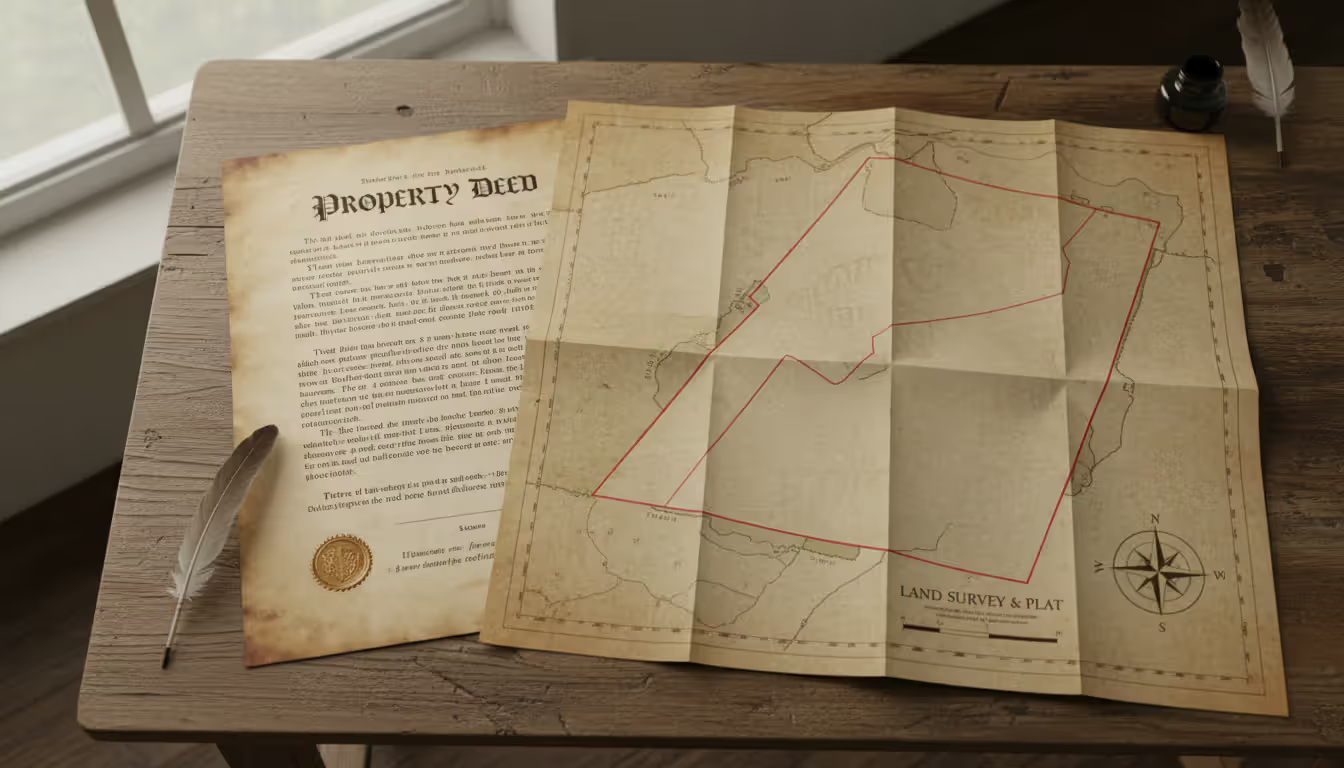
Now for the most crucial part: the legal description. This has nothing to do with your mailing address—it defines exact boundaries using established surveying methods. Metes and bounds descriptions employ compass bearings and measurements ("commencing at the iron rod, thence North 45 degrees East 200 feet to the oak tree..."). Lot and block references cite officially recorded subdivision maps ("Lot 23, Block 7, Riverside Heights Subdivision as recorded in Plat Book 15, Page 89"). Government survey descriptions use township, range, and section coordinates based on the Public Land Survey System.
Pull out your title insurance policy and survey. Compare the legal description across all three documents. Discrepancies could mean trouble. A missing 12-foot strip? Your garage might actually sit on your neighbor's land.
Hunt for the exceptions and reservations language. This specifies what the seller retained or what limits burden your ownership. You might find mineral rights reservations, utility company easements, or restrictive covenants limiting property use (like "no commercial businesses" or "residential dwellings only").
Examine the signature section closely. The seller must sign—most states require a notary to witness that signature. When multiple co-owners sold the property, generally all must sign to convey complete title (depending on their ownership structure).
Recording stamps appear courtesy of the county recorder. These marks show precisely when and where the government entered your deed into public records, establishing notice of your ownership change. An unrecorded deed can be valid between you and the seller, but recording protects you against later purchasers or creditors who record their interests first.
Want to verify your deed's accuracy? Visit your county recorder's office or check their online database. Look up the property by owner name, street address, or tax parcel identification number. The recorded version is the official document—keep your original safe, but remember the county's copy is what legally matters.
Watch for frequent mistakes: misspelled names, wrong legal descriptions, missing spouse signatures in community property states, or notary blocks with incorrect dates. Minor errors might not void the deed but will complicate your eventual sale. Serious mistakes require corrective deeds to fix.
How to Transfer a Property Deed
Moving a property deed involves more than signatures and handshakes. The process must ensure legal compliance, proper recording, and tax obligations.
Start by selecting the right deed type for your circumstances and relationship with the recipient. Selling to a stranger for fair market value? Go with a general warranty deed. Adding your spouse to the title? A quitclaim deed works fine. Uncertain about historical title problems? Consider a special warranty deed.
Get a current title search or examination. This reveals outstanding mortgages, judgment liens, or other issues requiring resolution before or during transfer. You can't convey clear title without knowing what problems exist.
Prepare the deed yourself or hire a real estate attorney for drafting. Most states provide statutory forms meeting minimum legal standards. Include every required element: proper deed type identification, full grantor and grantee names and addresses, precise legal property description, consideration language, signature blocks, and notary acknowledgment sections.
Consider carefully how the recipient should hold title. Single individuals can take title in their name alone. Married couples have options: joint tenants with rights of survivorship, tenants by the entirety (in states recognizing it), or community property. Unrelated co-buyers might choose tenancy in common, permitting unequal ownership percentages and no automatic survivorship.
Execute the deed before a notary public. Nearly every state requires notarization for recording purposes. A few states also demand witnesses beyond the notary. The seller signs—buyers don't need to sign accepting ownership (though some forms include optional grantee signature lines).
Record the deed with the county recorder where the property sits. Expect recording fees from $15 to $50, though some counties charge extra for multi-page documents. Recording establishes public notice of the ownership change and sets priority against future competing claims.
Handle tax consequences properly. The IRS doesn't require reporting most property transfers, but some trigger gift tax considerations. Transferring property exceeding the annual gift tax exclusion ($19,000 per recipient in 2026) to anyone besides your spouse might require filing a gift tax return—though you probably won't owe actual tax until you've exceeded your lifetime exemption. Certain states and municipalities impose transfer taxes calculated on property values—these range from trivial amounts to several thousand dollars.
Specific transfer scenarios have unique requirements. Inherited property typically moves through executor's deeds or administrator's deeds when estates undergo probate, or through affidavits of heirship for qualifying small estates in some jurisdictions. Divorce transfers usually employ quitclaim deeds as dictated by the divorce decree—record these promptly to protect all parties. Adding someone to your existing deed creates co-ownership; removing someone requires their voluntary signature on a deed conveying their interest away.
Costs fluctuate widely. DIY transfers using online forms might cost under $100 for recording and notarization. Attorney-prepared deeds typically run $150 to $500 for straightforward transfers. Complex situations involving trusts, business entities, or title defects can exceed $1,000. Transfer taxes in high-tax areas can add thousands more.
I see people choose completely wrong deed types constantly, usually picking quitclaim deeds when they need warranties or vice versa. One client used a quitclaim selling a rental property, thinking it simplified everything. When ownership questions surfaced later, the buyer sued. My client assumed the quitclaim eliminated liability entirely, but our state law implied certain warranties anyway. They spent $40,000 defending themselves—all to save a few hundred dollars on proper legal advice upfront
— Margaret Chen
Legal Requirements for a Valid Deed
Deeds must satisfy specific legal criteria to effectively transfer property ownership. Miss just one element and the transfer might fail or become vulnerable to challenge.
Competent Grantor: The seller must have legal capacity. Minors generally cannot convey real property. People declared legally incompetent need court-appointed guardians acting on their behalf. The seller must comprehend they're surrendering property ownership—deeds signed by people suffering severe dementia or under extreme duress may be voidable.
Identifiable Grantee: The deed must name a specific recipient who exists and can be determined. You can't deed property "to whoever purchases it" or "to my future grandchildren not yet born." The buyer doesn't need to sign or even know about the transfer initially, but must be identifiable when the deed gets created.
Written Form: Oral property transfers are void under the Statute of Frauds, which requires real estate transfers in writing. No exceptions exist for small parcels or family transfers.
Adequate Property Description: The deed must describe the property precisely enough that a surveyor could determine its exact boundaries. Street addresses alone won't suffice—you need a proper legal description. Vague descriptions potentially applying to multiple parcels void the deed.
Granting Language: The document must contain words showing the seller's present intent to transfer ownership immediately. Traditional phrases like "grant," "convey," "transfer," or "quitclaim" accomplish this. Future promises to transfer don't create valid deeds.
Grantor's Signature: The seller must sign the deed. Electronic signatures gain increasing acceptance under state e-recording statutes, though some counties still require physical signatures. When multiple people own property together, typically all must sign to transfer full ownership, depending on their title structure.
Delivery and Acceptance: The seller must deliver the deed to the buyer, who must accept it. Delivery can be physical or constructive (like providing it to an escrow agent with release instructions upon meeting conditions). Acceptance is normally presumed when the transfer benefits the recipient. A deed sitting unsigned in a drawer or locked in the seller's safe hasn't been delivered and doesn't transfer ownership.
Notarization and Witnesses: Most states require the seller's signature be notarized before recording is permitted. Several states require one or two witnesses beyond notarization. While an unnotarized deed might be valid between the immediate parties, it can't be recorded, leaving the buyer vulnerable.
Recording: Though recording isn't required for validity between seller and buyer, it's essential for protecting the buyer against subsequent purchasers and creditors. Unrecorded deeds lose priority to later recorded interests in most states.
Author: Marcus Delane;
Source: redmonpestmgt.com
Frequent mistakes that invalidate or weaken deeds include: forged signatures, deeds executed under fraud or extreme coercion, deeds from sellers who don't own the property, deeds missing proper legal descriptions, deeds never delivered to buyers, and deeds with substantial alterations made after execution.
State variations are significant. Community property states have special rules for married couples. Some states permit transfer-on-death deeds while others don't recognize them. Recording procedures and fees differ. A few states require additional formalities like documentary stamps or specific formatting.
When uncertain, consult a real estate lawyer licensed in the state where the property sits. Spending a few hundred dollars for professional deed preparation beats fixing a defective transfer years down the road.
Frequently Asked Questions
Do I need a lawyer to transfer a property deed?
Technically no—most states allow property owners to prepare and file their own deeds without attorney involvement. Practically speaking, it depends on your situation's complexity. Straightforward transfers between family members using quitclaim deeds frequently happen without legal counsel. Sales to unrelated parties, transfers involving existing mortgages or title problems, or situations with significant tax consequences benefit enormously from professional guidance. Many title companies offer deed preparation for a few hundred dollars as a middle ground between DIY and full attorney representation.
What are the typical expenses for transferring a deed?
County recording charges usually range from $15 to $100 depending on jurisdiction and page count. Notarizing signatures costs $5 to $25 per signature. Attorneys typically charge $150 to $500 for preparing simple transfers. Title searches add $75 to $200. Transfer taxes show enormous variation—some states have none, while others charge percentages of property value. Transferring a $300,000 house might involve just $50 in recording fees in one county or $3,000 in transfer taxes plus additional costs in another.
Can I remove someone from a property deed?
You can't unilaterally strip another owner from a deed—property ownership is a legal right that can't be removed without the owner's consent or court order. The person you want removed must voluntarily execute a deed transferring their share to you or another party. Courts can also order title changes through divorce decrees, partition actions, or quiet title lawsuits. If someone refuses to sign voluntarily and you have legitimate legal grounds, you'll need to pursue litigation.
Where do I find a copy of my property deed?
The official recorded version stays with the county recorder's office (sometimes called the register of deeds or county clerk) in the county where the property is located. Most counties now maintain online searchable databases allowing you to locate deeds by address, owner name, or parcel number and download recorded documents free or for nominal fees. In-person visits to the recorder's office work too. Title companies and real estate attorneys can retrieve copies for you. The deed you received at closing is a certified copy, but the county's records constitute the official version.
What should I do if my deed contains an error?
Minor mistakes like name misspellings or typos in non-essential sections usually don't invalidate the deed but should be corrected to prevent problems when selling. Obtain a corrective deed (also called a scrivener's affidavit or reformation deed) that references the original and corrects the error. Major mistakes affecting the legal description, party names, or property boundaries might require a completely new deed or court action to reform the existing one. When errors resulted from fraud or mutual mistake, you might need a quiet title action to clear up the ownership record.
Does a deed work if it's not notarized?
This varies by jurisdiction. In most states, an unnotarized deed remains binding between the seller and buyer—it accomplishes the ownership transfer between those two parties. However, unnotarized deeds typically can't be recorded, meaning they don't provide public notice of the ownership change. This exposes the buyer to serious risk from subsequent buyers or lienholders who record their interests before the unnotarized deed gets recorded. Some states actually require notarization for the deed's basic validity, not just for recording. Always get deed signatures notarized to ensure both validity and recordability.
Grasping house property deeds protects your largest financial investment. The deed type you receive determines what legal guarantees support your ownership. Your deed's legal description accuracy defines exactly which real estate you control. The transfer process validity determines whether your ownership can survive legal challenges.
Before accepting any deed, fully comprehend what protection level it provides. Before signing any deed as seller, completely recognize what potential liability you're accepting. When questions arise, bring in qualified professionals—real estate lawyers and title companies exist specifically to navigate these legal complexities.
Your deed represents more than just another paper in a pile of closing documents. It forms the legal foundation of your property ownership, and treating it with appropriate care prevents problems that can emerge years or even decades later.
Fee simple absolute represents the highest form of property ownership in American law, granting owners the broadest possible rights. Unlike conditional ownership or leases, this estate gives maximum control over use, transfer, and inheritance of real property with no automatic termination conditions
When someone dies, their estate is either testate or intestate. Dying testate means leaving a valid will that directs asset distribution. Dying intestate means state law decides everything. Understanding this distinction determines who controls your legacy
Right of survivorship automatically transfers a deceased owner's property interest to surviving co-owners, bypassing probate. This guide explains how it works, compares joint tenancy vs tenancy in common, covers tax implications, and shows how survivorship rights override wills
Real estate law governs property ownership, transfer, and use in the United States. This comprehensive guide explains foundational legal principles, transaction structures, common issues, and when to seek legal help for residential and commercial real estate matters
The content on this website is provided for general informational and educational purposes only. It is intended to explain concepts related to real estate law, property rights, leases, liens, zoning, landlord-tenant disputes, and litigation.
All information on this website, including articles, guides, and examples, is presented for general educational purposes. Legal outcomes may vary depending on jurisdiction, property type, and individual circumstances.
This website does not provide legal advice, and the information presented should not be used as a substitute for consultation with qualified attorneys or real estate professionals.
The website and its authors are not responsible for any errors or omissions, or for any outcomes resulting from decisions made based on the information provided on this website.