When you sign a lease, the security deposit often represents your single largest upfront expense after the first month's rent. For landlords, it's a crucial financial safeguard. Yet confusion about how these deposits work leads to thousands of disputes every year, many ending up in small claims court over amounts that could have been resolved with better understanding of the rules.
Security deposits exist in a complex legal landscape where state laws vary dramatically. A deposit limit that's standard in California might be illegal in New York. Return timelines that seem reasonable in Texas could violate tenant rights in Massachusetts. Both tenants and landlords need to understand these requirements to avoid costly mistakes.
What Is a Lease Security Deposit and How Does It Work?
A lease security deposit is money a tenant pays upfront to protect the landlord against specific financial losses during the tenancy. Unlike rent, which compensates the landlord for use of the property, a security deposit serves as a financial cushion held in reserve.
The basic mechanics work like this: Before moving in, you pay the deposit amount (typically alongside your first month's rent). The landlord holds this money throughout your tenancy without using it for routine expenses. When you move out, the landlord inspects the property and returns the deposit minus any legitimate deductions, usually within a state-mandated timeframe.
Security deposits can only be used for particular purposes. Most states limit usage to unpaid rent, repairs beyond normal wear and tear, cleaning costs to restore the unit to move-in condition, and sometimes unpaid utilities. A landlord can't simply decide to keep your deposit because they want to upgrade the carpeting or because they didn't like you as a tenant.
Landlord security deposit obligations extend beyond just holding the money. Many states require landlords to provide a written receipt, deposit funds in specific types of accounts, conduct move-in and move-out inspections, and provide detailed accounting of any deductions. Failing these obligations can result in penalties that exceed the original deposit amount.
The deposit doesn't give landlords unlimited time to make claims. Once the lease ends and you've moved out, the clock starts ticking on statutory deadlines. Miss these deadlines, and landlords in many states forfeit their right to make any deductions whatsoever.
Author: Olivia Carringt;
Source: redmonpestmgt.com
State Security Deposit Laws and Legal Limits
Security deposit laws vary so dramatically by state that what's perfectly legal in one jurisdiction might trigger triple damages in another. Some states take a hands-off approach, while others micromanage every aspect of deposit handling.
How Much Can Landlords Charge for Security Deposits?
Most states cap security deposits at one to two months' rent, though the exact limit often depends on factors like lease length, furnished vs. unfurnished units, and whether you have pets.
California limits deposits to two months' rent for unfurnished units and three months for furnished properties. New York allows one month's rent for most residential tenancies. In contrast, states like Texas, Georgia, and Florida impose no statutory maximum—landlords can theoretically charge whatever the market will bear, though competitive pressure usually keeps deposits reasonable.
Some states add nuance to their caps. In Massachusetts, landlords cannot charge more than one month's rent as a security deposit, but they can also collect first month's rent, last month's rent, and a lock/key fee—creating what feels like a much larger upfront payment even though technically only one portion is a "security deposit."
Military housing presents special rules under federal law. The Servicemembers Civil Relief Act limits security deposits for service members in certain circumstances, overriding state maximums.
Pet deposits or pet fees add another layer. Some states count these toward the overall security deposit cap, while others treat them as separate charges. This distinction matters significantly in states with strict deposit limits.
Security Deposit Escrow Account Requirements by State
Roughly half of all states require landlords to hold security deposits in some form of escrow or trust account, separate from operating funds. The specifics vary considerably.
New Jersey mandates that all security deposits be placed in an interest-bearing account at a New Jersey financial institution, with annual interest paid to the tenant. Maryland requires deposits exceeding $50 to be held in a Maryland bank or savings institution, with the landlord providing the tenant with the account details and accrued interest.
Massachusetts requires deposits to be held in a separate, interest-bearing account in a Massachusetts bank, with the tenant receiving the account number and bank name within 30 days. The landlord must pay 5% annual interest or the actual interest earned, whichever is less.
Many states with escrow requirements impose penalties for non-compliance that dwarf the original deposit. In Connecticut, failure to hold the deposit properly can result in the landlord owing double the deposit amount plus attorney's fees.
Other states take a lighter approach. Illinois requires landlords in buildings with 25 or more units to pay interest on deposits held for six months or longer, but smaller landlords face no such requirement. Some states have no escrow requirements at all, allowing landlords to commingle security deposits with business funds.
Security Deposit vs Last Month's Rent
Tenants frequently confuse security deposits with last month's rent, but these are legally distinct concepts with different rules and purposes.
Last month's rent is exactly what it sounds like: prepayment of rent for your final month of occupancy. When you move out, you've already paid that month's rent, so you owe nothing further for that period. The landlord must apply this payment to rent and cannot use it for damages or cleaning.
A security deposit, by contrast, isn't payment for any specific month. It's a refundable amount held against potential damages, unpaid rent, or other lease violations. You can't simply skip your last month's rent and tell the landlord to "use the security deposit"—that's a lease violation that can damage your rental history.
The practical difference becomes crucial during move-out. If you paid last month's rent upfront, you're covered for that final month regardless of your deposit status. But if you only paid a security deposit, you still owe that last month's rent, and the landlord can deduct unpaid rent from your deposit.
Some landlords collect both, which can feel excessive but is legal in most states (subject to overall deposit caps). When a landlord collects both, they must keep clear records of which is which. Commingling these funds or applying them incorrectly can create legal liability.
Author: Olivia Carringt;
Source: redmonpestmgt.com
Tax treatment differs as well. Last month's rent is income to the landlord in the year received (or when the lease term it covers begins, depending on accounting method). Security deposits aren't income unless and until the landlord becomes entitled to keep them.
One common mistake: A tenant pays what they think is a security deposit, but the lease labels it "last month's rent." Years later at move-out, the landlord claims they can't use it for damages because it was rent, not a deposit. Always verify in writing what each payment represents.
When and How Security Deposits Must Be Returned
Security deposit return rules center on two critical elements: timing and documentation. Get either wrong, and landlords risk penalties; understand both, and tenants can enforce their rights effectively.
Return deadlines vary from as short as 14 days to as long as 60 days after move-out, depending on your state. Tennessee requires return within 10 days if no deductions are made. California allows 21 days. New York mandates 14 days (or within the time period specified in the lease, if longer). Virginia gives landlords 45 days, while Alabama imposes a 60-day deadline.
These deadlines typically start from the date you surrender possession and return keys, not from when your lease term technically ends. If your lease ends May 31 but you don't return keys until June 3, the clock starts June 3.
Most states require landlords who make deductions to provide an itemized statement showing exactly what was deducted and why. This isn't optional—it's a legal requirement. The statement must list each deduction with a description and cost. "General cleaning: $300" usually doesn't cut it; the statement should specify "Kitchen deep cleaning: $120, Bathroom tile scrubbing: $80, Carpet shampooing: $100."
Some states require receipts or invoices for deductions above certain thresholds. California requires receipts for repairs exceeding $126 (as of 2026, adjusted periodically for inflation). Without proper documentation, landlords may be unable to justify deductions if challenged.
Interest payments add another wrinkle in certain states. If your state requires landlords to pay interest on deposits, this accrued interest must be included in your refund or accounted for in the itemized statement. New Mexico requires 3.75% annual interest paid to the tenant. Illinois requires interest in larger buildings, with rates tied to bank passbook savings rates.
When do you get your security deposit back? The short answer: within your state's deadline, assuming you've met your obligations. You should receive either a full refund or a partial refund with an itemized statement explaining deductions. If the landlord misses the deadline without providing any statement, many states allow you to recover the full deposit regardless of whether legitimate deductions existed.
Forwarding address requirements matter. Most states require you to provide a forwarding address in writing, and failure to do so can extend the landlord's deadline or even eliminate their obligation to return the deposit. Send this via certified mail for proof.
What Deductions Can Landlords Legally Make?
The line between allowable and prohibited deductions trips up landlords and tenants alike. State laws generally permit deductions for similar categories, but the details matter enormously.
Allowable deductions typically include:
Unpaid rent for any period you occupied the unit
Repairs for damage beyond normal wear and tear
Cleaning costs to return the unit to its condition at move-in (excluding normal wear)
Unpaid utilities if you were responsible under the lease
Costs to replace unreturned keys or garage remotes
Repair of tenant-caused damage to appliances or fixtures
Lawn care or snow removal if required by lease and neglected
Breaking a lease early (in states that allow this deduction)
Prohibited deductions generally include:
Normal wear and tear from ordinary use
Pre-existing damage documented in your move-in inspection
Repairs needed due to landlord negligence or failure to maintain
Upgrades or improvements beyond restoring original condition
Cleaning that goes beyond returning to move-in cleanliness
Painting if you lived there multiple years (many states)
The "normal wear and tear" standard causes the most disputes. Courts generally define this as deterioration that occurs naturally from ordinary use without negligence, carelessness, or abuse. Faded paint after three years? Normal wear and tear. Crayon drawings on the wall? Damage. Worn carpet traffic patterns after five years? Normal wear. Large stains or burns? Damage.
Here's a practical example: You lived in an apartment for four years. The landlord deducts $800 for new carpet. Most states recognize that carpet has a useful life of 5-10 years depending on quality. If the carpet was new when you moved in and you lived there four years, the landlord can only charge you for the remaining useful life you consumed—perhaps 40-50% of replacement cost, not the full amount.
Some states provide specific guidance. Wisconsin explicitly states that landlords cannot charge for carpet cleaning unless the carpet is damaged beyond normal wear and tear. Washington requires landlords to prorate deductions based on the useful life of the item.
Pet damage occupies a gray area. Normal pet wear (slight scratches on floors from claws) might be considered normal wear and tear if pets were allowed. But excessive damage (destroyed doors, urine-soaked subflooring) clearly exceeds normal wear regardless of pet permissions.
What to Do If Your Landlord Won't Return Your Deposit
When a landlord wrongfully withholds your security deposit, you have several escalating options. Start with communication and escalate to legal action only if necessary.
Step 1: Document everything. Before you even move out, photograph or video every room, all appliances, walls, floors, and fixtures. Date-stamp this evidence. Compare it to your move-in documentation. This creates your baseline proof.
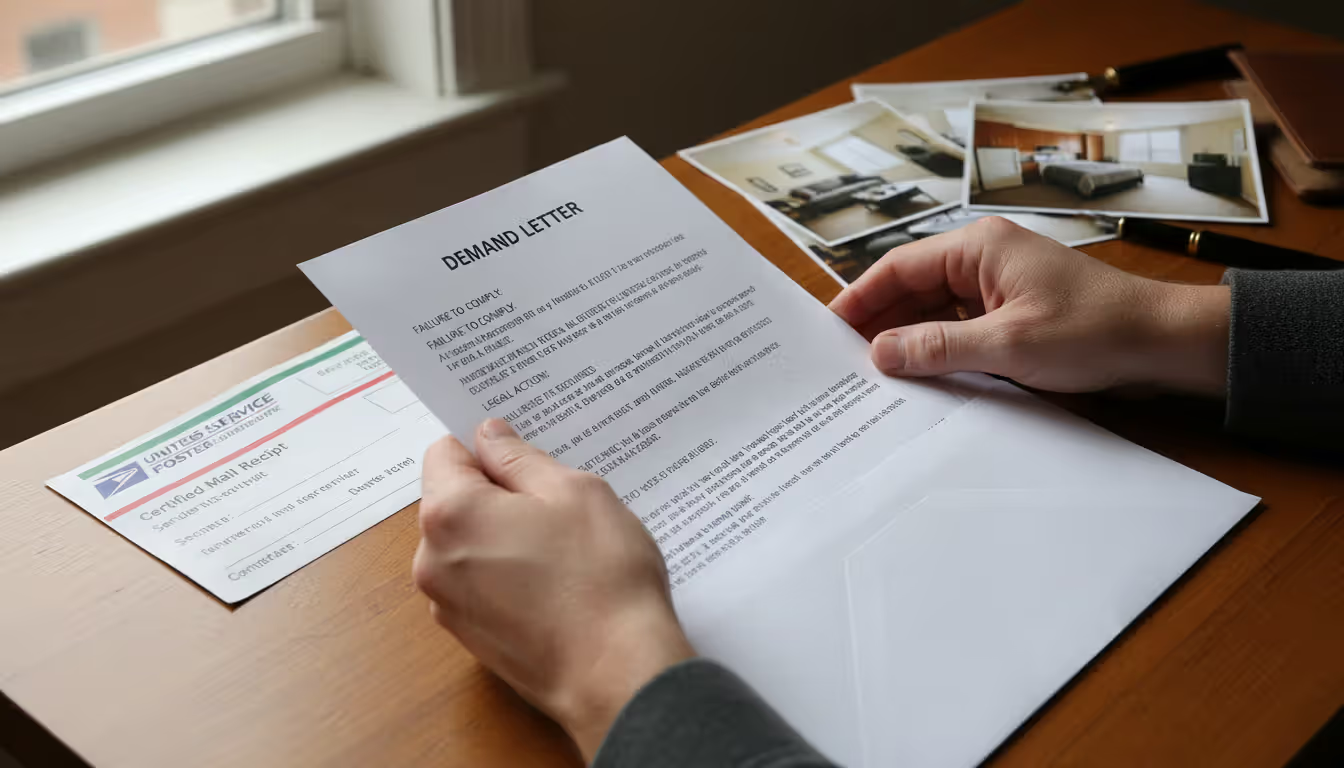
Step 2: Send a written demand. If the deadline passes without your refund or statement, send a formal demand letter via certified mail. State the facts clearly: lease address, move-out date, deposit amount, deadline that passed, and your demand for full return within 7-10 days. Reference your state's security deposit statute by name and section number. Mention that you'll pursue legal remedies if necessary.
Many landlords respond to formal demands because they realize you're serious and informed. A well-crafted letter often resolves disputes without court involvement.
Author: Olivia Carringt;
Source: redmonpestmgt.com
Step 3: File a complaint with local authorities. Some cities and states have tenant rights agencies that investigate complaints. While they can't force a refund, official inquiries often motivate landlords to settle. Check if your city has a rental housing enforcement office.
Step 4: Consider small claims court. Most security deposit disputes fall within small claims limits ($5,000-$10,000 in most states). You don't need an attorney. Filing fees typically run $30-$100. The process is relatively quick, often resolving within 4-8 weeks.
Small claims suits for wrongful deposit retention can be particularly powerful because many states impose penalties for bad-faith withholding. California allows judges to award up to twice the deposit amount if the landlord acted in bad faith. Massachusetts provides for triple damages plus attorney's fees. Illinois mandates double damages plus court costs if the landlord fails to comply with return requirements.
Step 5: Gather evidence for court. Bring your lease, move-in checklist, move-out photos, all correspondence with the landlord, your demand letter, proof of forwarding address, and any receipts for cleaning or repairs you performed. Organize everything chronologically in a binder.
The security deposit dispute process favors prepared tenants. Judges hear these cases constantly and can spot a landlord who's making excuses versus one with legitimate claims. Your documentation makes the difference.
One important note: Don't withhold last month's rent in retaliation for deposit disputes. This creates a separate lease violation that undermines your position. Keep rent and deposit issues separate.
Are Non-Refundable Security Deposits Legal?
The overwhelming majority of security deposit disputes stem from inadequate documentation at move-in. Tenants who thoroughly document the unit's condition with dated photos or video, and who obtain written acknowledgment from the landlord of pre-existing issues, almost never lose legitimate deposit claims. Conversely, landlords who fail to conduct formal move-in inspections with tenant signatures find themselves unable to prove that damage wasn't pre-existing. The five minutes spent documenting condition at the beginning of a tenancy can save months of conflict at the end
— Jennifer Martinez
The term "non-refundable security deposit" is inherently contradictory in most states. By definition, a security deposit must be refundable if you meet your lease obligations. What landlords often mean by "non-refundable deposit" is actually a fee, not a deposit.
The legality of non-refundable charges depends entirely on how they're structured and labeled. Many states explicitly prohibit non-refundable security deposits. California, for instance, requires all deposits to be refundable (minus legitimate deductions). Calling something "non-refundable" doesn't make it legal if state law says otherwise.
However, landlords can charge non-refundable fees for specific purposes, as long as they're clearly labeled as fees rather than deposits. Common examples include:
Non-refundable pet fees (allowed in many states, but not all)
Non-refundable cleaning fees (permitted in some states with disclosure)
Non-refundable application fees
Non-refundable move-in fees or administrative fees
Author: Olivia Carringt;
Source: redmonpestmgt.com
The critical distinction: A deposit is held against future performance and returned if you comply with lease terms. A fee is payment for a service or privilege, consumed immediately, and never refunded.
Some states split the difference. Arizona allows non-refundable fees if the lease clearly discloses them as non-refundable and explains their purpose. Washington permits non-refundable fees but requires specific written disclosure in the lease.
Other states prohibit the practice entirely. In Massachusetts, all money paid by tenants except rent must be refundable. Calling it a "fee" doesn't circumvent this rule.
For tenants, the practical advice is simple: Before signing a lease, identify every upfront charge and determine whether it's refundable. If a landlord claims a "non-refundable security deposit," that's a red flag suggesting either confusion or an illegal charge. Ask them to clarify whether it's actually a fee and, if so, what specific service it covers.
For landlords, the safer approach is to avoid the term "non-refundable deposit" entirely. If you want to charge for something that won't be refunded, call it what it is—a fee—and ensure your state allows it.
Security Deposit Limits and Return Timelines by State
State
Maximum Deposit
Return Deadline
Interest Required
Escrow Required
California
2 months (unfurnished), 3 months (furnished)
21 days
No
No
New York
1 month
14 days
Yes (buildings 6+ units)
Yes
Texas
No limit
30 days
No
No
Florida
No limit
15-60 days (depending on notice)
Yes (if held 1+ year)
No
Illinois
No limit
30-45 days (depending on notice)
Yes (25+ unit buildings)
Yes (if interest required)
Massachusetts
1 month
30 days
Yes (5% or actual)
Yes
New Jersey
1.5 months
30 days
Yes
Yes
Pennsylvania
2 months (first year), 1 month (after)
30 days
Yes (after 2 years)
Yes
Washington
No limit
21 days
No
No
Virginia
2 months
45 days
No
Yes (if managing 5+ units)
Georgia
No limit
30 days
No
No
Arizona
1.5 months
14 days
No
No
Colorado
No limit
30-60 days (depending on notice)
No
No
Maryland
2 months
45 days
Yes (simple interest)
Yes
North Carolina
1.5 months (month-to-month), 2 months (longer)
30 days
No
Yes (if 10+ units)
Note: Laws change frequently. Verify current requirements for your specific situation.
Allowable vs Non-Allowable Security Deposit Deductions
Landlords CAN Deduct For
Landlords CANNOT Deduct For
Unpaid rent for occupied period
Normal wear and tear
Holes in walls from removed fixtures
Faded paint after multi-year tenancy
Broken windows or damaged doors
Pre-existing damage documented at move-in
Carpet stains or burns
Worn carpet from normal use
Deep cleaning for excessive filth
Routine cleaning between tenants
Broken appliances due to misuse
Appliance failure from age/normal use
Unpaid utilities tenant was responsible for
Repairs due to landlord's maintenance failure
Unreturned keys or remotes
Upgrading to newer fixtures/features
Lawn damage beyond normal wear
Repainting after 5+ years (in many states)
Pet damage exceeding normal wear
Minor scuffs and marks on walls
Unauthorized alterations or modifications
Depreciation of items with expired useful life
Frequently Asked Questions
Can a landlord charge more than one month's rent for a security deposit?
It depends on your state. Many states cap deposits at one to two months' rent, while others impose no limit. California allows up to two months for unfurnished units and three months for furnished ones. New York limits deposits to one month's rent. States like Texas and Florida have no statutory maximum, though market competition usually keeps deposits reasonable. Check your specific state law, as caps may also vary based on whether the unit is furnished, whether you have pets, or the length of your lease term.
How long does a landlord have to return my security deposit?
Return deadlines range from 14 to 60 days depending on your state. Most states require return within 21-30 days after you move out and surrender the property. The clock typically starts when you return keys and provide a forwarding address, not when your lease term ends. If your landlord misses this deadline without providing an itemized statement of deductions, many states impose penalties ranging from forfeiture of all deduction rights to double or triple damages. Always send your forwarding address via certified mail to prove compliance with your obligations.
Can my landlord use my security deposit for unpaid rent?
Yes, unpaid rent is one of the most common allowable deductions from security deposits in virtually all states. However, you cannot voluntarily withhold your last month's rent and tell the landlord to "use the deposit"—that constitutes a lease violation. The landlord can deduct unpaid rent only after you've moved out and they're processing your deposit return. If you paid both a security deposit and last month's rent upfront, the landlord must apply the last month's rent to that period and cannot use it for other purposes.
What counts as normal wear and tear vs damage?
Normal wear and tear is deterioration from ordinary use without negligence or abuse. Examples include minor scuffs on walls, faded paint after several years, worn carpet traffic patterns, small nail holes from hanging pictures, and minor scratches on hardwood floors. Damage exceeds normal wear and includes large holes in walls, broken fixtures, stained or burned carpet, unauthorized paint colors, broken windows, and excessive filth requiring deep cleaning. The key factors are severity and cause: Did the problem result from normal living, or from carelessness, abuse, or neglect? Duration matters too—carpet showing wear after five years is normal; the same wear after six months suggests damage.
Do I need to clean the apartment professionally before moving out?
Most states require you to return the unit in the same condition as move-in, excluding normal wear and tear, but don't mandate professional cleaning unless your lease specifically requires it. You should clean thoroughly to the same standard of cleanliness that existed when you moved in. If the unit was professionally cleaned before your move-in and your lease requires professional cleaning at move-out, the landlord can deduct this cost if you don't comply. However, if the lease is silent on professional cleaning, your own thorough cleaning should suffice. Landlords cannot deduct for professional cleaning that goes beyond restoring move-in condition or that addresses normal wear and tear.
What should I do if my landlord keeps my deposit without explanation?
First, verify you provided a forwarding address in writing and that the legal deadline has passed. Then send a formal demand letter via certified mail citing your state's security deposit law, the deadline that passed, and demanding return within 7-10 days. If that fails, file a complaint with local tenant rights agencies if available. Finally, consider small claims court, where many states impose penalties for wrongful withholding—often double or triple the deposit amount plus court costs. Bring all documentation: lease, move-in/move-out photos, correspondence, proof of forwarding address, and your demand letter. The process typically takes 4-8 weeks and doesn't require an attorney.
Security deposits represent a significant financial stake for both tenants and landlords, but confusion about the rules creates unnecessary conflict. The key to avoiding disputes lies in understanding your state's specific requirements, documenting everything from day one, and following proper procedures during both move-in and move-out.
Tenants should photograph the unit thoroughly at move-in, provide forwarding addresses in writing, and understand exactly what deductions are permitted in their state. Landlords must comply with escrow requirements, meet strict return deadlines, and provide detailed itemization of any deductions with supporting documentation.
When disputes arise, remember that most states favor tenants who can prove they met their obligations, often imposing substantial penalties on landlords who wrongfully withhold deposits. A few minutes spent understanding your rights and responsibilities can save hundreds or thousands of dollars and months of frustration.
Whether you're signing your first lease or your tenth, treat the security deposit as a legal agreement with specific rules, not a casual transaction. Know your state's laws, keep meticulous records, and communicate clearly in writing. These simple practices transform security deposits from a common source of conflict into a straightforward, manageable aspect of renting.
Property taxes in land contracts confuse many buyers and sellers. While contracts typically assign responsibility to buyers, sellers remain legally liable until the deed transfers. Understanding this split obligation and the consequences of unpaid taxes is critical for protecting your investment
A sublease agreement creates a legal bridge between your existing lease obligations and someone else's temporary housing needs. Understanding the three-party relationship, securing landlord approval, and drafting comprehensive agreements protects your security deposit and rental history
A residential lease agreement creates legally binding obligations for both tenants and landlords. This comprehensive guide explains standard lease clauses, rights and responsibilities, security deposit rules, renewal processes, subletting options, and how to break a lease legally while avoiding costly mistakes
Persistent noise, odors, or encroachment from neighbors can cross the line into legal nuisance. Understand what qualifies as actionable nuisance under US law, the difference between private and public nuisance, and the legal steps to resolve disputes—from documentation to court remedies
The content on this website is provided for general informational and educational purposes only. It is intended to explain concepts related to real estate law, property rights, leases, liens, zoning, landlord-tenant disputes, and litigation.
All information on this website, including articles, guides, and examples, is presented for general educational purposes. Legal outcomes may vary depending on jurisdiction, property type, and individual circumstances.
This website does not provide legal advice, and the information presented should not be used as a substitute for consultation with qualified attorneys or real estate professionals.
The website and its authors are not responsible for any errors or omissions, or for any outcomes resulting from decisions made based on the information provided on this website.