Renting a home comes with legal protections most tenants don't realize exist until something goes seriously wrong. When your apartment's heat fails in January or sewage backs up into your bathroom, you're not at the mercy of a slow-responding landlord. The law recognizes your right to safe, livable housing through a legal doctrine that applies automatically to nearly every residential lease in the United States.
Understanding these protections can mean the difference between living in unsafe conditions while paying full rent and taking effective action to force repairs or reduce what you owe. The following guide explains your rights, your landlord's obligations, and the specific steps you can take when your rental unit falls below legal standards.
What Is the Implied Warranty of Habitability?
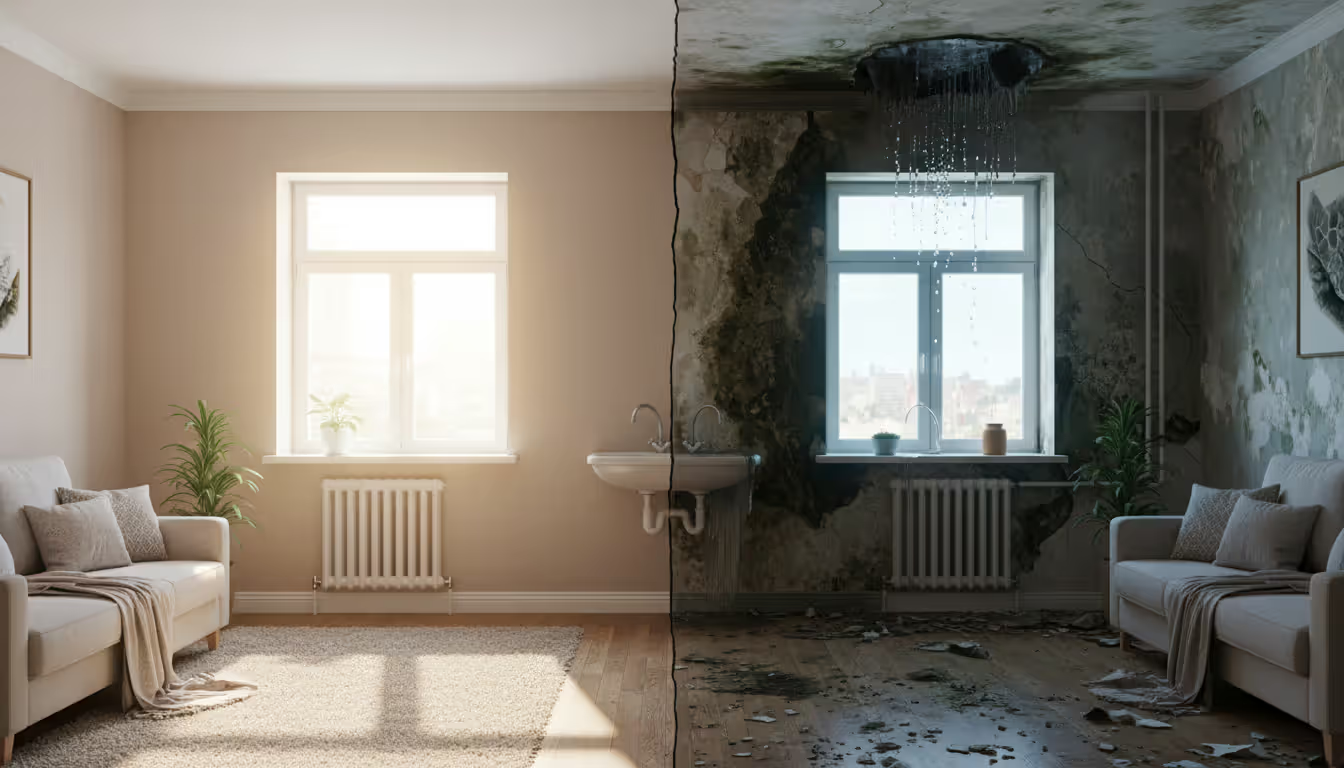
The implied warranty of habitability is a legal guarantee that residential rental property meets minimum standards for safe, sanitary living conditions. Unlike provisions you negotiate or sign in a lease, this warranty exists automatically in most states—landlords cannot eliminate it through contract language, and tenants don't need to request it.
This legal protection emerged from court decisions in the 1970s that recognized the inequality between landlords and tenants. Traditional property law treated leases like land sales, where buyers accepted property "as is." Courts eventually acknowledged that modern tenants rent housing for shelter, not land speculation, and deserve baseline livability regardless of what a lease says.
The warranty applies from the moment you take possession and continues throughout your tenancy. It covers conditions existing when you move in (unless you accepted them in writing with specific disclosures) and problems that develop later. Your landlord must maintain the property at habitable standards, not merely avoid making it worse.
Most states recognize this warranty through statutes or court decisions. A handful of states have weaker protections or apply them differently to single-family homes versus multi-unit buildings. The warranty typically doesn't apply to commercial leases, short-term vacation rentals under 30 days, or owner-occupied properties with minimal rental units, though state laws vary.
Author: Samantha Holloway;
Source: redmonpestmgt.com
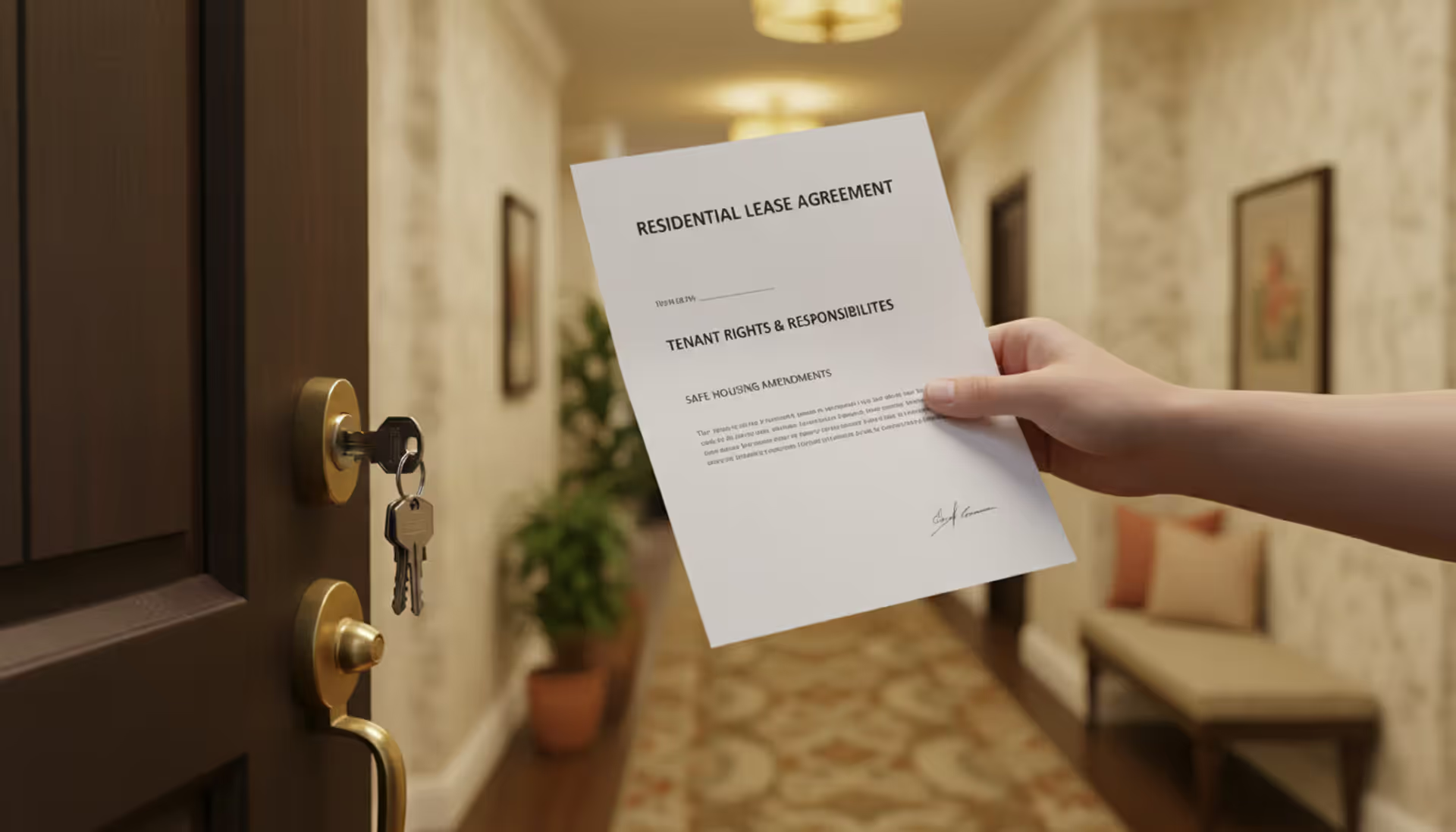
Crucially, you cannot waive this warranty. Lease clauses stating "tenant accepts property as-is" or "landlord not responsible for repairs" are unenforceable when they conflict with habitability standards. Some landlords include these provisions anyway, hoping tenants won't challenge them.
Habitability Standards Landlords Must Meet
State and local codes define specific requirements, but common habitability standards include:
Weatherproofing and structural integrity: Roofs, walls, and windows must keep out rain, snow, and wind. Broken windows, missing roof shingles that cause leaks, and doors that don't close properly typically violate habitability standards.
Heating systems: Landlords must provide adequate heat during cold months. Many states specify minimum temperatures (often 68°F during daytime hours).
Plumbing and hot water: Working toilets, sinks, and showers are mandatory. Hot water must be available at reasonable temperatures, typically between 110-120°F.
Electrical systems: Sufficient outlets, working lights in common areas, and safe wiring that doesn't create fire hazards are required.
Sanitation: Properties must have proper sewage disposal, trash receptacles, and freedom from pest infestations the landlord's negligence caused or failed to address.
Water supply: Clean, running water that meets health standards must be available.
Safe common areas: Stairways, hallways, and entryways must have adequate lighting and be free from hazards.
Smoke and carbon monoxide detectors: Nearly all states now require working detectors, with landlords responsible for installation and sometimes battery replacement.
Habitability vs. Cosmetic Issues
Not every defect violates habitability warranties. Peeling paint (unless it's lead paint), worn carpet, outdated appliances, and minor cracks in walls are generally cosmetic issues. Your landlord may have promised to address these in your lease, but they don't typically trigger habitability remedies.
The distinction matters because habitability violations allow specific legal remedies like rent withholding, while cosmetic issues only give you standard breach-of-contract claims. Courts ask whether the defect materially affects health, safety, or your ability to use the property as a residence.
A leaky faucet that drips annoyingly is cosmetic. The same faucet that leaks through the floor and causes mold growth becomes a habitability issue. One cockroach is a cosmetic problem; an infestation that persists despite your reasonable cleaning efforts violates habitability standards.
State-Specific Variations in Standards
California requires landlords to provide deadbolt locks and window locks. New York mandates window guards in apartments where children 10 and under reside. Texas allows landlords and tenants to agree in writing that tenants will handle certain repairs in exchange for rent reductions, something prohibited in many states.
Habitability Standards Comparison by State
State
Heat Requirement
Hot Water Standard
Pest Control Duty
Mold Remediation
California
Adequate heating facilities
Available at all times
Landlord must address infestations not caused by tenant
Landlord must remediate moisture problems causing mold
New York
Must maintain 68°F day/55°F night (Oct 1-May 31)
Minimum 120°F at tap
Landlord responsible except tenant-caused
Required when mold results from landlord's failure to maintain
Texas
Heating equipment must be provided if specified in lease
Required in reasonable amounts
Landlord must treat at tenant request if not tenant-caused
No specific statute; falls under general habitability
Florida
No statewide minimum temperature requirement
Must be provided in reasonable amounts
Landlord responsible for treatment in multi-family; shared in single-family
Must address water intrusion and leaks causing mold
Illinois
Adequate heat between September 15-June 1
Supplied at minimum 120°F
Landlord must provide pest-free unit at move-in and address non-tenant-caused infestations
Required when caused by landlord's failure to maintain property
Landlord Duty to Repair and Maintain Rental Units
Your landlord's duty activates when they receive proper notice of a problem. "Proper notice" typically means written notification describing the defect with enough detail that the landlord understands what needs repair. Texting a photo of a broken pipe may suffice in some states, but certified letters create the best documentation.
Landlords don't have to fix problems they don't know about. If your toilet has leaked for months but you never reported it, you likely can't claim a habitability violation. Exceptions exist when defects are obvious during routine inspections or when the landlord created the problem.
Response time requirements depend on the severity of the issue. Emergencies that threaten immediate health or safety—no heat in winter, no water, gas leaks, sewage backups—typically require same-day or next-day response. Non-emergency issues usually allow 7-30 days depending on state law.
Some states specify exact timeframes in statutes. Others leave "reasonable time" to court interpretation based on circumstances. A broken air conditioner might require immediate repair in Phoenix in July but could wait longer in Seattle in October.
Typical Repair Response Timeframes by Issue Type
Issue Severity
Examples
Typical Legal Deadline
Tenant Remedy if Missed
Emergency
No heat in winter, no water, gas leak, sewage backup, broken locks after break-in
Non-functioning refrigerator, single toilet in unit broken, significant roof leak, no hot water
3-7 days
Written notice, then rent withholding or repair-and-deduct after deadline
Non-urgent
Minor leaks, one outlet not working, cosmetic damage affecting habitability
14-30 days
Notice required, remedies available after reasonable time passes
Landlords can't retaliate against tenants who request repairs by raising rent, refusing to renew leases, or filing eviction actions. Federal and state laws protect tenants who exercise habitability rights, though proving retaliation requires showing the timing and circumstances suggest punishment for complaints.
Recognizing Uninhabitable Living Conditions
Obvious violations include no running water, non-functioning heating in cold climates, or raw sewage exposure. Less obvious situations require judgment about whether conditions materially affect livability.
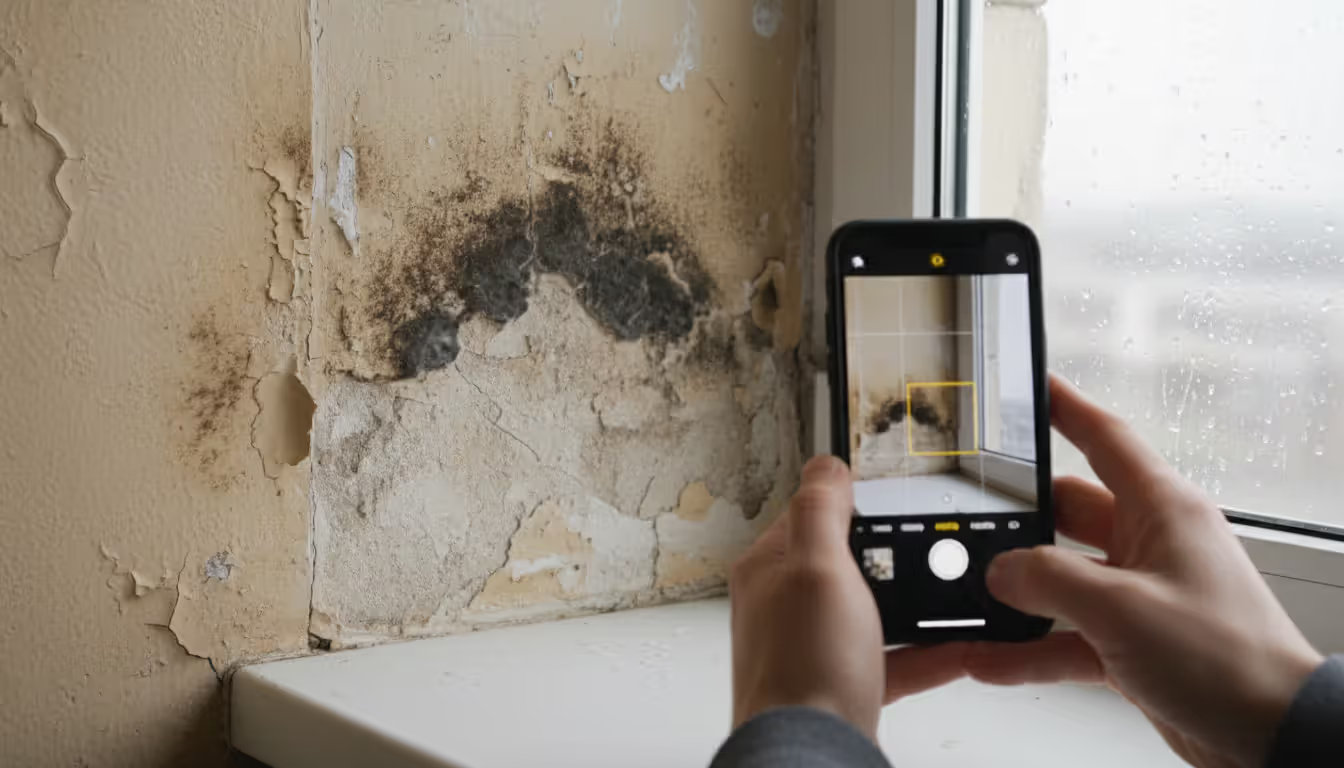
Mold becomes a habitability issue when it's widespread, visible, causes health symptoms, or results from the landlord's failure to fix water intrusion. A small patch of mildew in a shower corner you could clean doesn't qualify. Black mold spreading across bedroom walls from a roof leak the landlord ignored for months clearly violates habitability standards.
Pest infestations cross into uninhabitability when they're severe, persistent despite your reasonable efforts to maintain cleanliness, or result from structural problems like holes in walls. A few ants near your trash can aren't a violation. Mice entering through gaps around pipes the landlord should have sealed, or bedbugs spreading through a multi-unit building, trigger habitability protections.
Temperature extremes matter. Lack of heat when outdoor temperatures drop below freezing creates uninhabitable conditions within hours. Broken air conditioning in extreme heat can violate habitability in states with hot climates, particularly for vulnerable tenants with health conditions, though standards vary more than for heating.
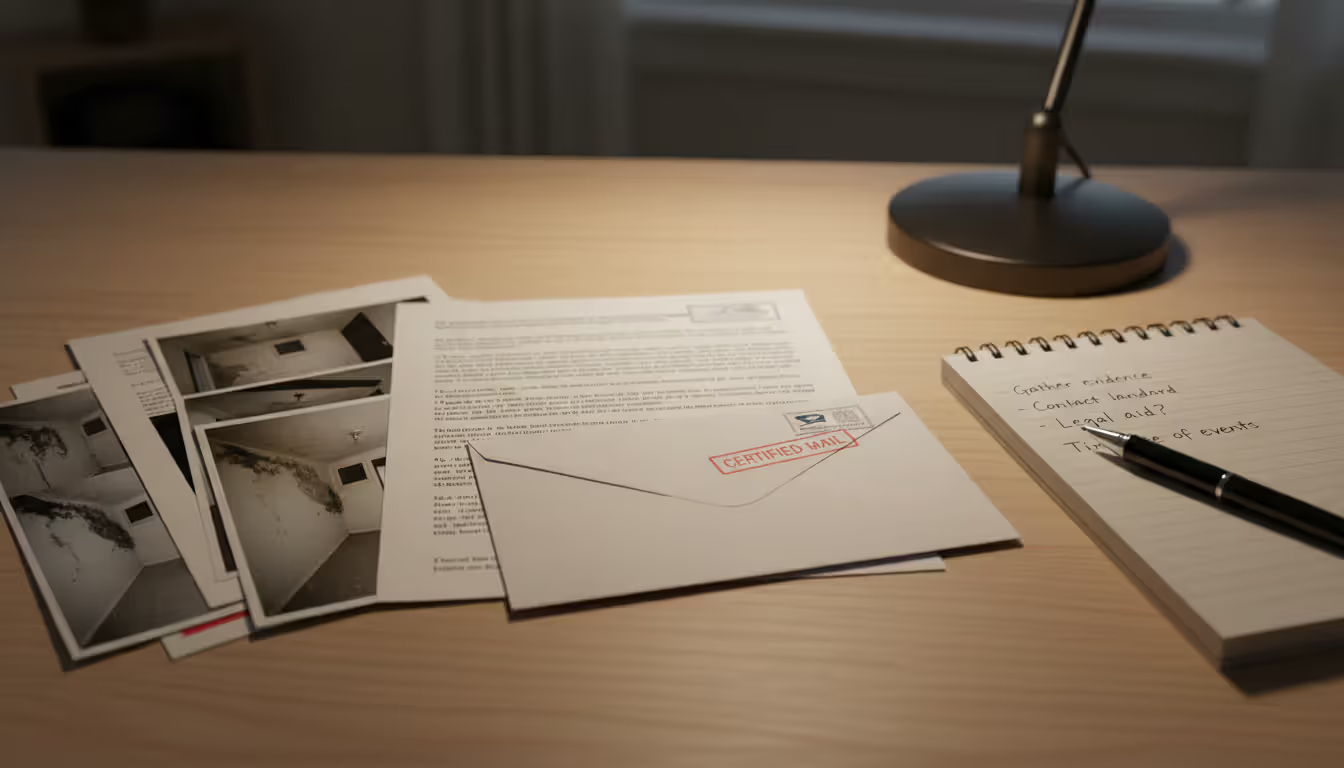
Document everything. Photograph problems from multiple angles with timestamps. Keep a written log of when issues started, how they've progressed, and every time you've reported them. Save all communication with your landlord—emails, texts, letters, and notes from phone conversations including dates and what was discussed. If inspectors visit, get copies of their reports.
Video documentation helps for intermittent problems. A pipe that only leaks during heavy rain or a heating system that fails overnight can be hard to prove without video evidence.
Author: Samantha Holloway;
Source: redmonpestmgt.com
How to Invoke the Warranty of Habitability
Taking effective action requires following specific procedures. Skipping steps can undermine your legal position even when you're clearly right about the habitability violation.
Step 1: Provide written notice. Send your landlord a letter or email describing the problem specifically. "The heat doesn't work" is less effective than "The furnace is not producing heat. The thermostat is set to 70°F but the indoor temperature is 58°F." Include the date you first noticed the problem.
Step 2: State the remedy you expect. Request that the landlord repair the issue within a reasonable timeframe. You can specify "within 7 days" or "immediately for this emergency," depending on severity.
Step 3: Reference your legal rights. Mention that the condition violates the implied warranty of habitability. This signals you understand your rights and aren't making a casual request.
Step 4: Send via certified mail or email with read receipt. You need proof of when the landlord received notice. Certified mail with return receipt provides the strongest evidence. Email works if you can prove the landlord received and read it.
Step 5: Keep copies of everything. Maintain a file with your notice, proof of delivery, photos, and any landlord responses.
Step 6: Follow up in writing. If the deadline passes without adequate response, send another notice documenting the landlord's failure and stating your intended remedy (rent withholding, repair-and-deduct, etc.).
Many tenants make the mistake of only calling or texting about problems. Verbal notice may technically suffice, but proving what you said and when becomes difficult in disputes. Always put it in writing.
Another common error is waiting too long to invoke formal rights. If you've complained informally for months, then suddenly withhold rent without proper written notice and deadlines, courts may side with your landlord despite the legitimate habitability violation.
Tenant Remedies for Uninhabitable Conditions
When landlords fail to maintain habitable conditions after proper notice, tenants have several legal remedies. The availability and procedures for each remedy vary significantly by state.
Repair-and-deduct allows you to hire someone to fix the problem and subtract the cost from your rent. Most states cap this at one month's rent or a specific dollar amount (often $500-$1,000). You typically must give the landlord notice and opportunity to repair first, keep receipts, and only use this remedy for specific types of repairs. Some states limit how often you can use repair-and-deduct (once or twice per year).
Reporting to housing inspectors brings government enforcement. Call your local building or health department to request an inspection. Inspectors can issue violation notices requiring repairs by specific deadlines, with fines for non-compliance. This remedy costs you nothing and creates official documentation, but inspectors may find violations in your unit that you're responsible for correcting.
Small claims court lets you sue for rent reductions, moving costs, or property damage caused by habitability violations. You can typically recover the difference between the rent you paid and the reduced value of the uninhabitable unit. If you paid $1,500/month for an apartment but it was only worth $900/month due to no heat for two months, you could sue for $1,200.
Rent Withholding Rules and Risks
Rent withholding means you stop paying some or all rent until the landlord makes repairs. This powerful remedy comes with strict requirements and serious risks if done incorrectly.
Most states allowing rent withholding require you to: - Provide written notice of the defect - Give the landlord reasonable time to repair - Continue living in the unit - Pay withheld rent into an escrow account or court registry in some jurisdictions - Only withhold for genuine habitability violations, not minor issues
You generally cannot withhold rent for problems you caused. If you broke the window, you can't withhold rent because the landlord hasn't fixed it.
The amount you can withhold often equals the reduced rental value of the unit in its uninhabitable state, not necessarily the full rent. An apartment with no hot water might be worth 30-40% less, not completely worthless.
Critical warning: Rent withholding done improperly can result in eviction for non-payment. Some states don't recognize rent withholding as a defense to eviction at all—you must pay rent, then sue separately for damages. Know your state's specific laws before withholding a single dollar.
The implied warranty of habitability fundamentally changed the landlord-tenant relationship by recognizing that safe housing is a basic necessity, not a luxury. However, tenants must exercise their rights carefully and procedurally correctly, because courts will not excuse improper rent withholding even when the underlying habitability complaint is valid
— Janet Martinez
What Is Constructive Eviction?
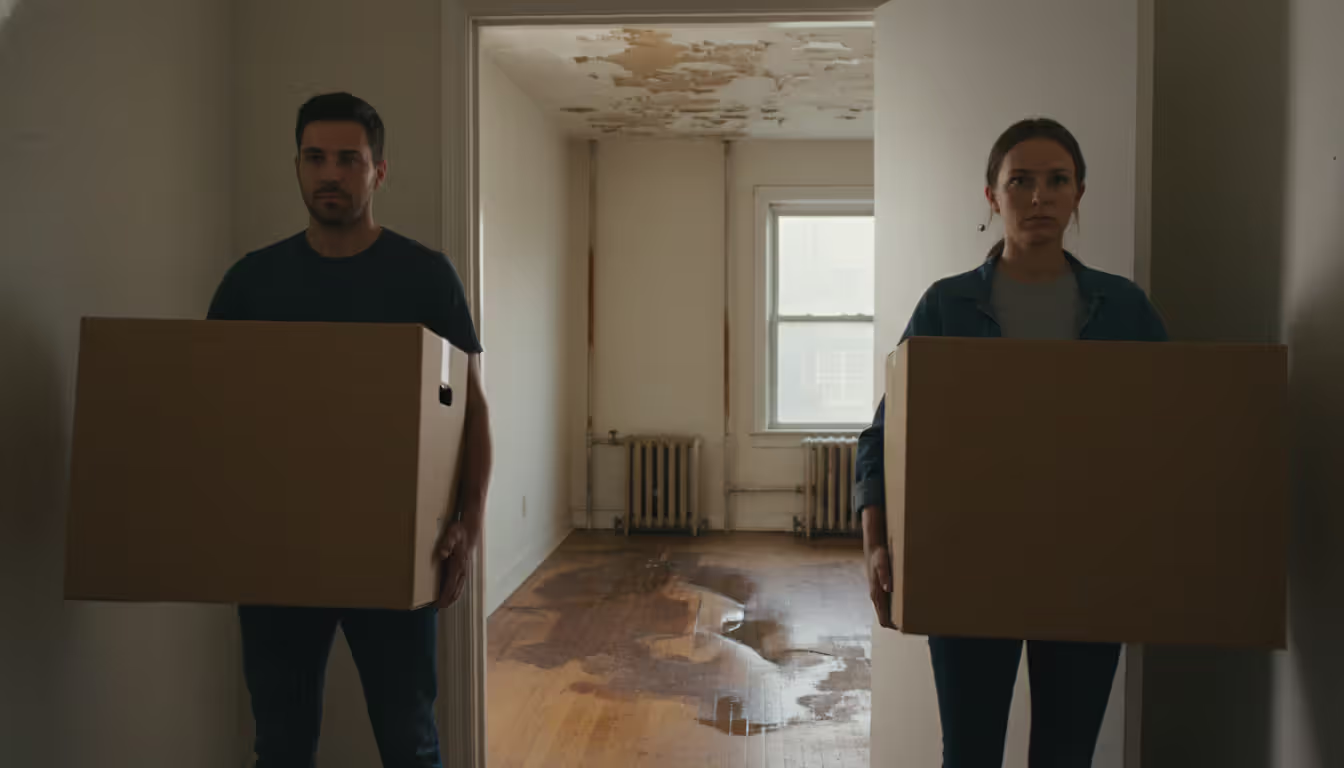
Constructive eviction occurs when a landlord's failure to maintain habitable conditions makes the property so unlivable that you're forced to move out. It's treated legally as if the landlord evicted you, even though they didn't formally terminate your lease.
To claim constructive eviction, you typically must prove: - A serious habitability violation existed - You notified the landlord and gave reasonable opportunity to repair - The landlord failed to fix the problem - The conditions were so severe you couldn't reasonably continue living there - You actually moved out within a reasonable time after the problem began
Constructive eviction is an all-or-nothing remedy. You must move out to claim it. If you stay, you can't later argue you were constructively evicted. This makes it risky—if a court disagrees the conditions were severe enough, you may owe rent for breaking your lease.
Examples that might support constructive eviction: complete loss of heat in winter for weeks, sewage flooding that makes the unit unsanitary, or toxic mold throughout the property causing serious health effects. A broken dishwasher or even a non-functioning bathroom in a two-bathroom apartment typically won't qualify.
Author: Samantha Holloway;
Source: redmonpestmgt.com
When You Can Legally Break Your Lease
Beyond constructive eviction, some states allow you to terminate your lease through specific procedures when landlords fail habitability obligations.
You might be able to break your lease legally if: - The landlord fails to make required repairs within the statutory deadline after proper notice - The unit violates local housing codes and the landlord won't correct violations - The landlord shuts off utilities to force you out - Conditions pose immediate danger to health or safety
Procedures vary. Some states require you to give 30 days' notice. Others allow immediate termination for emergencies. You may need to provide documentation like inspection reports proving the violations.
Breaking a lease without following proper procedures can result in liability for remaining rent, even if habitability violations existed. The landlord's breach doesn't automatically excuse your obligations—you must invoke your legal remedies correctly.
Author: Samantha Holloway;
Source: redmonpestmgt.com
Frequently Asked Questions
Can a landlord waive the warranty of habitability in the lease?
No. The implied warranty of habitability exists by operation of law and cannot be waived through lease provisions. Clauses stating you accept the property "as-is," waive the right to repairs, or release the landlord from habitability obligations are unenforceable in nearly all states. Some jurisdictions allow limited exceptions for specific disclosed conditions you accept in writing, but landlords cannot use lease language to eliminate their basic duty to maintain habitable premises. If your lease contains such provisions, they're void, though the rest of your lease remains valid.
How long does a landlord have to fix a broken heater?
Heating failures are typically classified as emergencies requiring response within 24-48 hours in most states, particularly during cold weather when lack of heat poses immediate health risks. The exact timeframe depends on your state's laws, local ordinances, and the severity of the situation. In freezing temperatures, landlords may need to provide temporary heat sources immediately while arranging permanent repairs. If your landlord doesn't respond to a heating emergency within the required timeframe, you may have the right to arrange emergency repairs yourself and deduct the cost from rent, withhold rent, or relocate to a hotel with costs charged to the landlord, depending on your state's laws.
Can I withhold rent if my apartment has mold?
Possibly, but it depends on the mold's severity, cause, and your state's laws. If mold results from the landlord's failure to fix leaks or moisture problems, covers substantial areas, and poses health risks, it likely violates habitability standards and may justify rent withholding after proper notice. Minor mold in a shower corner you could clean yourself typically doesn't qualify. You must follow your state's rent withholding procedures exactly—provide written notice, give the landlord reasonable time to remediate, and potentially deposit withheld rent in escrow. Document the mold with photos and consider getting an inspection report. Never withhold rent without understanding your state's specific requirements, as improper withholding can result in eviction.
What's the difference between constructive eviction and breaking a lease?
Constructive eviction is a legal doctrine that treats the landlord's failure to maintain habitable conditions as equivalent to forcing you out, excusing your lease obligations. To claim constructive eviction, conditions must be so severe you cannot reasonably continue living there, and you must actually move out. Breaking a lease generally refers to terminating your lease early for any reason, which normally makes you liable for remaining rent unless you have legal justification. Some states provide statutory rights to terminate leases for habitability violations without meeting the high bar of constructive eviction—you follow specific procedures like giving notice and a deadline, then can terminate if repairs aren't made. Constructive eviction is a common-law remedy requiring you to prove your case if disputed; statutory termination rights follow specific steps defined in law.
Do I need to pay rent into escrow when withholding?
This depends entirely on your state's laws. Some states require tenants to deposit withheld rent into a court-supervised escrow account or with the court registry to legally withhold rent. Others allow you to simply stop paying rent (or pay reduced rent) without depositing it anywhere, though you should set the money aside in case a court later determines you owe it. A few states don't recognize rent withholding at all as a tenant remedy. Paying into escrow demonstrates good faith and ensures you have the funds available if a court orders you to pay. It also protects the money from being spent on other expenses. Check your specific state's statutes or consult a tenant rights organization to understand the requirements in your jurisdiction before withholding any rent.
Can I be evicted for complaining about habitability issues?
Landlords cannot legally evict you in retaliation for exercising your rights to request repairs or report habitability violations. Federal law and most state laws prohibit retaliatory eviction, rent increases, or other penalties against tenants who complain about housing code violations, report landlords to authorities, or organize tenant unions. However, landlords can still evict you for legitimate reasons like non-payment of rent or lease violations unrelated to your complaints. If your landlord files for eviction shortly after you report problems, you may have a retaliation defense, but you'll need to prove the timing and circumstances show retaliation. Document everything—when you reported issues, when the eviction notice came, and any statements the landlord made. Retaliatory eviction protections typically cover actions taken within 90-180 days after you exercised your rights, depending on your state.
The implied warranty of habitability gives tenants meaningful leverage against landlords who neglect their properties, but these rights only help when you know they exist and exercise them correctly. Habitability violations won't fix themselves, and landlords who ignore problems rarely improve without pressure.
Start by understanding what qualifies as a genuine habitability issue versus a cosmetic annoyance. Know your state's specific standards and procedures—the general principles discussed here apply broadly, but details matter when you're withholding rent or terminating a lease. Document problems thoroughly from the first moment you notice them.
Most importantly, put everything in writing and follow proper notice procedures. Informal complaints, no matter how frequent or justified, don't trigger your legal remedies. A single certified letter describing the problem and invoking your habitability rights accomplishes more than months of texts and phone calls.
When landlords fail to maintain safe, sanitary housing, you have options beyond suffering through uninhabitable conditions or walking away from your lease. Use the remedies available in your state, but use them carefully and by the book. The law protects tenants who assert their rights properly while penalizing those who take shortcuts, even when their underlying complaints are completely valid.
Property taxes in land contracts confuse many buyers and sellers. While contracts typically assign responsibility to buyers, sellers remain legally liable until the deed transfers. Understanding this split obligation and the consequences of unpaid taxes is critical for protecting your investment
A sublease agreement creates a legal bridge between your existing lease obligations and someone else's temporary housing needs. Understanding the three-party relationship, securing landlord approval, and drafting comprehensive agreements protects your security deposit and rental history
A residential lease agreement creates legally binding obligations for both tenants and landlords. This comprehensive guide explains standard lease clauses, rights and responsibilities, security deposit rules, renewal processes, subletting options, and how to break a lease legally while avoiding costly mistakes
Persistent noise, odors, or encroachment from neighbors can cross the line into legal nuisance. Understand what qualifies as actionable nuisance under US law, the difference between private and public nuisance, and the legal steps to resolve disputes—from documentation to court remedies
The content on this website is provided for general informational and educational purposes only. It is intended to explain concepts related to real estate law, property rights, leases, liens, zoning, landlord-tenant disputes, and litigation.
All information on this website, including articles, guides, and examples, is presented for general educational purposes. Legal outcomes may vary depending on jurisdiction, property type, and individual circumstances.
This website does not provide legal advice, and the information presented should not be used as a substitute for consultation with qualified attorneys or real estate professionals.
The website and its authors are not responsible for any errors or omissions, or for any outcomes resulting from decisions made based on the information provided on this website.