Adverse possession is a legal doctrine that allows someone to claim ownership of land they don't legally own by occupying it for a specific period under certain conditions. The concept might seem counterintuitive—how can using someone else's property eventually make it yours? Yet this principle exists in every U.S. state, rooted in the idea that land should be used productively rather than left idle.
The legal mechanism transfers property rights from the titled owner to the possessor when strict requirements are met over many years. Courts don't award these claims lightly. The burden of proof falls entirely on the person claiming adverse possession, who must demonstrate they've satisfied every element the law demands.
Historically, adverse possession emerged from English common law to encourage land development and resolve boundary disputes that had persisted for generations. When property sat unused while someone else cultivated, improved, or maintained it openly for decades, the law recognized the possessor's claim. This doctrine also addresses situations where official records contain errors, fences were built on incorrect survey lines generations ago, or neighbors have treated certain boundaries as settled facts for longer than anyone can remember.
The difference between adverse possession and simple trespassing comes down to intent, duration, and legal recognition. A trespasser knows they're on someone else's property temporarily and has no claim to ownership. An adverse possessor occupies land as if they own it, making improvements, paying taxes in some states, and treating the property as theirs for the entire statutory period. Squatting typically refers to occupying abandoned buildings without permission—it may eventually lead to adverse possession claims, but most squatters never meet the stringent requirements.
Legal Requirements to Claim Property Through Adverse Possession
Five core elements must be proven simultaneously throughout the statutory period. Missing even one element for a single day can reset the clock or invalidate the entire claim.
The Hostile Claim Requirement Explained
"Hostile" in legal terms doesn't mean aggressive or antagonistic. It means the possession occurs without the owner's permission and is adverse to the owner's interests. Three different standards exist across states for interpreting hostility:
The "awareness" standard requires the possessor to know they're occupying someone else's land. The "good faith" standard applies when the possessor genuinely believes they own the property—perhaps due to a faulty deed or incorrect survey. The "objective" standard, used in most states, simply asks whether the possessor is using the land as an owner would, regardless of their mental state.
Permission destroys hostility immediately. If a property owner gives a neighbor written consent to use a driveway or plant a garden on their land, that use can never ripen into adverse possession—no matter how many years pass. The neighbor is there with permission, making their presence lawful rather than hostile.
Author: Daniel Crosswell;
Source: redmonpestmgt.com
Open and Notorious Possession Standards
The possession must be visible and obvious enough that a reasonable property owner would notice it. Secret or hidden use doesn't count. Courts ask: Would an owner who occasionally inspected their property discover this use?
Mowing a lawn, building a fence, planting crops, constructing a shed, or parking vehicles all constitute open and notorious possession. Using a hiking trail through wooded property might qualify if the path is clearly worn and regularly maintained. Installing underground utilities without visible surface evidence would likely fail this test.
The standard protects owners from losing property to activities they had no reasonable way to detect. If you can't see it, you can't stop it—and the law won't penalize you for failing to prevent something invisible.
Continuous Possession Rule and Time Limits
Possession must continue uninterrupted for the entire statutory period, which ranges from five to thirty years depending on the state. "Continuous" doesn't mean the possessor must be physically present every moment. Seasonal use of vacation property, farming land that lies fallow in winter, or maintaining a hunting cabin used only during certain months can all satisfy continuity if the pattern matches how a typical owner would use that type of property.
Abandoning the property, even briefly, can break continuity. If someone possesses land for eight years in a state with a ten-year requirement, then leaves for six months, they must start the ten-year clock over from the beginning.
Some states allow "tacking," where successive possessors can combine their periods of possession if they're related by blood, deed, or contract. A father who possessed land for seven years can transfer his claim to his daughter, who needs only three more years in a ten-year state.
Exclusive Use Requirement
The possessor must occupy the property exclusively, not sharing control with the legal owner or the general public. This doesn't prohibit having family members or guests on the property—it means the possessor controls access and use.
If both the titled owner and the adverse possessor are using the same parcel simultaneously—perhaps both grazing cattle on the same pasture—exclusivity fails. Similarly, if the possessor allows the public to freely cross the land, they're not exercising the exclusive control an owner would maintain.
Actual Possession vs Color of Title
Actual possession means physically occupying and using the property. The possessor must treat the land as an owner would: maintaining it, improving it, or extracting resources from it. The specific activities depend on the property type—residential lots require different use than farmland or timber tracts.
Color of title exists when the possessor has a document (like a deed) that appears to give them legal ownership but is somehow defective. Perhaps the deed contains an incorrect legal description, was improperly executed, or came from someone who didn't actually own the property. Possessing under color of title often shortens the required time period and may allow the possessor to claim the entire parcel described in the defective document, not just the portion they physically occupy.
State-Specific Time Limits and Variations
Statutory periods vary dramatically across jurisdictions, reflecting different policy priorities about land use and property rights.
State
Standard Period (years)
With Color of Title (years)
Tax Payment Required
California
5
5
Yes
Texas
10
3–5
Sometimes
Florida
7
7
Yes (with color of title)
New York
10
10
No
Georgia
20
7
No
Illinois
20
7
Yes (with color of title)
Pennsylvania
21
21
No
Ohio
21
21
No
Michigan
15
15
No
North Carolina
20
7
Sometimes
Arizona
10
3
Yes
Washington
10
7
Yes
Massachusetts
20
20
No
Virginia
15
15
No
Colorado
18
7
Yes
Oregon
10
10
No
Tennessee
20
7
Yes (with color of title)
New Jersey
30
30
No
Several states require the adverse possessor to pay property taxes throughout the statutory period, particularly when claiming under color of title. This requirement adds a significant hurdle—most people won't pay taxes on property they don't believe they own. In California, for example, the five-year period only begins when the claimant starts paying taxes under a written instrument or court judgment.
States with shorter periods generally impose more requirements. Arizona's three-year period with color of title requires tax payments and substantial improvements. Texas has multiple pathways: ten years of cultivation or possession under written memorandum of title, five years with color of title and tax payments, or twenty-five years of peaceable possession (rarely used).
Author: Daniel Crosswell;
Source: redmonpestmgt.com
Common Adverse Possession Scenarios and Examples
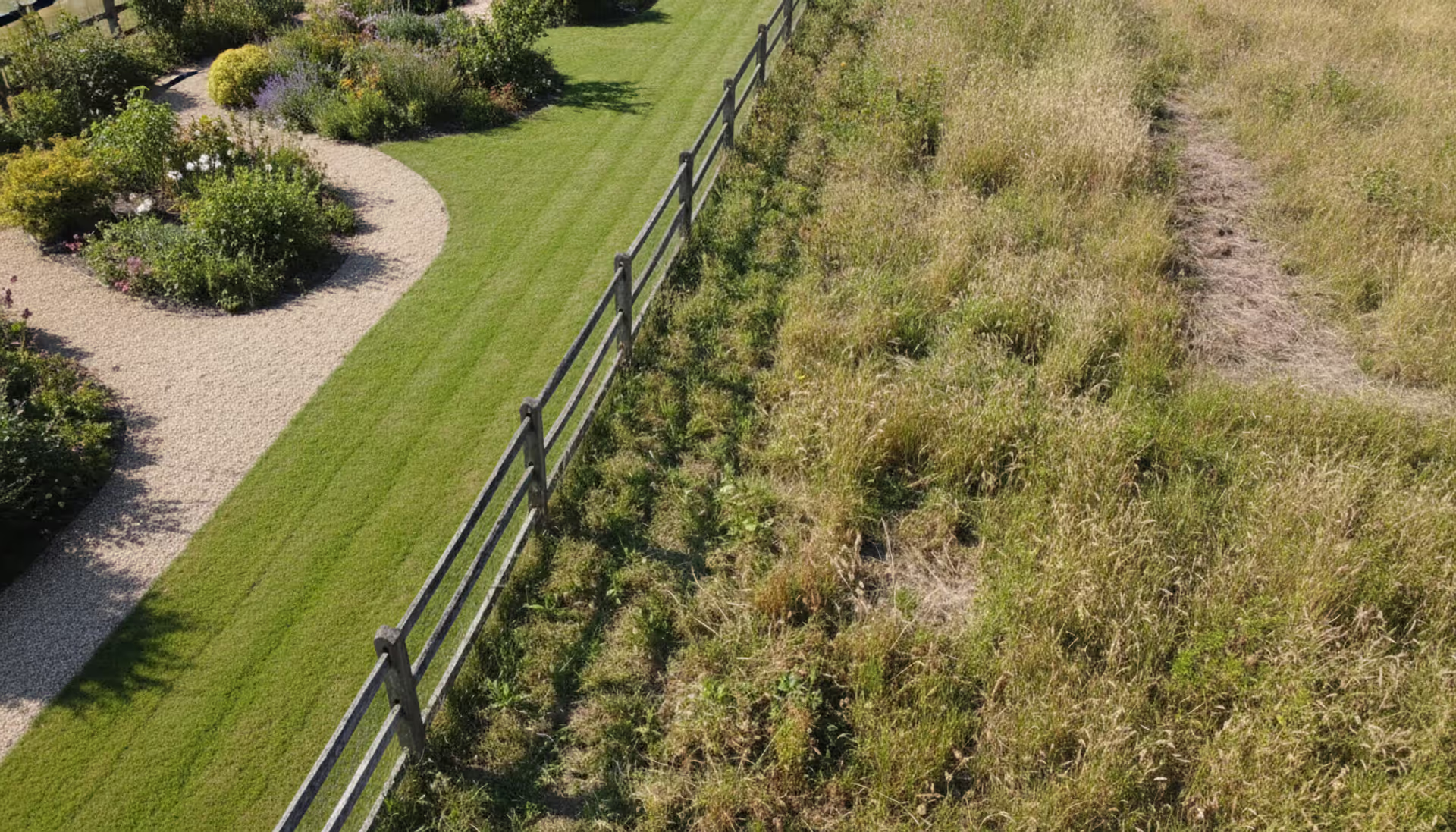
Boundary disputes generate the majority of adverse possession claims. Two neighbors share a property line marked by a fence built forty years ago. Neither questions its location until one orders a survey before selling. The survey reveals the fence sits three feet inside one owner's legal boundary. The neighbor whose garden, patio, and sprinkler system occupy those three feet for decades may have a valid adverse possession claim to that strip.
Driveway cases present similar patterns. A shared driveway serves two homes, but the asphalt actually sits entirely on one lot according to legal descriptions. If both families have used and maintained the driveway for the statutory period, the neighbor without legal title might claim an easement by prescription (similar to adverse possession but granting use rights rather than ownership) or actual ownership of the driveway portion.
Abandoned properties attract adverse possession attempts, though these rarely succeed. Someone moving into a vacant house and paying utilities doesn't satisfy the requirements if the owner is simply letting the property sit empty while deciding what to do with it. The possession isn't hostile if the owner hasn't objected simply because they're not monitoring the property closely. Courts distinguish between true abandonment—where an owner has relinquished all interest—and mere non-use.
Vacation homes and seasonal properties face higher risks. An owner who visits their lake cabin two weeks each summer might not notice that a neighbor has extended their dock onto the owner's waterfront, built a fire pit on the owner's beach, or cleared trees to improve their view across the owner's lot. Years pass before the owner discovers these encroachments, potentially after the statutory period has expired.
Most adverse possession disputes I handle involve good people who genuinely didn't realize they were on someone else's property.A fence gets built in the wrong place, everyone treats it as the boundary for a generation, and suddenly we have a legal mess when someone orders a survey. The law isn't designed to reward bad actors—it's meant to recognize reality when the facts on the ground have diverged from the paperwork for longer than anyone can remember
— Robert Chen
How to Prevent Adverse Possession on Your Property
Regular inspections represent your first line of defense. Walk your property boundaries at least annually, looking for encroachments, new structures, worn paths, or signs of use. Large parcels might require hiring someone to inspect remote areas you can't easily access.
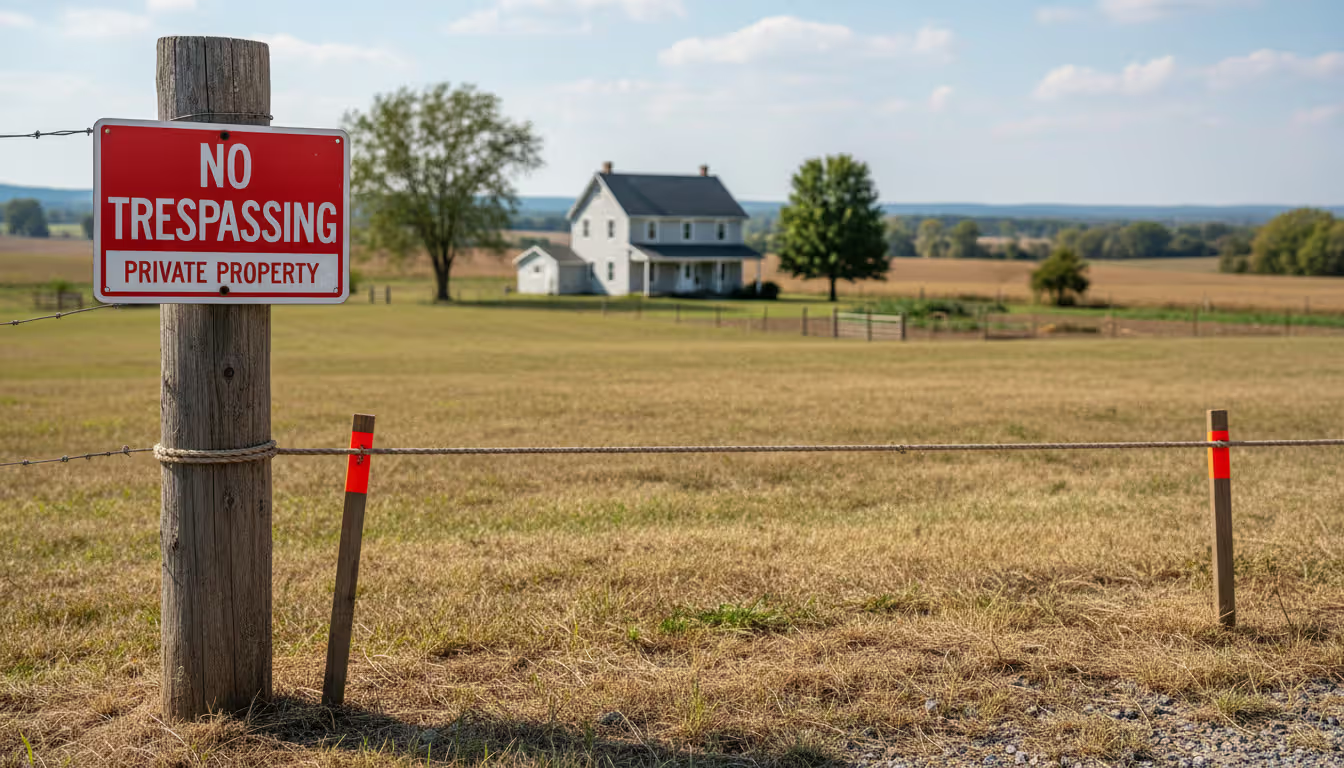
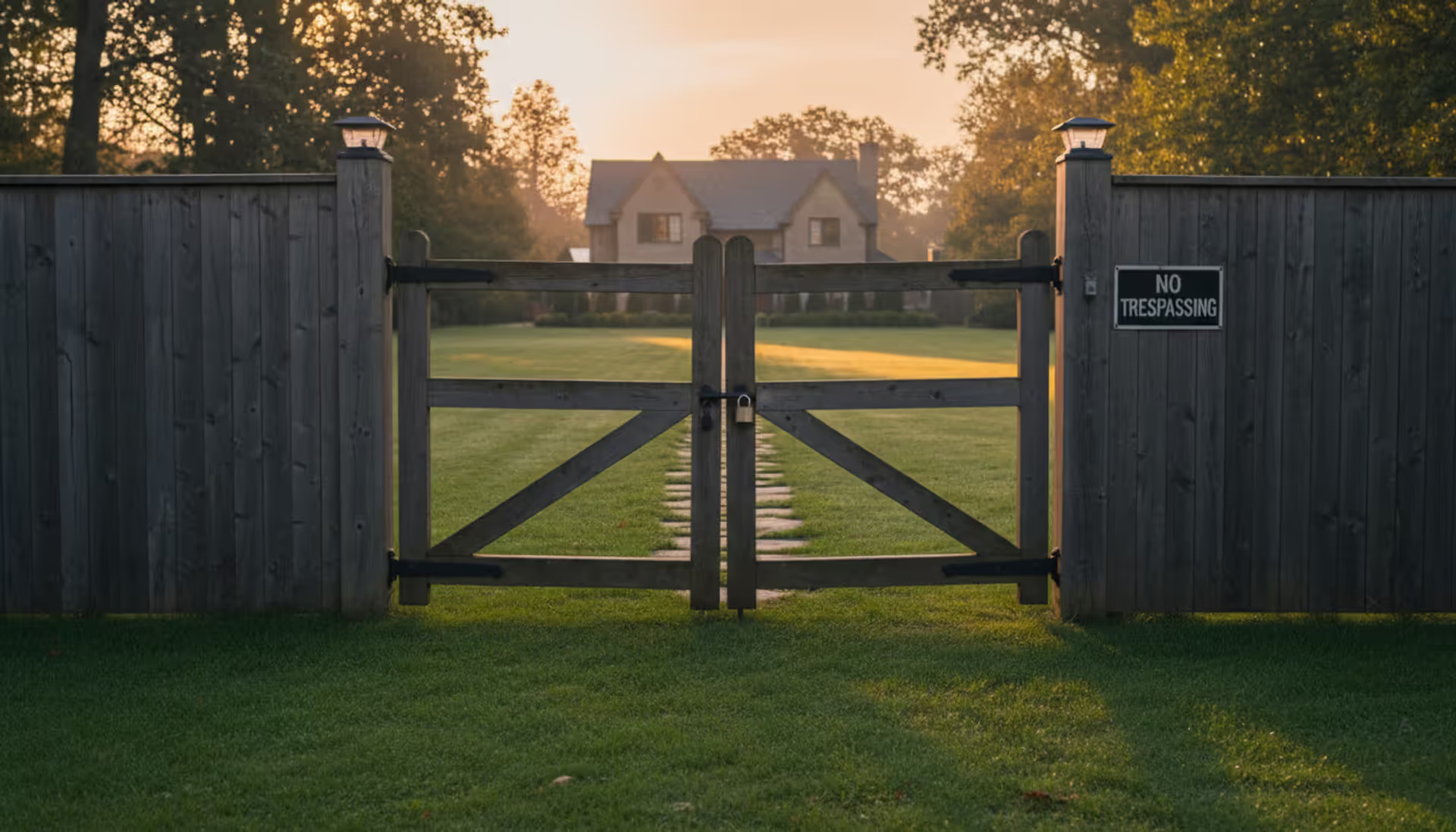
Posted no trespassing signs establish that any use is without permission, though signs alone won't prevent adverse possession if you don't enforce them. Place signs at entry points and along boundaries, replacing them when they deteriorate. Some states require specific language or posting intervals.
Written permission agreements protect you when you want to allow someone to use your property temporarily. If a neighbor asks to store equipment on your land or cross your property to access theirs, provide written permission that explicitly states the use is temporary, revocable, and doesn't grant any ownership rights. Renew these agreements periodically—every one to three years—to document the ongoing permissive nature.
Cease and desist letters serve as formal notice when you discover unauthorized use. Send them via certified mail, documenting the date and describing the specific encroachment. This creates a paper trail showing you didn't acquiesce to the use and destroys any claim that possession was peaceable or unopposed.
Boundary surveys provide definitive evidence of property lines. If you're uncertain where your property ends, commission a licensed surveyor to mark the boundaries with stakes or monuments. Record the survey with your county to create a public record. When neighbors dispute line locations, a recent survey carries substantial weight.
Author: Daniel Crosswell;
Source: redmonpestmgt.com
Legal action may become necessary when someone refuses to stop encroaching after you've sent written demands. Filing a trespassing lawsuit or seeking an injunction interrupts the adverse possession clock and demonstrates you're actively defending your property rights. The cost of legal action often seems excessive for minor encroachments, but allowing them to continue for the statutory period costs you far more—the land itself.
Adverse Possession vs Trespassing: Key Differences
Trespassing is a criminal offense in most circumstances—entering or remaining on property without authorization. Adverse possession is a civil legal doctrine that can result in ownership transfer. A trespasser might face fines or jail time. An adverse possessor faces a lawsuit to quiet title or eject them from the property.
Intent distinguishes the two concepts. Trespassers know they're on someone else's property without permission. Adverse possessors occupy land as if they own it, often believing they have legitimate claims. A hiker who ignores "no trespassing" signs commits criminal trespass. A neighbor who builds a garage partially on your lot because they relied on an incorrect survey might eventually claim adverse possession if all elements are met.
Property owners have immediate remedies against trespassers: calling police, seeking criminal prosecution, or filing for emergency injunctions. Against adverse possessors who've occupied land for years, owners must file quiet title actions to confirm their ownership or ejectment actions to remove the possessor—both civil proceedings requiring proof and potentially lengthy litigation.
Trespassing can evolve into adverse possession if the trespasser's use continues long enough and satisfies all required elements. The transformation isn't automatic. A trespasser who occasionally cuts through your property for fifteen years hasn't gained adverse possession rights because their use wasn't exclusive, continuous in the required sense, or possessory. But a trespasser who fences off a portion of your land, builds a workshop, and uses it daily for the statutory period might succeed in an adverse possession claim.
Author: Daniel Crosswell;
Source: redmonpestmgt.com
FAQ About Adverse Possession
Can someone take my property if I don't use it?
Non-use alone doesn't create adverse possession rights for others. You can leave property vacant for decades without losing ownership. Someone else must actively possess your property, meet all five legal elements, and maintain that possession for the entire statutory period. However, properties you rarely visit face higher practical risks because you're less likely to notice encroachments before they ripen into legal claims. Unused property still belongs to you, but monitoring it protects you from losing portions to adverse possessors who assume your absence means abandonment
What happens if I discover someone claiming adverse possession?
Take immediate action to interrupt their claim. Send a certified letter demanding they cease use of your property. If they refuse, file a lawsuit to eject them or quiet title confirming your ownership. Granting written permission for their continued use while you resolve the situation can convert their hostile possession into permissive use, destroying their adverse possession claim. Consult a real estate attorney to evaluate whether they've already satisfied the statutory period. If they haven't, stopping their use now prevents them from ever completing the requirements. If they have, you'll need to defend against their claim in court, where they bear the burden of proving every element.
Does paying property taxes strengthen an adverse possession claim?
In states that require tax payments as an element of adverse possession, paying taxes is essential—without it, the claim fails regardless of how long possession continues. In states where tax payments aren't required, they still strengthen claims by demonstrating the possessor treated the property as their own and providing documentary evidence of the possession duration. Tax records create a paper trail showing exactly when possession began and that it continued uninterrupted. Some courts view tax payments as particularly strong evidence of the possessor's good faith belief in their ownership, though this varies by jurisdiction.
Can adverse possession apply to government or public land?
Most states prohibit adverse possession claims against government-owned property, whether federal, state, or municipal. The reasoning is that public land belongs to all citizens, and allowing individuals to claim it through long-term use would harm the public interest. Some limited exceptions exist—a few states allow adverse possession against certain types of government land under very narrow circumstances, typically involving long-standing boundary errors. Native American tribal lands, federal parks, wildlife refuges, and similar properties are immune from adverse possession. Private parties cannot acquire public land simply by occupying it, regardless of duration.
How do I prove I've met the adverse possession requirements?
Documentation is critical. Gather photographs showing your use of the property over time, receipts for improvements or maintenance, utility bills in your name for structures on the land, tax payment records, affidavits from neighbors who witnessed your possession, and any surveys or deeds (even if defective) supporting your claim. The more evidence spanning the entire statutory period, the stronger your case. Many adverse possession claims fail because possessors can't prove continuous use for every year required. Keep detailed records from the moment you begin possessing property if you believe you might have a claim. Witness testimony helps, but physical evidence and documents carry more weight.
What should I do if a neighbor is encroaching on my property?
Address encroachments immediately, even if they seem minor. Start with a friendly conversation—your neighbor might not realize their fence, shed, or landscaping crosses the property line. If conversation doesn't resolve the issue, send a formal written notice via certified mail identifying the encroachment and requesting removal within a specific timeframe (30-60 days is reasonable). Commission a boundary survey if property lines are unclear; share the results with your neighbor. If they refuse to correct the encroachment, consult an attorney about filing a trespassing lawsuit or seeking an injunction. Don't wait years to act—every day of continued encroachment brings your neighbor closer to satisfying adverse possession requirements.
Adverse possession claims succeed when property owners remain unaware of encroachments until statutory periods expire. The doctrine doesn't reward bad behavior—it recognizes changed circumstances when possession has continued openly for so long that treating the possessor as the owner aligns reality with legal title.
Property ownership carries responsibilities beyond paying taxes and maintaining structures. Knowing where your boundaries lie, monitoring those boundaries regularly, and responding promptly to encroachments protects you from losing land you legally own. The investment in periodic surveys and boundary inspections costs far less than litigating adverse possession claims or losing valuable property.
For those considering adverse possession claims, understand that courts scrutinize these cases carefully. You must prove every element for every day of the statutory period. Gaps in evidence, periods of non-use, or failure to meet even one requirement defeats your claim entirely. The process isn't a shortcut to free property—it's a demanding legal doctrine with strict requirements that few claimants fully satisfy.
Whether defending your property or pursuing a claim, the complexity of adverse possession law makes professional legal advice essential. State-specific variations, local precedents, and the particular facts of your situation determine outcomes. An experienced real estate attorney can evaluate your circumstances, explain your rights and obligations, and help you navigate the legal process effectively.
Zoning regulations determine what you can build and where across the United States. This guide explains zoning law basics, classification types, how to find zoning information, navigate variances and permits, and address alternative structures like shipping containers
The Uniform Partition of Heirs Property Act prevents forced sales of inherited family land at below-market prices through mandatory appraisals, buyout rights, and partition in kind preferences. Twenty-nine states have adopted this reform legislation as of 2026
Trespassing represents one of the most common property violations in the US. Learn the legal definitions, differences between criminal and civil trespass, penalties, proper signage requirements, and how property owners can legally protect their land from unauthorized entry
Real estate fraud costs Americans hundreds of millions annually through wire transfer scams, forged deeds, and foreclosure rescue schemes. This comprehensive guide explains common fraud types, warning signs to watch for, and practical prevention steps to protect your property and finances during transactions
The content on this website is provided for general informational and educational purposes only. It is intended to explain concepts related to real estate law, property rights, leases, liens, zoning, landlord-tenant disputes, and litigation.
All information on this website, including articles, guides, and examples, is presented for general educational purposes. Legal outcomes may vary depending on jurisdiction, property type, and individual circumstances.
This website does not provide legal advice, and the information presented should not be used as a substitute for consultation with qualified attorneys or real estate professionals.
The website and its authors are not responsible for any errors or omissions, or for any outcomes resulting from decisions made based on the information provided on this website.