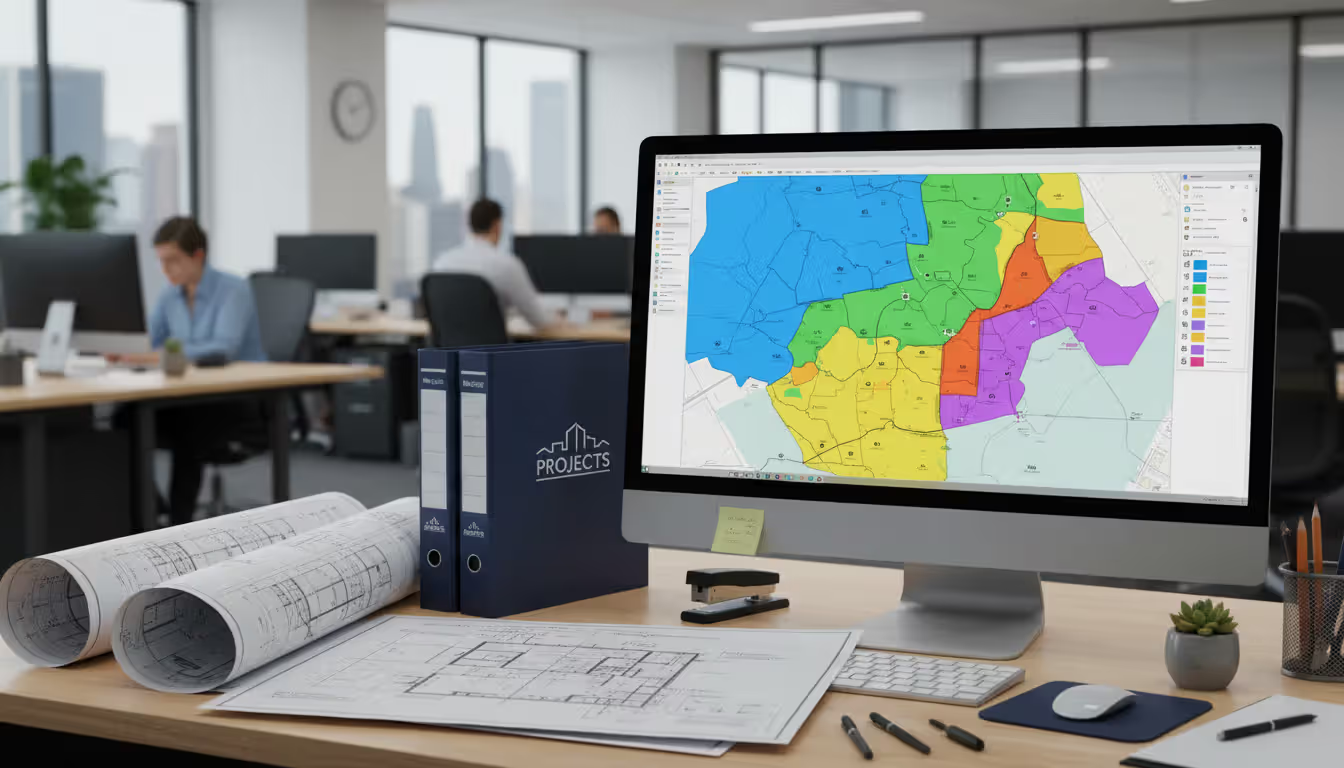
Aerial view of an American suburban neighborhood with color-coded overlay showing different zoning districts including residential, commercial, and green areas
Zoning regulations shape nearly every aspect of land use across the United States, determining whether you can build a duplex on your lot, open a coffee shop on Main Street, or park a shipping container home in your backyard. These rules affect property values, neighborhood character, and development possibilities—yet most people never think about them until they bump into a restriction.
At their core, zoning regulations are local laws that divide municipalities into districts and specify what can be built or operated in each area. Understanding how these systems work can save you thousands of dollars in mistakes and open doors to opportunities others miss.
Understanding Zoning Law Basics
Zoning law refers to the legal framework municipalities use to regulate land use within their boundaries. Unlike building codes that govern construction safety, zoning determines what you can build and where you can build it.
The legal foundation for zoning stems from the Standard State Zoning Enabling Act of 1926, which gave local governments the authority to regulate land use under their police power—the government's right to protect public health, safety, and welfare. This means cities and counties create their own zoning ordinances, which explains why regulations vary dramatically between neighboring towns.
Local planning departments typically enforce these rules. A city council or county board adopts the zoning ordinance, while planning staff review applications and issue permits. Zoning boards of adjustment or appeals hear requests for exceptions. State governments rarely intervene unless local decisions conflict with state housing mandates or environmental laws.
Why do these regulations exist? The original justification was separating incompatible uses—keeping slaughterhouses away from schools, for example. Modern zoning serves additional purposes: preserving neighborhood character, managing infrastructure capacity, protecting environmental resources, and controlling development density. Critics argue that overly restrictive zoning drives up housing costs and reinforces segregation, leading some cities to reform their codes in recent years.
Most property owners don't realize that zoning is fundamentally about managing externalities—preventing your neighbor's choices from harming your property value or quality of life.The challenge is balancing individual property rights with community interests, which is why zoning remains one of the most contentious areas of local government
— Michael Torres
Common Types of Zoning Classifications
Most municipalities use similar categories, though naming conventions and specific rules differ. Understanding these classifications helps you identify what's possible on any property.
Residential Zoning Categories
Residential zones typically separate by density and housing type. An R-1 or single-family district usually allows only detached homes on individual lots, often with minimum lot sizes ranging from 5,000 to 20,000 square feet depending on the municipality. Many R-1 zones prohibit accessory dwelling units, though some cities changed this after California and Oregon passed state laws requiring ADU allowances.
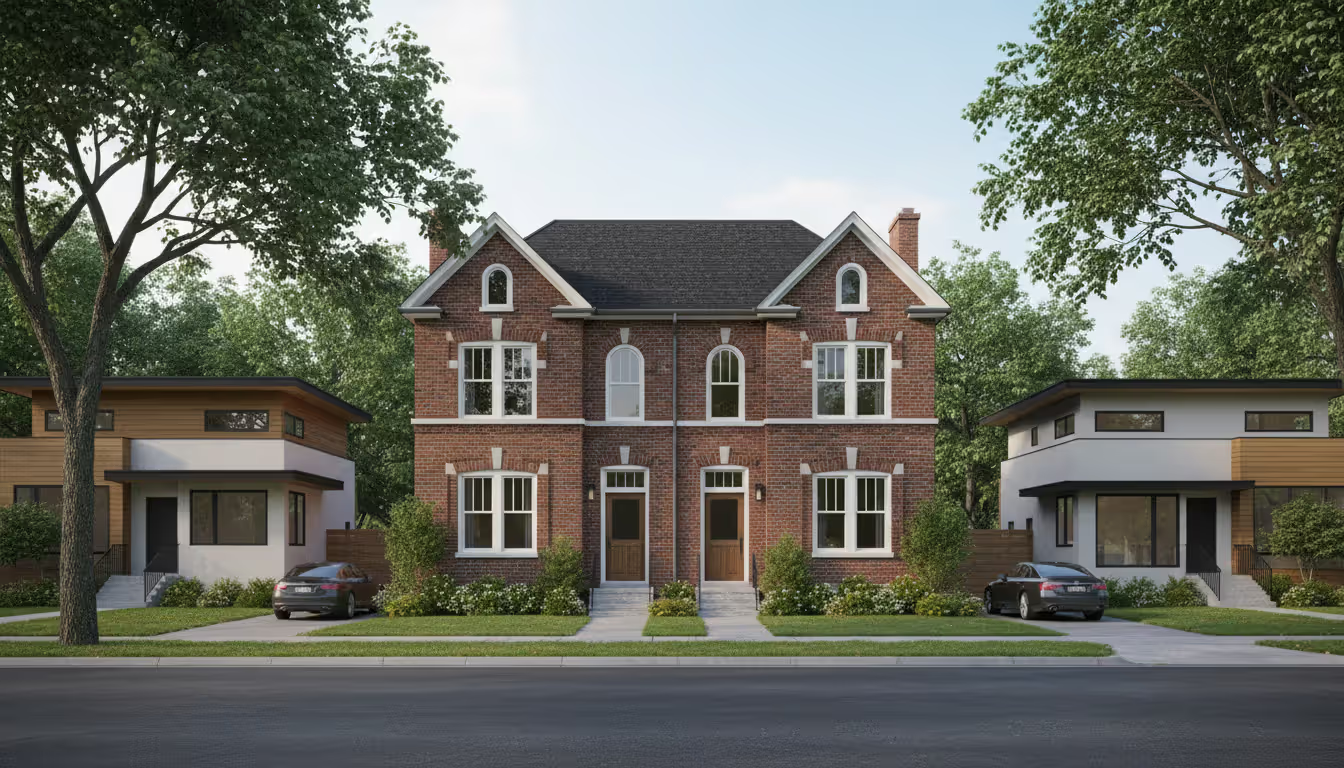
Multi-family residential zones (often labeled R-2, R-3, or R-4) permit duplexes, townhouses, and apartment buildings. Higher numbers generally mean higher density. An R-3 zone might allow up to 12 units per acre, while R-4 could permit 30 or more. These zones often include height limits, setback requirements, and parking minimums that effectively constrain how many units developers can actually build.
Some communities use planned unit development (PUD) overlays that allow mixed housing types within a single project if developers meet certain design standards.
Author: Olivia Carringt;
Source: redmonpestmgt.com
Commercial and Industrial Zones
Commercial zoning rules separate retail, office, and service businesses from residential areas. A C-1 or neighborhood commercial zone typically allows small shops, restaurants, and professional offices that serve nearby residents. C-2 or general commercial zones permit larger retailers, auto dealerships, and entertainment venues. Some ordinances include specific categories for downtown or central business districts with different rules about building height and street-level uses.
Industrial zones range from light industrial (warehouses, assembly operations, research facilities) to heavy industrial (manufacturing plants, chemical processing). Light industrial zones often sit between commercial and heavy industrial areas as a buffer. Heavy industrial zones typically allow the most intensive uses and may have few restrictions on noise, odors, or operating hours.
Mixed-Use and Special Purpose Zones
Mixed-use zones intentionally combine residential and commercial uses, usually requiring ground-floor retail with apartments or offices above. These zones have become more common as cities try to create walkable neighborhoods and reduce car dependence.
Special purpose zones address unique situations: agricultural zones protect farmland, overlay zones add requirements to underlying districts (historic preservation, flood hazard, airport approach), and institutional zones accommodate schools, hospitals, and government buildings.
Table 1: Common Zoning Classifications Compared
Zoning Type
Typical Uses Allowed
Density/Intensity Limits
Common Restrictions
Single-Family Residential (R-1)
Detached homes, sometimes home offices
1-8 units/acre, minimum lot size 5,000-20,000 sq ft
No multi-family, limited accessory structures, owner occupancy sometimes required
Limits on non-farm businesses, animal restrictions, building setbacks from property lines
How to Find Zoning Information for a Property
Discovering a property's zoning requires a few simple steps, though the ease of access varies by jurisdiction.
Start with the municipality's online zoning map. Most cities and counties maintain GIS-based maps where you can enter an address and see the zoning designation. These maps typically show zoning boundaries, overlay districts, and sometimes links to the relevant code sections. Smaller towns might only have PDF maps on their websites or paper maps at city hall.
Once you know the zoning designation (like "R-2" or "C-1"), read the actual zoning ordinance text. Every municipality publishes its zoning code, usually in the municipal code section of their website. Look for the chapter on zoning or land use. Find your zone's section and review permitted uses, conditional uses, dimensional requirements (setbacks, height, lot coverage), and parking requirements.
Contact the planning department directly if you have questions about interpretation. Staff can tell you whether a specific use is allowed, what permits you'll need, and whether any recent changes affect your property. Visit in person when possible—planners often share insights about approval likelihood that they won't put in writing.
Check for overlay zones and special restrictions. Your property might sit in a historic district, floodplain, or other overlay that adds requirements beyond the base zone. Also verify whether any deed restrictions, homeowner association rules, or easements further limit what you can do.
For complex projects, hire a land use attorney or consultant who works regularly with that jurisdiction. They understand the unwritten rules, know which officials make decisions, and can navigate the approval process efficiently. This costs $1,500-$5,000 for most residential projects but can save months of delays.
Author: Olivia Carringt;
Source: redmonpestmgt.com
What to Do When Zoning Rules Don't Fit Your Plans
Zoning codes can't anticipate every reasonable use of property, so most ordinances include mechanisms for exceptions and flexibility.
Applying for a Zoning Variance
A variance provides relief from dimensional requirements when strict application would create unnecessary hardship. You might seek a setback variance to build closer to your property line, a height variance to add an extra story, or a lot size variance to subdivide a parcel slightly smaller than the minimum.
The key word is "hardship." You must prove that your property's unique physical characteristics—steep slope, irregular shape, existing structures—create difficulties that don't affect other properties in the zone. Financial hardship alone rarely qualifies. You can't create your own hardship by subdividing a lot, then claim it's too small.
The process typically involves submitting an application with site plans, paying fees ($300-$1,500), and attending a public hearing before the zoning board of adjustment. Neighbors receive notice and can object. Approval rates vary widely; straightforward dimensional variances for reasonable improvements might have 60-70% approval rates, while requests that substantially change the property's character often fail.
Getting a Special Use Permit
Special use permits (also called conditional use permits) allow uses that the zoning code recognizes as potentially appropriate but requiring case-by-case review. Common examples include daycare centers in residential zones, drive-through restaurants in commercial areas, or cell towers in various locations.
Unlike variances, you don't need to prove hardship. The use must be listed as a conditional use in your zone, and you must meet the specific conditions the ordinance requires. A daycare might need additional parking, playground setbacks, and drop-off area design. A cell tower might require landscaping, height limits, and co-location provisions.
The approval process resembles variance applications: application, site plan, fees ($500-$3,000), public hearing, and decision. Planning commissions or city councils typically decide these requests. Approval often comes with conditions—operating hour restrictions, design requirements, performance standards. Violating conditions can revoke the permit.
Understanding Nonconforming Uses
Author: Olivia Carringt;
Source: redmonpestmgt.com
A nonconforming use (sometimes called "grandfathered use") exists when a property legally established a use before zoning changed to prohibit it. The duplex built in 1950 can continue operating even after the area was rezoned to single-family only.
Nonconforming status protects existing uses but limits changes. Most ordinances prohibit expanding nonconforming uses or structures. If you stop the use for a specified period (often 6-12 months), you lose the right to resume it. Damage beyond a certain threshold (typically 50-75% of value) may require rebuilding to current standards.
You can't transfer nonconforming status to a different use. Converting that legal duplex to a triplex would require bringing the entire property into compliance or obtaining a variance.
Table 2: Zoning Exception Mechanisms Compared
Exception Type
Definition
When to Use
Approval Process
Typical Costs
Variance
Relief from dimensional requirements due to property hardship
Need to exceed height, reduce setbacks, or modify lot requirements; property has unique physical constraints
$500-$3,000 application fee + $3,000-$8,000 for site plans and professionals
Nonconforming Use
Legal continuation of pre-existing use that no longer complies
Already operating a use before zoning changed; no application needed but limited expansion rights
No application—status exists by operation of law; may need to document establishment date
No direct costs but may need legal verification of status ($500-$2,000)
How the Zoning Change Process Works
Rezoning (changing a property's zoning designation) offers the most flexibility but faces the highest hurdles.
Property owners or developers typically initiate rezoning by filing an application with the planning department. The application requires detailed information: current and proposed zoning, justification for the change, site plans showing intended development, traffic impact analysis, and other studies depending on the project size.
Application fees vary dramatically based on project scope, ranging from $1,000 for small residential parcels to $25,000+ for large commercial developments. Many jurisdictions also require applicants to pay for public notice advertisements and planning consultant review.
The process involves multiple review stages. Planning staff analyze the request against the comprehensive plan (the municipality's long-term development vision), existing zoning patterns, infrastructure capacity, and compatibility with surrounding uses. They prepare a recommendation for the planning commission.
Public hearings are mandatory. The planning commission holds a hearing where neighbors, advocacy groups, and other interested parties can comment. Commission members vote on a recommendation to the city council or county board. The legislative body then holds its own hearing and makes the final decision.
Timeline expectations should be realistic. Simple rezoning requests take 3-6 months minimum. Complex or controversial proposals can stretch to 12-18 months, especially if they require environmental review or comprehensive plan amendments.
Success factors include alignment with the comprehensive plan, compatibility with surrounding properties, demonstrated community benefit, and political support. Rezoning to higher density in an area the comprehensive plan designates for growth has better odds than spot rezoning a single parcel to a use incompatible with neighbors.
Opposition from neighbors can kill proposals even when they technically comply with planning principles. Smart developers engage neighbors early, address concerns through design modifications, and build coalitions of support before formal hearings.
Zoning Rules for Alternative Structures
Shipping container homes, tiny houses, and other non-traditional structures face unique zoning challenges because most codes were written before these building types became popular.
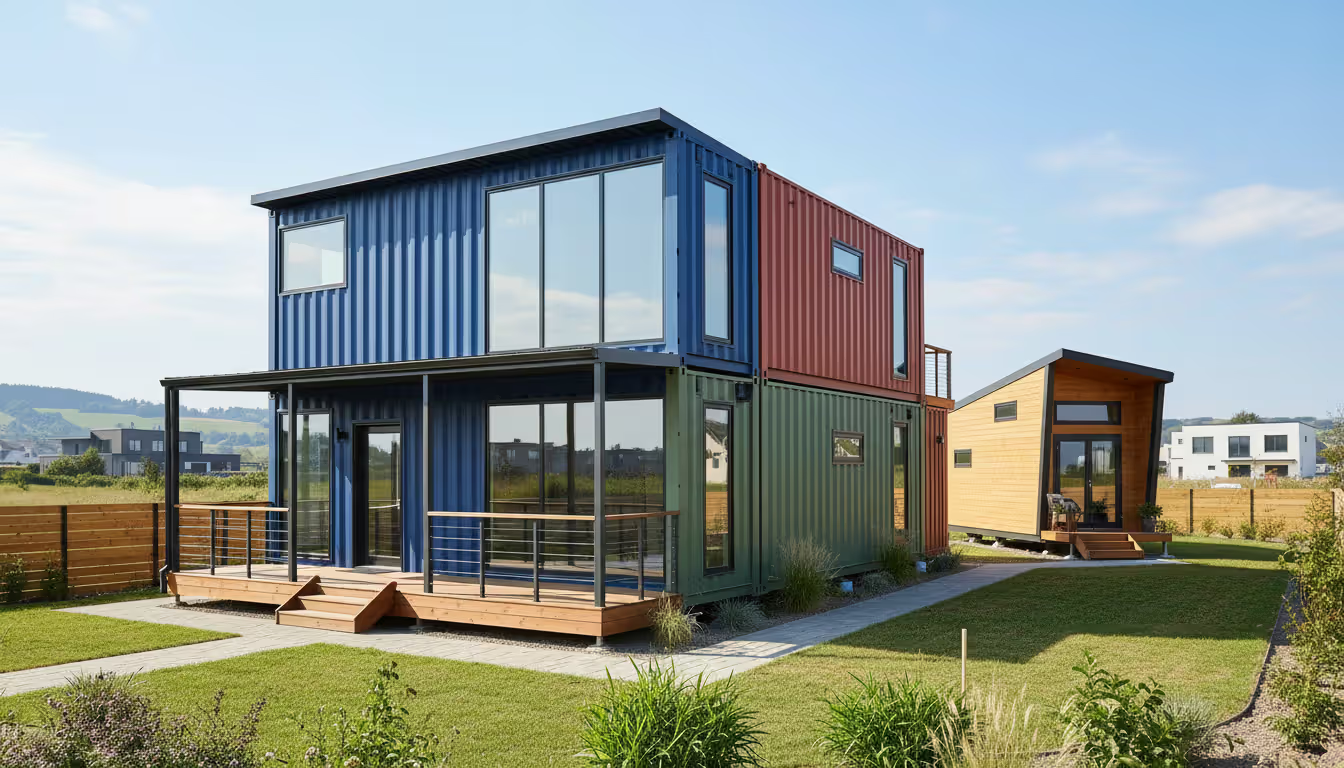
Shipping container zoning laws vary widely. Some municipalities classify containers as temporary structures or storage units, prohibiting residential use entirely. Others allow them in industrial zones but not residential areas. Progressive cities like Austin and Portland have created pathways for container homes by amending their codes to focus on performance standards rather than construction methods.
Author: Olivia Carringt;
Source: redmonpestmgt.com
The primary obstacles are minimum dwelling size requirements (often 600-1,000 square feet), foundation requirements (containers on wheels may be classified as vehicles), and aesthetic standards (industrial appearance conflicts with residential design guidelines). Some codes specifically prohibit "metal buildings" in residential zones, which planners interpret to include containers.
Tiny homes face similar issues. Permanent tiny homes on foundations generally face fewer restrictions than wheeled versions. Many codes classify tiny homes on wheels as recreational vehicles, limiting them to RV parks or prohibiting residential use. Minimum square footage requirements eliminate tiny homes in many jurisdictions.
Accessory dwelling units have become more accepted as housing shortages intensify. California, Oregon, and Washington passed state laws limiting local governments' ability to restrict ADUs. These laws typically prohibit minimum lot sizes for ADUs, reduce parking requirements, and streamline approval processes. However, design standards, owner-occupancy requirements, and size limits still apply in most places.
Strategy for alternative structures: Research your target municipality's specific codes before purchasing property. Look for jurisdictions that have explicitly addressed these building types or have no minimum dwelling size. Consider rural areas with less restrictive zoning, though be aware that lack of zoning doesn't mean no restrictions—county health departments still regulate septic systems, and building codes still apply. Budget for potential variance or code amendment processes if you're committed to a specific location.
Frequently Asked Questions About Zoning Regulations
Can zoning laws affect property value?
Absolutely. Zoning directly impacts what you can do with property, which determines its value. Land zoned for commercial use typically sells for 3-10 times more per acre than residentially zoned land in the same area. Restrictive residential zoning that limits density can increase individual home values by creating scarcity, while also making housing less affordable overall. Downzoning (changing to less intensive use) can reduce property values, sometimes triggering legal challenges. Upzoning to allow higher density generally increases land value but may affect neighboring properties differently.
How long does a zoning variance take to get approved?
Most variance applications take 60-90 days from submission to decision, though this varies by jurisdiction. Smaller municipalities with monthly board meetings might decide within 45 days. Larger cities with backlogs can take 4-6 months. The timeline includes application review (2-4 weeks), public notice period (typically 15-30 days before the hearing), the hearing itself, and decision issuance. If neighbors appeal the decision, add another 3-6 months. You can sometimes expedite the process by submitting complete applications with all required documentation and meeting with planning staff before formal submission.
What happens if I violate zoning regulations?
Violations trigger enforcement actions that escalate if you don't comply. The process typically starts with a warning letter or notice of violation giving you 30-60 days to correct the problem. Failure to comply results in fines ($100-$500 per day in many jurisdictions), stop-work orders if construction is involved, or court action. Municipalities can seek injunctions forcing you to remove unpermitted structures or cease prohibited uses. Repeat violations may result in criminal misdemeanor charges in some states. Violations also create disclosure problems when selling property and can void insurance coverage if unpermitted work causes damage.
Can I run a business from a residential property?
It depends on the business type and local regulations. Most residential zones allow home occupations with restrictions: no employees visiting the property, no customer traffic, no external evidence of the business, and business use limited to 25-30% of the home's floor area. Professional services (accounting, consulting, writing) typically qualify. Retail sales, auto repair, or manufacturing generally don't. Some jurisdictions require home occupation permits ($50-$300 annually). E-commerce businesses that receive deliveries or ship products may violate restrictions on commercial vehicle traffic. Always check your specific zoning code and HOA rules before starting a home business.
Do zoning laws apply to rural properties?
Not always. Many rural counties have limited zoning or no zoning at all, relying instead on building codes and health department regulations. However, this is changing as rural areas experience development pressure. Agricultural zoning in rural areas typically allows farming and single-family homes but may restrict subdivision, commercial uses, and non-farm activities. Some rural properties fall under state or federal land use regulations even without local zoning—coastal zones, critical habitat areas, and farmland preservation districts impose restrictions. Check county planning departments to determine what regulations apply.
What's the difference between zoning and building codes?
Zoning regulates land use (what you can build and where), while building codes regulate construction methods (how you build it). Zoning determines whether you can build a duplex on your lot; building codes specify the foundation depth, electrical wiring, and fire safety features. Zoning is primarily a local decision reflecting community preferences. Building codes are typically based on international model codes (IRC, IBC) adopted with local amendments, focusing on safety and structural integrity. You need zoning approval before building permits, and you need building code compliance to pass inspections. Both systems operate independently—you can have proper zoning but fail building inspections, or have code-compliant construction in the wrong zone.
Zoning regulations form the invisible framework that shapes American communities, determining everything from neighborhood character to housing affordability. While these rules can frustrate property owners with ambitious plans, they serve legitimate purposes in managing growth and protecting community interests.
Success in navigating zoning requires three things: early research before purchasing property or committing to plans, realistic expectations about what's possible in your zone, and willingness to engage with the approval process when you need exceptions. The municipalities with the most restrictive zoning often have the most established variance and permit procedures—learning to work within these systems opens opportunities others miss.
Zoning is also changing. Housing shortages are pushing cities to relax single-family zoning, allow more accessory units, and reduce parking requirements. Climate concerns are prompting mixed-use zones that reduce car dependence. These reforms create new possibilities for property owners willing to stay informed about evolving regulations.
Whether you're buying your first home, planning a renovation, or developing property professionally, understanding zoning regulations helps you avoid expensive mistakes and identify opportunities. The time invested in learning your local zoning code pays returns in better decisions and smoother project execution.
The Uniform Partition of Heirs Property Act prevents forced sales of inherited family land at below-market prices through mandatory appraisals, buyout rights, and partition in kind preferences. Twenty-nine states have adopted this reform legislation as of 2026
Trespassing represents one of the most common property violations in the US. Learn the legal definitions, differences between criminal and civil trespass, penalties, proper signage requirements, and how property owners can legally protect their land from unauthorized entry
Real estate fraud costs Americans hundreds of millions annually through wire transfer scams, forged deeds, and foreclosure rescue schemes. This comprehensive guide explains common fraud types, warning signs to watch for, and practical prevention steps to protect your property and finances during transactions
Co-owning property with family members, business partners, or former spouses can become complicated when disagreements arise about selling, managing, or dividing the asset. When negotiations fail and co-owners reach an impasse, a partition action provides a legal remedy to force the division or sale of jointly owned real estate
The content on this website is provided for general informational and educational purposes only. It is intended to explain concepts related to real estate law, property rights, leases, liens, zoning, landlord-tenant disputes, and litigation.
All information on this website, including articles, guides, and examples, is presented for general educational purposes. Legal outcomes may vary depending on jurisdiction, property type, and individual circumstances.
This website does not provide legal advice, and the information presented should not be used as a substitute for consultation with qualified attorneys or real estate professionals.
The website and its authors are not responsible for any errors or omissions, or for any outcomes resulting from decisions made based on the information provided on this website.