You lock your doors at night. You put up a fence. Maybe you've even posted a few signs around your property. But do you actually know what legally counts as trespassing—or more importantly, what doesn't?
Here's the reality: someone could wander onto your land right now, and whether you can do anything about it depends on a maze of state laws, local ordinances, and legal technicalities most property owners never think about until it's too late. From suburban homeowners dealing with persistent shortcut-takers to rural landowners facing hunters who claim they "didn't see any signs," the rules vary wildly depending on where you live and the specific circumstances.
Let's cut through the confusion and look at what actually matters when someone enters your property without asking.
What Is Trespassing on Private Property?
The basic concept seems simple enough: if you walk onto land that isn't yours without the owner's okay, you've trespassed. But the legal machinery behind that simple idea gets complicated fast.
When someone physically enters land owned by another person without authorization or any legal justification for being there, that's the textbook definition lawyers use for trespass to land. Notice what's missing from that definition—you don't need to prove the person damaged anything. They don't need evil intentions. Just being there without permission is enough.
Courts look at three things when deciding if trespass happened. Did the person actually go onto the property (or stay after they should've left)? Does that property belong to someone else? And here's the kicker—did they lack permission or any legal right to be there? Property law assumes you don't want random strangers walking around your land unless they can prove otherwise.
Now, here's where people get confused: intentional versus unintentional trespass. Intentional doesn't mean "trying to do something wrong." It just means you deliberately took the steps that put you on someone else's property. That hiker who wandered off the public trail and ended up in your backyard? They intentionally walked there, even though they had zero idea it was private land. That still counts as intentional trespass.
Unintentional trespass? Much rarer. We're talking about situations where someone genuinely had no control—maybe they were shoved onto your property during an altercation, or their car skidded off the road onto your lawn during a storm.
Even brief unauthorized entry matters legally. Your neighbor cutting across your yard for thirty seconds to retrieve a wayward frisbee? Technically trespass. Do most people care? No. Would a court take that seriously? Probably not. But repeated incidents tell a different story, and that's when property owners start looking at their legal options.
Physical presence isn't always required, either. Let your dog run onto neighboring property every morning? That can be trespass. Dumping leaves over the property line? Same thing. Some states even recognize what they call "trespass by projection"—like when your neighbor's tree branch extends over your roof, or someone installs underground utilities beneath your land without permission.
Author: Samantha Holloway;
Source: redmonpestmgt.com
Criminal Trespass vs Civil Trespass
Here's what trips people up constantly: not all trespassing gets you arrested. Sometimes it's a crime. Sometimes it's just grounds for a lawsuit. Sometimes it's both at once.
Aspect
Criminal Trespass
Civil Trespass
Definition
Unauthorized entry after receiving a warning, or entering secured/restricted areas with criminal intent
Entering another person's land without any permission or lawful reason to be there
Who Initiates Action
Police and prosecutors (the state)
The property owner files a lawsuit
Burden of Proof
Guilt beyond reasonable doubt (very high bar)
More likely than not (much easier standard)
Potential Penalties
Jail time, criminal fines, permanent record
Money damages, court orders, legal fees
Common Examples
Refusing to leave after being told to go, breaking into fenced areas, entering after formal warning
Property line disputes, unauthorized hunting, taking shortcuts without permission
Criminal trespass means prosecutors get involved, courts get involved, and you're potentially looking at jail time. The state has to prove its case beyond reasonable doubt—that's the same tough standard used in murder trials. Most states only charge criminal trespass when someone ignored clear warnings (signs, verbal orders to leave, previous formal notice) or entered obviously secured areas like fenced yards or locked buildings. The criminal element usually involves defiance or deliberate disregard of property rights.
Civil trespass works completely differently. Property owners file lawsuits themselves. They only need to prove their case by "preponderance of evidence"—basically, showing it's more likely than not that trespass occurred. You don't need to show criminal intent, just that someone went onto your land without your okay.
Real situations often trigger both tracks simultaneously. Imagine someone repeatedly crosses your land despite your "No Trespassing" signs. The prosecutor might file criminal charges while you simultaneously sue them in civil court for damages. These cases proceed on separate tracks—getting acquitted of criminal charges doesn't automatically mean you win the civil case (or vice versa).
Getting criminal charges filed isn't automatic. Police might respond to your complaint, document the incident, and then... nothing. Prosecutors have discretion about what cases to pursue, and they often pass on minor, first-time trespass without aggravating circumstances. Your civil lawsuit options remain available regardless of what prosecutors decide.
Trespassing Penalties and Legal Consequences
The punishment for trespassing ranges from "basically nothing" to "years in prison"—it all depends on the details.
Most basic criminal trespass gets classified as a misdemeanor. You're looking at fines anywhere from $250 up to $1,000, plus potential jail time maxing out at one year. First-time offenders often catch a break—maybe a $500 fine and probation without any jail. But courts don't show much sympathy for repeat offenders. Third conviction? You might actually see the inside of a jail cell for a few months, plus maximum fines.
Felony trespass charges come into play when the situation gets more serious. Entering someone's home or any occupied building? Felony territory. Trespassing while carrying a weapon? Felony. Breaking into critical infrastructure like water treatment plants or electrical substations? Definitely a felony. Intent to commit another crime while trespassing? That's felony enhancement. We're talking 1-5 years in state prison and fines that can exceed $10,000.
Arizona's approach (which people often search for as "trespassing ars"—the state's revised statutes code) shows how states break this down. Arizona splits criminal trespass into degrees. First-degree trespass covers entering residential yards or any nonresidential structures—basically, anywhere people reasonably expect privacy and security. Second-degree covers open, nonresidential land. First-degree carries stiffer penalties because you've invaded someone's secure space.
What makes penalties jump higher? Several things:
Ignoring posted signs or direct warnings to leave
Damaging property while there
Trespassing at night (automatically more suspicious)
Carrying weapons
Breaking through fences or other barriers
Prior trespass convictions on your record
Someone who hops a fence marked with signs at 2 AM faces drastically different consequences than someone who walked across an unmarked rural field at noon.
Civil penalties focus on compensation instead of punishment. Property owners can recover actual damages—repair costs, crop losses, diminished property value. When actual damages barely exist, courts sometimes award "nominal damages" (often literally $1) just to officially recognize the property rights violation. Some states triple damages for willful or malicious trespass.
Beyond financial hits, criminal trespass convictions create permanent records that show up on background checks. Good luck landing certain jobs, renting apartments, or maintaining professional licenses with trespass convictions. Trespass injunctions can legally ban you from entire areas, and violating those orders means contempt charges that bring their own jail time.
Author: Samantha Holloway;
Source: redmonpestmgt.com
Posted No Trespassing Signs and Legal Requirements
Slapping up a "No Trespassing" sign from the hardware store might make you feel better, but it doesn't necessarily give you legal protection. States have specific requirements, and signs that don't meet those standards might be legally worthless.
Most jurisdictions spell out exact specifications: letters must be at least 2 inches tall (sometimes larger). Specific language is required—usually "No Trespassing," "Private Property," or "Keep Out." Materials must withstand weather long-term. And placement matters enormously. One sign hidden by bushes on a 50-acre property? Not adequate notice by any legal standard.
How far apart should signs be? Rules vary, but many states require posting every 500 feet along property boundaries, or at every reasonable entry point. For large rural properties, you might need dozens of signs. Smaller suburban lots might meet requirements with signs at each corner.
Several states—including Texas, North Carolina, Pennsylvania, and others—recognize an alternative called "purple paint laws." Instead of signs, you paint purple vertical stripes on trees or fence posts at regular intervals. The paint needs specific dimensions (usually 8 inches long, 1 inch wide, positioned 3-5 feet above ground level). Why purple? It's uncommon in nature and stands out visually. Plus, nobody can steal or vandalize paint marks the way they can remove signs.
Fence and no trespassing law requirements create another layer of complexity. A fence shows boundaries, but doesn't automatically communicate "stay out." That decorative split-rail fence around your garden? Aesthetically pleasing, but legally weak. A proper privacy fence—solid wood, 6 feet tall—sends a clearer message. Chain-link with barbed wire at the top? Crystal clear. But even substantial fencing doesn't always eliminate sign requirements in every state.
Do You Need Signs If Your Property Is Fenced?
Short answer: probably yes, if you want the strongest legal protection.
Fencing alone doesn't satisfy notice requirements for criminal prosecution in many jurisdictions. The fence needs to be "substantial" and clearly designed to exclude intruders, not just mark where your property ends. We're talking about structures that unmistakably communicate restricted access—solid privacy fencing, tall chain-link, agricultural fencing with locked gates.
Even with Fort Knox-level fencing, adding signs removes all ambiguity. When someone scales your fence, signs eliminate any possible argument that they didn't realize entry was forbidden. That matters enormously in criminal court, where prosecutors need to prove defendants knew they lacked permission.
Unfenced property almost always requires posted signs for criminal charges to stick. Without visible warnings, prosecutors face an uphill battle proving the trespasser understood entry wasn't allowed—particularly on undeveloped rural land where boundaries aren't obvious.
Smart property owners photograph their signage and fencing installation. Date-stamp those photos. If trespassing becomes an issue months or years later, you've got proof you provided proper legal notice.
Author: Samantha Holloway;
Source: redmonpestmgt.com
Implied License to Enter Property
Not everyone who shows up on your property uninvited is trespassing. The law recognizes certain people have implied permission to enter based on social customs, practical necessity, or the nature of their work.
Mail carriers walking to your mailbox every day? They don't need your explicit daily permission—that's implied license. Delivery drivers coming to your front door? Same thing. Utility company employees reading your electric or gas meters? Legally permitted. These people perform legitimate functions that require property access, and society has decided they have implied authorization unless you specifically revoke it.
This implied permission extends to door-to-door salespeople, political canvassers, religious missionaries, and others conducting lawful business. Courts have consistently recognized that by maintaining a residence, you impliedly consent to brief visits from people conducting legitimate activities, provided they stick to normal approach routes and leave when asked.
But implied license has clear boundaries. It covers the normal path to your front door—sidewalks, driveways, porches. It doesn't authorize wandering your backyard or peering through windows. It applies during reasonable hours (not 3 AM visits). And most importantly, it exists only until you explicitly revoke it.
Revoking implied license requires clear communication. A "No Soliciting" sign at your property entrance revokes implied permission for salespeople and canvassers—now they're trespassing if they approach anyway. Directly telling someone "you're not welcome here, please leave" immediately cancels any implied permission. Continued presence after that becomes trespass.
Some jurisdictions require specific signage to revoke implied license for particular categories of visitors. A generic "No Trespassing" sign might not clearly communicate that postal delivery is still okay but solicitors aren't welcome. Signs saying "No Soliciting" or "Private Property—Deliveries Only" provide clearer guidance.
Emergency responders—police, firefighters, paramedics—have legal authority to enter property when responding to emergencies, posted signs be damned. That authority comes from public safety statutes, not implied license, and can't be revoked by property owners.
How to Stop Trespassers Legally
Dealing with persistent trespassers? You've got several legal tools at your disposal. Just don't cross the line into actions that create liability for you.
Start with proper signage and fencing that complies with your state's specific legal requirements. Document the installation with dated photographs. This creates the foundation supporting both criminal prosecution and civil lawsuits.
When trespass happens, document everything obsessively. Photograph or video record trespassers if you can do so safely. Write down exact dates, times, and specific locations. Document any damage. This evidence becomes critical for police reports and potential court cases.
Call local law enforcement to report criminal trespass. Police can issue formal trespass warnings—official notice that a specific person is banned from your property. Violating a trespass warning typically triggers criminal charges even on property without posted signs. Keep copies of every police report.
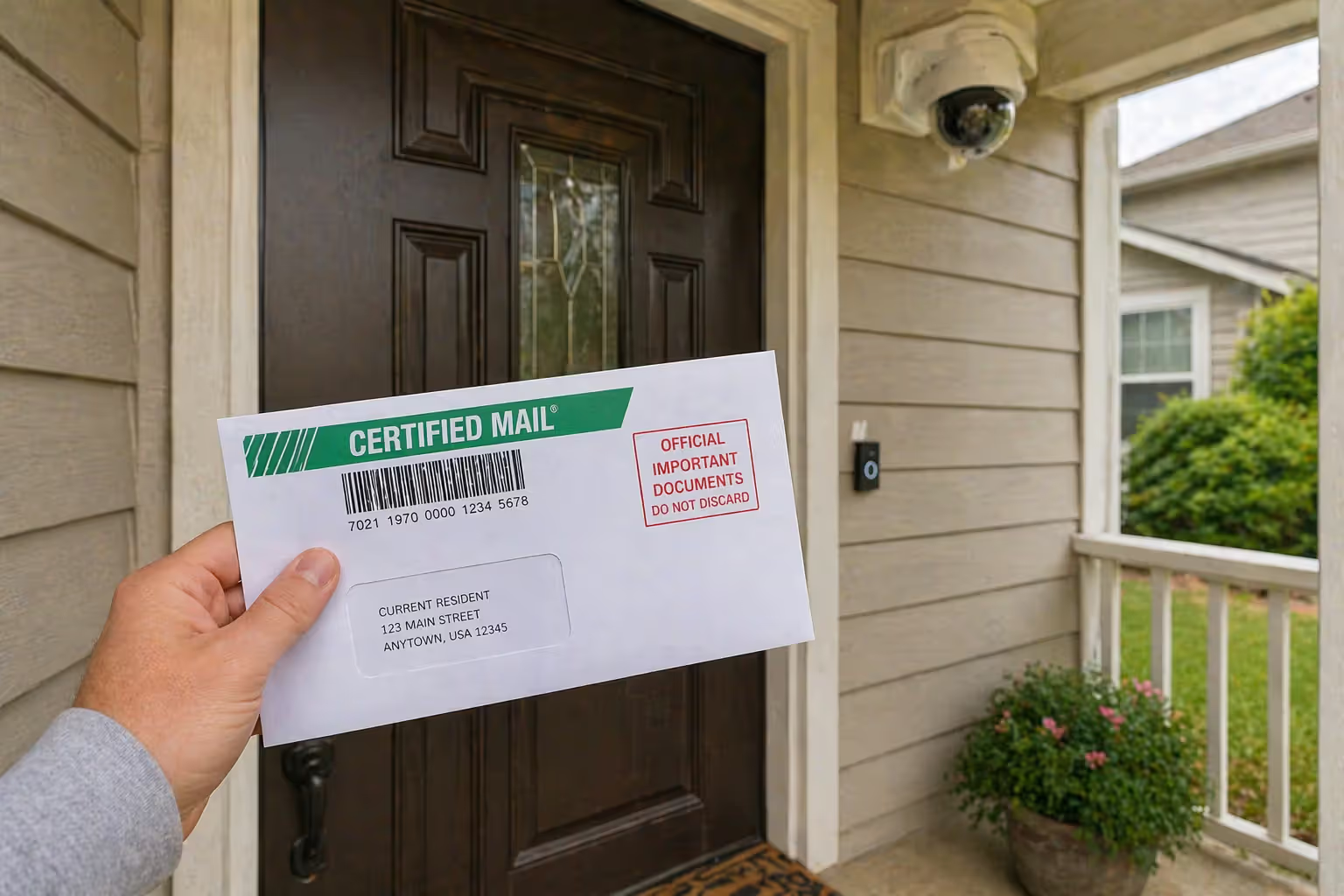
Send written cease-and-desist letters to known trespassers. These letters formally notify them they lack permission and demand they stop entering your property. Send via certified mail with return receipt requested—you'll get proof they received it. This documentation substantially strengthens later legal action.
Filing civil lawsuits for persistent trespass remains an option even without significant monetary damages. Courts can award nominal damages plus attorney fees. More importantly, courts can issue injunctions that legally prohibit future trespass.
Getting a Trespass Injunction
Author: Samantha Holloway;
Source: redmonpestmgt.com
A trespass injunction is a court order legally banning someone from your property. Violating an injunction constitutes contempt of court—a serious matter that can result in immediate arrest and jail time without the normal trial process.
Obtaining an injunction requires filing a civil lawsuit demonstrating several elements: you own the property in question, the defendant has repeatedly trespassed, and you'll suffer irreparable harm without court intervention. "Irreparable harm" doesn't require physical damage—courts recognize that repeated invasions of property rights cause harm money can't adequately address.
You'll need solid evidence of repeated trespass: photographs, videos, police reports, witness testimony. Courts want to see you've attempted resolving the situation through warnings and other reasonable measures before seeking judicial intervention.
Temporary restraining orders provide immediate emergency relief while your full case proceeds. If you can demonstrate urgent circumstances—ongoing trespass threatening safety or property—courts can issue temporary orders within days, sometimes within hours.
Permanent injunctions follow full hearings where both parties present evidence and arguments. Once issued, they remain in effect indefinitely unless modified by the court. Violating a permanent injunction can result in immediate arrest and jail time for contempt, which carries its own separate penalties.
What you absolutely cannot do legally: You cannot use deadly force to protect property from simple trespass. Period. Most states permit reasonable, non-deadly force to remove trespassers only if you've first attempted verbal removal, the trespasser refuses to leave, and the force used is proportional to the situation. You can't physically attack someone for walking across your lawn.
You cannot set traps or create dangerous conditions intended to harm trespassers. Spring-loaded weapons, concealed pits, electrified fences designed to injure people—these create massive civil and criminal liability. Property owners must maintain reasonably safe conditions even for trespassers, though the legal standard is lower than for invited guests.
You cannot detain or imprison trespassers except in extremely limited circumstances involving other crimes in progress. Attempting to physically restrain someone for simple trespass creates liability for false imprisonment and possible kidnapping charges.
The most common mistake property owners make is assuming they have broad rights to use force against trespassers. Modern law heavily favors calling law enforcement over self-help remedies. Property owners who take matters into their own hands often find themselves facing liability that far exceeds any harm caused by the original trespass
— Michael R. Siebecker
Frequently Asked Questions About Trespassing Laws
Can you be charged with trespassing if there are no signs posted?
Absolutely—signage isn't always required for criminal charges to stick. You can face prosecution without posted signs if you entered someone's home, climbed over a substantial fence clearly designed to keep people out, or stayed on property after being verbally warned to leave. That said, most states do require posted signs or fencing for criminal charges when dealing with open, undeveloped land. Civil trespass lawsuits don't require any signs whatsoever—unauthorized entry alone is sufficient grounds. Signs definitely strengthen your case, but they're not mandatory in every situation.
How does trespassing differ from breaking and entering?
Trespassing means unauthorized entry onto property, while breaking and entering specifically requires forcibly entering a building or enclosed structure. "Breaking" doesn't necessarily mean smashing windows—opening an unlocked door or climbing through an accessible window both qualify. When combined with intent to commit a crime inside, breaking and entering typically becomes burglary. It's charged much more seriously than simple trespass, often as a felony. Trespassing can happen on completely open land; breaking and entering requires some kind of structure.
How long does a trespass warning last?
Trespass warnings generally remain valid indefinitely unless the property owner formally revokes them in writing. Some jurisdictions impose expiration dates—typically one to three years—after which warnings must be renewed. However, many states treat these warnings as permanent until the property owner explicitly withdraws them. Once you've received a formal trespass warning, you should assume you're permanently banned from that property unless specifically told otherwise in writing. Violating a trespass warning even several years later can trigger criminal charges.
Can a landowner use force to remove a trespasser?
Landowners can use reasonable, non-deadly force to remove trespassers, but only after requesting they leave and providing reasonable opportunity for voluntary departure. The force must be proportional—you can't beat someone up for peacefully crossing your property. Deadly force is never legally justified solely to protect property from trespass, even if someone is actively stealing from you. Most states strongly prefer that property owners contact law enforcement rather than physically confronting trespassers themselves. Using excessive force creates civil liability for assault and battery, plus potential criminal charges against you.
Is trespassing a felony or misdemeanor?
Basic trespassing gets charged as a misdemeanor in most circumstances, carrying maximum penalties of one year in county jail and fines ranging from $1,000-$2,500 depending on the state. However, aggravating circumstances elevate trespass to felony status: entering an occupied home or dwelling, trespassing while armed with weapons, entering critical infrastructure like power plants or communications facilities, or trespassing with intent to commit another felony. Repeat offenses can also trigger felony charges in certain states. Felony trespass convictions can mean 1-5 years in state prison and substantially higher fines.
What does "purple paint law" mean in trespassing cases?
Purple paint laws permit property owners to mark boundaries using purple paint instead of traditional posted signs. Vertical purple stripes painted on trees or fence posts at specified intervals (commonly every 100-500 feet depending on state law) provide legal notice that property is private and entry is prohibited. The paint marks must meet specific requirements: typically 8-12 inches long, 1-2 inches wide, positioned 3-5 feet above ground. States including Texas, North Carolina, Arkansas, Florida, Pennsylvania, Kansas, and several others legally recognize purple paint as equivalent to "No Trespassing" signs. This method prevents sign theft and vandalism while providing permanent, weather-resistant boundary marking.
Trespassing law walks a fine line between protecting property rights and recognizing practical realities of how people move through the world. Property owners need proper signage and fencing meeting state-specific legal requirements. They should document trespass incidents thoroughly and pursue legal remedies through law enforcement and courts rather than taking matters into their own hands.
The criminal versus civil trespass distinction matters enormously when deciding how to address unauthorized entry. Criminal prosecution requires police involvement and prosecutorial buy-in, both of which you can't control. Civil remedies remain available regardless of whether prosecutors decide to file charges, giving property owners direct control over protecting their interests.
For recurring trespass problems, injunctions provide powerful enforcement tools that make future violations subject to contempt charges with immediate jail time. That often gets trespassers' attention when nothing else has worked.
Implied license recognizes that mail carriers, delivery drivers, and others performing legitimate functions have legal reasons to briefly enter your property. Posted signs and formal trespass warnings clearly communicate when that implied permission doesn't apply or has been revoked.
Whether you're a property owner dealing with persistent trespassers or someone who accidentally crossed property boundaries, understanding these legal principles helps you handle situations appropriately and avoid escalating minor issues into serious legal problems. When in doubt, consult a local property attorney familiar with your state's specific requirements—trespassing law varies significantly by jurisdiction, and getting it wrong can be expensive.
Zoning regulations determine what you can build and where across the United States. This guide explains zoning law basics, classification types, how to find zoning information, navigate variances and permits, and address alternative structures like shipping containers
The Uniform Partition of Heirs Property Act prevents forced sales of inherited family land at below-market prices through mandatory appraisals, buyout rights, and partition in kind preferences. Twenty-nine states have adopted this reform legislation as of 2026
Real estate fraud costs Americans hundreds of millions annually through wire transfer scams, forged deeds, and foreclosure rescue schemes. This comprehensive guide explains common fraud types, warning signs to watch for, and practical prevention steps to protect your property and finances during transactions
Co-owning property with family members, business partners, or former spouses can become complicated when disagreements arise about selling, managing, or dividing the asset. When negotiations fail and co-owners reach an impasse, a partition action provides a legal remedy to force the division or sale of jointly owned real estate
The content on this website is provided for general informational and educational purposes only. It is intended to explain concepts related to real estate law, property rights, leases, liens, zoning, landlord-tenant disputes, and litigation.
All information on this website, including articles, guides, and examples, is presented for general educational purposes. Legal outcomes may vary depending on jurisdiction, property type, and individual circumstances.
This website does not provide legal advice, and the information presented should not be used as a substitute for consultation with qualified attorneys or real estate professionals.
The website and its authors are not responsible for any errors or omissions, or for any outcomes resulting from decisions made based on the information provided on this website.