Discovering someone living in your property without permission triggers an immediate question: can you call the police and have them removed right away? For most property owners, the answer is frustrating. Law enforcement typically cannot forcibly remove squatters the way they would arrest a burglar or trespasser. The distinction between criminal trespassing and civil squatting determines whether police will intervene, and understanding this difference saves property owners weeks of wasted effort.
The confusion stems from how squatters establish occupancy. Once someone has been in your property for even a short period and presents any documentation suggesting residency—real or fabricated—police treat the situation as a landlord-tenant dispute requiring court intervention. This article explains exactly when police can act, when they cannot, and the legal steps you must take to reclaim your property.
When Police Can and Cannot Remove Squatters
Police authority to remove unauthorized occupants depends entirely on whether the situation qualifies as criminal trespassing or a civil dispute. This determination happens at the officer's discretion based on evidence presented at the scene.
Trespassing vs. Squatting: What Police Need to Know
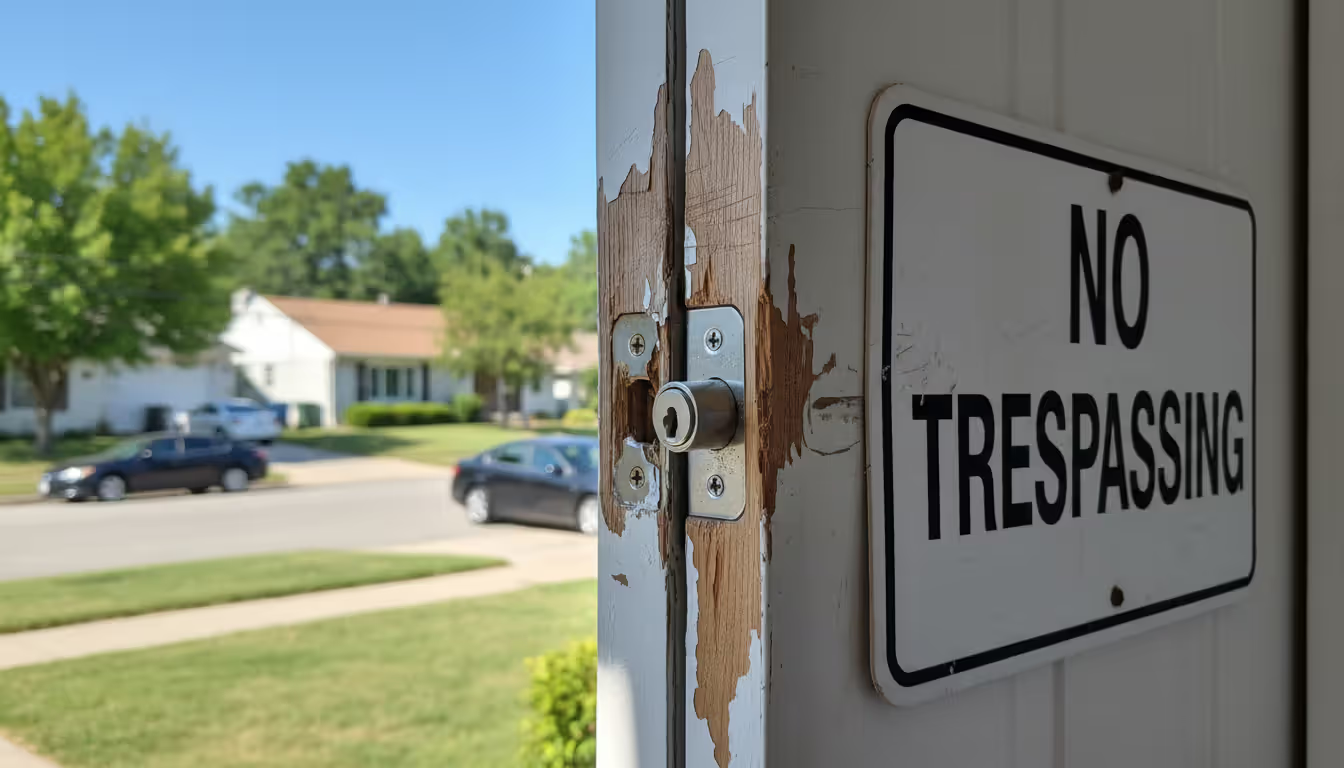
Criminal trespassing requires proof that someone entered or remained on property after being explicitly told to leave. If you catch someone breaking into your vacant home and immediately call police, officers can arrest them for breaking and entering. The crime is clear, documented, and actionable.
Squatting becomes a civil matter when the occupant claims some right to be there. A squatter might show police a fake lease, claim a verbal rental agreement with a previous owner, or simply assert they have lived there long enough to establish residency. Police cannot determine lease validity or residency claims on the spot—these require court review. The moment an occupant disputes your ownership claim or asserts any right to occupy the space, law enforcement steps back.
Consider this common scenario: You own a rental property between tenants. Someone breaks in and changes the locks. When you arrive with police three days later, the squatter shows a handwritten "lease" and utility bills forwarded to that address. Even though you know these documents are fraudulent, police cannot make that legal determination. They will likely tell both parties to resolve the matter in civil court.
The critical window is immediate discovery. If you find someone in your property and they have not yet established any appearance of residency—no belongings moved in, no mail received, no utility accounts opened—police may remove them as trespassers. Wait even 48 hours, and the situation shifts into civil territory.
Author: Samantha Holloway;
Source: redmonpestmgt.com
Why Police Often Treat Squatting as a Civil Matter
Law enforcement agencies avoid making determinations about property rights because doing so exposes them to liability. If police forcibly remove someone who later proves they had a legitimate lease or rental agreement, the department faces potential lawsuits for illegal eviction.
Police also lack the legal training to evaluate complex property disputes. Determining whether someone is a squatter, a holdover tenant, a guest who overstayed, or someone with a valid but disputed rental agreement requires examining contracts, payment records, and sometimes adverse possession claims. Courts handle these matters because judges have the authority and expertise to weigh evidence and make binding property rights determinations.
Police officers are not arbiters of civil disputes.When someone claims any colorable right to occupy a property—even a obviously fraudulent lease—officers must treat it as a landlord-tenant issue. Forcing police to determine lease validity on a doorstep would open municipalities to massive liability and turn patrol officers into impromptu judges
— Jennifer Martinez
This civil treatment frustrates property owners who see squatting as theft. From a legal standpoint, however, the distinction protects legitimate tenants from wrongful removal while requiring property owners to use proper eviction channels.
How Squatter Rights Limit Police Authority
Squatter rights exist primarily through adverse possession laws, which allow someone to gain legal ownership of property after occupying it openly for a statutory period. These laws date back centuries and serve a public policy goal: keeping property in productive use rather than sitting abandoned.
Adverse possession requires meeting specific criteria. The squatter must occupy the property continuously, openly (not hiding the occupancy), exclusively (not sharing with the owner), without permission, and for a period ranging from five to 30 years depending on the state. They must also treat the property as their own, maintaining it and sometimes paying property taxes.
Even before adverse possession grants ownership, squatters gain certain civil protections once they establish residency. After occupying a property for as little as 30 days in some jurisdictions, a squatter may claim tenant rights requiring formal eviction. This seems absurd to property owners, but the law cannot easily distinguish between a squatter and a tenant whose landlord suddenly claims they never had permission to be there.
The appearance of tenancy matters more than actual legal right during police encounters. If a squatter has furniture, receives mail, pays utilities, and has been present for weeks, they present as a resident. Police cannot verify whether rent was paid or permission granted without court records. This appearance of residency triggers civil protections that block immediate removal.
Some states have recently toughened squatter laws in response to rising cases. Florida passed legislation in early 2025 allowing police to remove squatters more readily if property owners provide proof of ownership and file an affidavit that the occupant has no lease. Georgia enacted similar reforms. These remain exceptions, however, and most states continue treating established squatting as a civil matter.
How to Remove Squatters Legally Without Police Help
Property owners must follow the same eviction process used for non-paying tenants. Skipping steps or attempting self-help eviction creates legal liability and can result in the squatter suing you successfully.
Step 1: Verify the Person Is Actually a Squatter
Before taking legal action, confirm the occupant has no legitimate claim to be there. Check whether the person is a former tenant whose lease expired, a guest of a previous tenant, or someone with a verbal agreement you were unaware of. Review property records, talk to neighbors about how long the person has been present, and document everything with photographs and timestamps.
If the property was recently purchased, verify that the previous owner did not have rental agreements in place. Some squatters exploit ownership transitions, moving in during the gap when the old owner has left and the new owner has not yet taken possession.
Distinguish between squatters and holdover tenants. A holdover tenant had a legitimate lease that expired but refuses to leave. While both require eviction, holdover tenants may have additional protections, and the legal notices differ slightly.
Step 2: Serve Proper Legal Notice
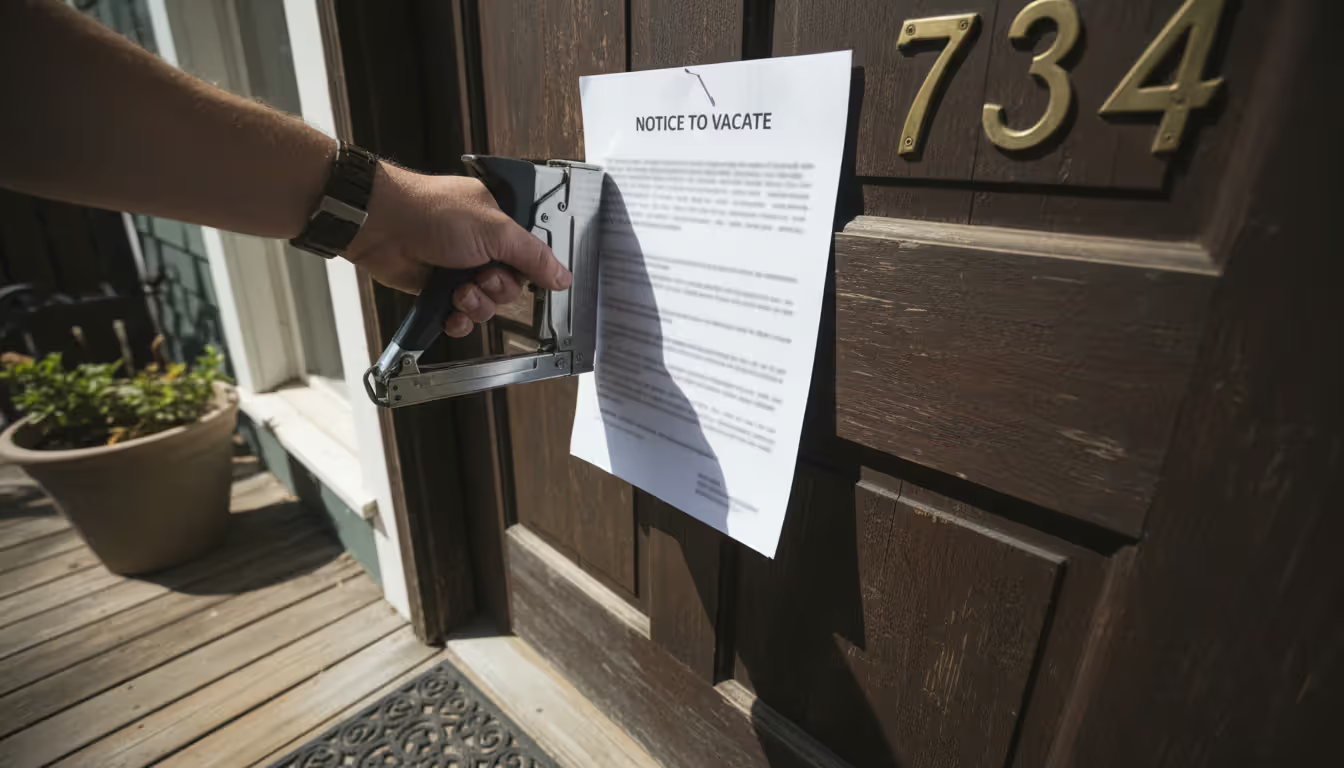
Most states require serving a notice to quit or notice to vacate before filing eviction. For squatters, this is typically a notice demanding they leave within three to 30 days, depending on state law. The notice must be served according to state requirements—usually personally delivered, posted on the door, or sent via certified mail.
Proper service is critical. If you serve notice incorrectly, the court will dismiss your eviction case, and you must start over. Many property owners hire process servers to ensure compliance. Keep copies of all notices and proof of service.
Some states allow shorter notice periods for squatters than for tenants. In jurisdictions that distinguish between the two, you may be able to use a notice period as short as three days if you can prove the occupant never had permission to be there.
Author: Samantha Holloway;
Source: redmonpestmgt.com
Step 3: File an Unlawful Detainer or Eviction
If the squatter does not leave after the notice period expires, file an unlawful detainer lawsuit (also called an eviction or forcible entry and detainer action). This lawsuit asks the court to order the squatter removed and may also seek damages for unpaid rent or property damage.
Filing requires completing court forms, paying filing fees (typically $100 to $400), and serving the squatter with the lawsuit. The squatter has a limited time to respond—often five to 15 days. If they fail to respond, you can request a default judgment. If they contest the eviction, the court schedules a hearing.
At the hearing, bring all evidence: property deeds, photographs, witness statements, and documentation showing the squatter had no permission to occupy the property. The burden of proof is on you to demonstrate they are unlawfully present.
Step 4: Obtain a Court Order and Sheriff Enforcement
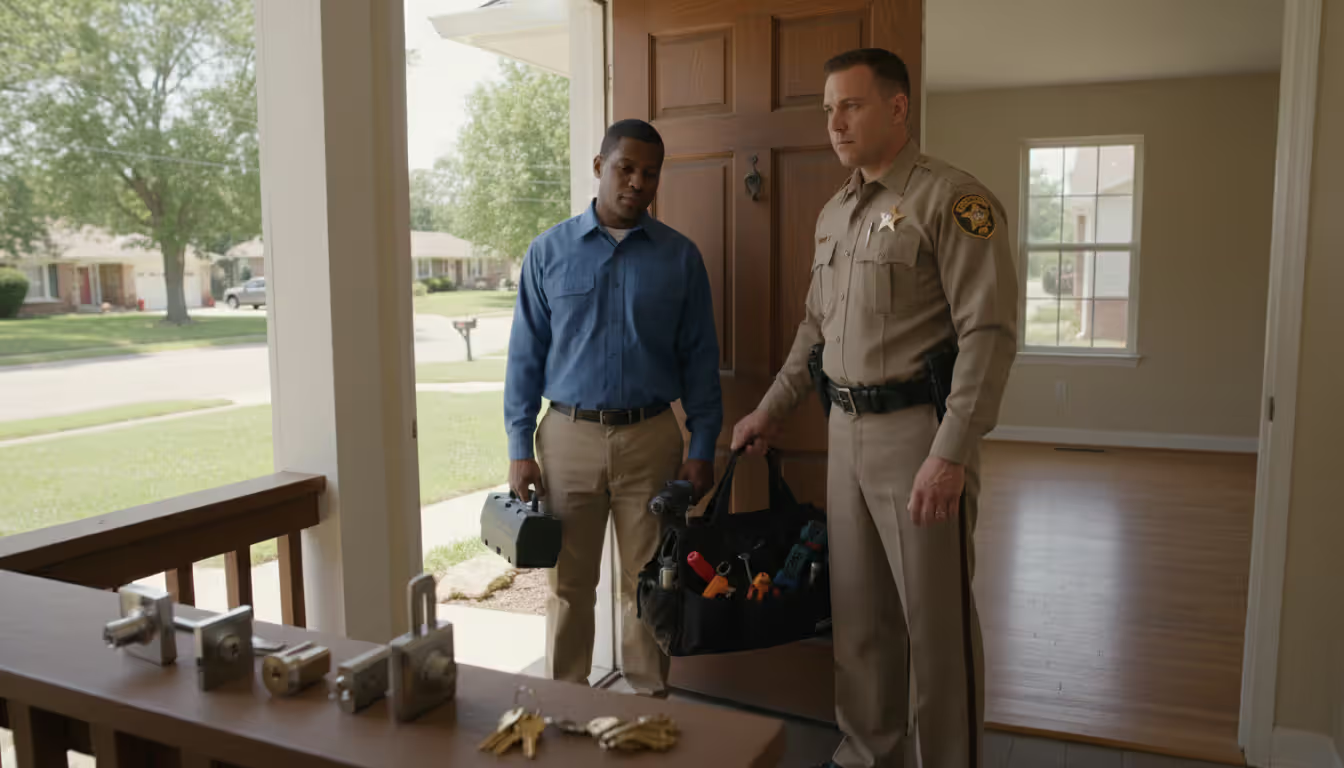
If the court rules in your favor, it issues a judgment for possession and a writ of restitution or writ of possession. This writ authorizes the sheriff to physically remove the squatter and their belongings. Only the sheriff can enforce this order—you still cannot remove the squatter yourself.
After receiving the writ, the sheriff schedules a lockout date, often seven to 30 days out. On that date, the sheriff oversees the removal of the squatter and their possessions from the property. You can then change locks and secure the property.
The entire process from notice to removal typically takes 30 to 90 days in most states, though it can extend to six months if the squatter contests the eviction or court dockets are backlogged.
States Where Squatter Rights Complicate Removal
Adverse possession laws and squatter protections vary significantly by state. Some states have short adverse possession periods and minimal requirements, while others impose strict conditions that make gaining ownership nearly impossible.
State
Adverse Possession Period
Color of Title Required?
Must Pay Property Taxes?
Removal Difficulty
California
5 years
No, but shortens timeline
Yes
High
Texas
10 years (30 without title)
Shortens to 10 years
Yes, for 5-year claims
Medium
Florida
7 years
No
Yes
Medium (Low with 2025 reforms)
New York
10 years
No
No
High
Georgia
20 years (7 with color of title)
Shortens timeline significantly
Yes, for 7-year claims
Low (with 2025 reforms)
New Jersey
30 years
No
No
High
Arizona
10 years
No
Yes
Medium
Oregon
10 years
No
Yes
Medium
Louisiana
10 years (30 without good faith)
Shortens to 10 years
Yes
Medium
Washington
10 years (7 with color of title)
Shortens timeline
Yes
Medium
"Color of title" means the squatter has a document that appears to give them ownership, even if the document is defective or invalid—such as a fraudulent deed or an incorrect property description in a legitimate deed.
States with shorter adverse possession periods and lower requirements make squatter removal more urgent. In California, a squatter who pays property taxes can claim ownership after just five years. In New Jersey, the 30-year requirement means adverse possession claims are rare, but squatters still gain tenant-like protections after establishing residency.
Recent legislative reforms in Florida and Georgia allow property owners to file affidavits with law enforcement proving ownership and lack of authorization, enabling police to remove squatters without court proceedings. These laws remain new, and their effectiveness depends on local law enforcement implementation.
Your Rights as a Property Owner Against Squatters
Property owners have clear legal rights to reclaim their property, but the methods matter. Understanding what you can and cannot do prevents turning a squatting problem into a lawsuit against you.
You have the right to immediately secure your property if it is vacant. If you discover squatters have not yet moved in but have broken a lock or window to gain access, you can repair the damage and secure the property immediately. Once squatters are inside with belongings, however, you must use legal eviction processes.
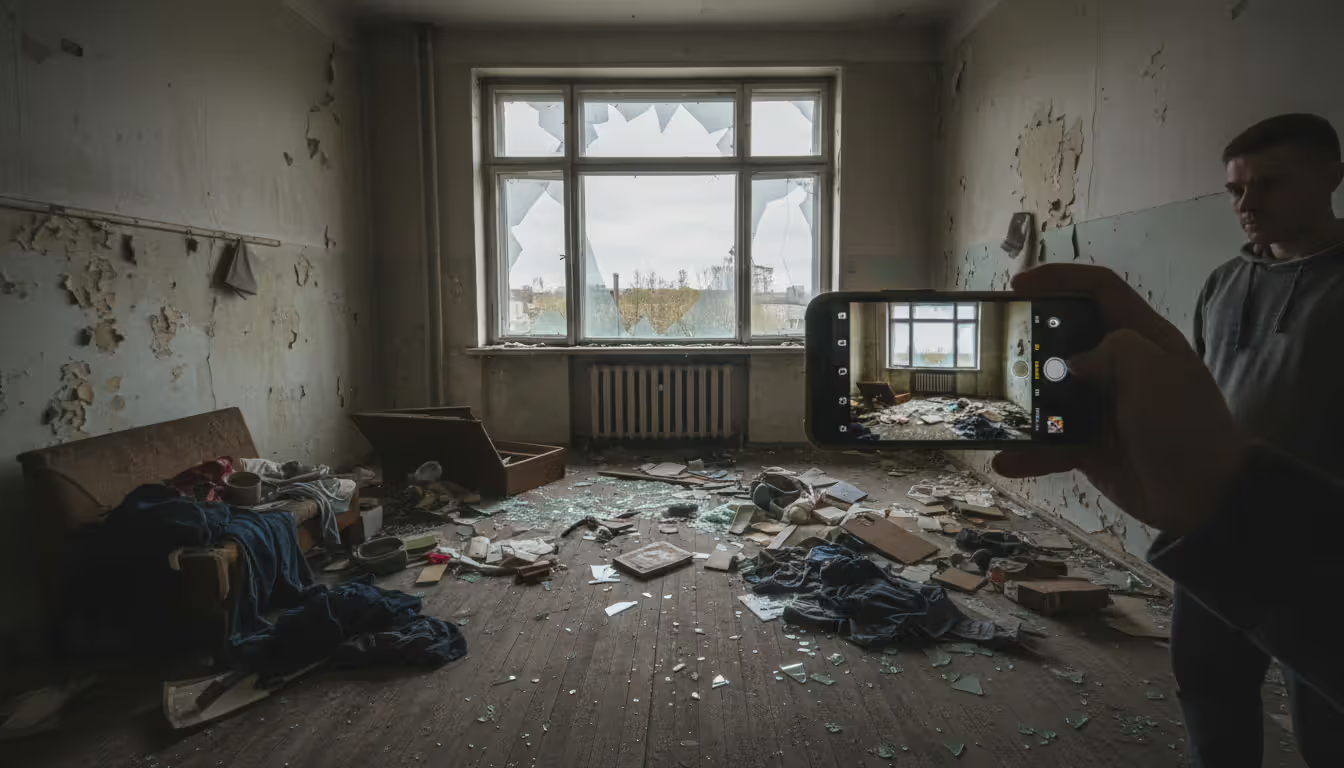
You can document everything. Photograph the squatters, their belongings, any damage to the property, and evidence of forced entry. These records support your eviction case and any subsequent claims for damages.
You cannot use self-help eviction tactics. Turning off utilities, changing locks while the squatter is out, removing their belongings, or physically intimidating them into leaving all constitute illegal eviction. Even though the squatter has no right to be there, these actions violate their civil rights once they have established residency. Property owners who use self-help eviction face lawsuits for illegal eviction, and squatters can recover damages including moving costs, temporary housing, emotional distress, and attorney fees.
You can pursue criminal charges separately if the squatter caused damage. Breaking and entering, vandalism, and utility theft are crimes distinct from the civil eviction. File police reports for these offenses, though prosecution depends on the district attorney's priorities.
You can seek damages in your eviction lawsuit. Courts can award unpaid rent (calculated at fair market value), property damage costs, and sometimes attorney fees. Collecting these judgments is difficult if the squatter has no assets, but the judgment remains enforceable for years.
Landlord rights against squatters mirror rights against holdover tenants in most respects. The key difference is that squatters never had permission, which can shorten notice periods and strengthen your eviction case, but does not eliminate the need for court proceedings.
Author: Samantha Holloway;
Source: redmonpestmgt.com
When You Might Remove a Squatter Without Going to Court
A few narrow scenarios allow squatter removal without formal eviction, though they are rare and depend on immediate action and clear evidence.
If you catch someone in the act of breaking into your property and call police immediately, officers can arrest them for burglary or breaking and entering. The crime is the unlawful entry, not the squatting. This works only if you discover them during or immediately after entry, before they establish any appearance of residency.
If the squatter has been present for less than 24 to 48 hours with no belongings or evidence of living there, some police departments will treat them as trespassers and remove them. This is highly jurisdiction-dependent and requires you to prove ownership on the spot with a deed or tax bill. The squatter must also have no documents suggesting permission to be there, even fake ones.
In states with new anti-squatter laws like Florida, property owners can file a sworn affidavit with the sheriff's office stating they own the property and the occupant has no lease or permission. If the sheriff verifies ownership and the squatter cannot produce a valid lease, deputies can remove them without a court order. This process is faster than eviction but still requires paperwork and sheriff involvement.
Squatter removal without court order remains the exception, not the rule. Most situations require full eviction proceedings because squatters quickly establish the appearance of residency, making their removal a civil matter beyond police authority.
Property owners sometimes ask whether offering "cash for keys"—paying the squatter to leave voluntarily—is advisable. This approach can work when the squatter is willing to negotiate and the cost is less than months of lost rent and legal fees. The risk is that the squatter takes the money and refuses to leave anyway, or other squatters learn that your property is an easy target. If you choose this route, have the squatter sign a written agreement to vacate by a specific date and verify they have removed all belongings before handing over payment.
Author: Samantha Holloway;
Source: redmonpestmgt.com
Frequently Asked Questions About Police and Squatter Removal
Can I call 911 to remove squatters?
You can call police, but 911 is for emergencies. Use the non-emergency line instead. Police will respond and assess whether the situation is criminal trespassing or a civil dispute. If the squatter has established any appearance of residency or claims any right to be there, police will tell you to pursue eviction in court. Only if you catch someone breaking in or they have been there less than a day with no belongings might police remove them.
What's the difference between a squatter and a trespasser?
A trespasser is someone who enters or remains on property without permission and has no claim of right to be there. Trespassing is a criminal offense police can address immediately. A squatter is someone who occupies property without permission but establishes residency and may claim some right to be there, making it a civil dispute. The key difference is whether the person has created the appearance of living there—moved in belongings, received mail, paid utilities—which converts the situation from criminal to civil.
How long does the legal squatter removal process take?
The eviction process typically takes 30 to 90 days from serving initial notice to the sheriff physically removing the squatter. The timeline varies by state and whether the squatter contests the eviction. In jurisdictions with backlogged courts, the process can extend to four to six months. States with expedited procedures for squatters may complete removal in as little as two to three weeks if the squatter does not respond to the lawsuit.
Can I change the locks if someone is squatting in my property?
Not while they are inside or have belongings there. Changing locks on an occupied property constitutes illegal eviction, even if the occupant is a squatter with no legal right to be there. You can change locks only after obtaining a court order and having the sheriff remove the squatter and their possessions. Changing locks before then exposes you to a lawsuit for illegal eviction, and the squatter can recover damages from you.
Do squatters have to pay rent or utilities?
Legally, squatters owe rent to the property owner calculated at fair market value for the period they occupied the property. In reality, squatters rarely pay anything, which is why they are squatting. You can sue for unpaid rent as part of your eviction case and receive a judgment, but collecting that judgment is difficult if the squatter has no income or assets. Some squatters do pay utilities to strengthen their claim of residency, though they have no legal obligation to do so.
What happens if I forcibly remove a squatter myself?
You face potential criminal charges for assault, battery, or harassment, plus a civil lawsuit for illegal eviction. Even though the squatter has no right to be there, they have civil rights that protect them from forcible removal without due process. Courts take illegal eviction seriously and often award squatters significant damages, including moving costs, temporary housing, emotional distress, and attorney fees. Property owners who use force can also face restraining orders preventing them from accessing their own property until the court resolves the matter.
Police cannot remove squatters in most situations because squatting is treated as a civil dispute rather than a criminal matter. Once a squatter establishes any appearance of residency or claims any right to occupy the property, law enforcement steps back and requires property owners to pursue formal eviction through the courts. The only exceptions are immediate discovery during unlawful entry or in states with new legislation allowing expedited removal through sheriff affidavits.
Property owners must follow the legal eviction process: verify the person is actually a squatter, serve proper notice, file an unlawful detainer lawsuit, obtain a court order, and have the sheriff enforce removal. This process takes one to three months in most cases. Attempting to bypass these steps through self-help eviction creates legal liability and can result in the squatter successfully suing you.
Understanding the distinction between trespassing and squatting, knowing your state's specific laws, and acting quickly when you discover unauthorized occupants gives you the best chance of reclaiming your property with minimal delay and cost. While the legal process feels slow when someone is living in your property without permission, following it correctly is the only reliable way to regain possession and avoid turning a squatter problem into a costly legal battle against yourself.
Zoning regulations determine what you can build and where across the United States. This guide explains zoning law basics, classification types, how to find zoning information, navigate variances and permits, and address alternative structures like shipping containers
The Uniform Partition of Heirs Property Act prevents forced sales of inherited family land at below-market prices through mandatory appraisals, buyout rights, and partition in kind preferences. Twenty-nine states have adopted this reform legislation as of 2026
Trespassing represents one of the most common property violations in the US. Learn the legal definitions, differences between criminal and civil trespass, penalties, proper signage requirements, and how property owners can legally protect their land from unauthorized entry
Real estate fraud costs Americans hundreds of millions annually through wire transfer scams, forged deeds, and foreclosure rescue schemes. This comprehensive guide explains common fraud types, warning signs to watch for, and practical prevention steps to protect your property and finances during transactions
The content on this website is provided for general informational and educational purposes only. It is intended to explain concepts related to real estate law, property rights, leases, liens, zoning, landlord-tenant disputes, and litigation.
All information on this website, including articles, guides, and examples, is presented for general educational purposes. Legal outcomes may vary depending on jurisdiction, property type, and individual circumstances.
This website does not provide legal advice, and the information presented should not be used as a substitute for consultation with qualified attorneys or real estate professionals.
The website and its authors are not responsible for any errors or omissions, or for any outcomes resulting from decisions made based on the information provided on this website.