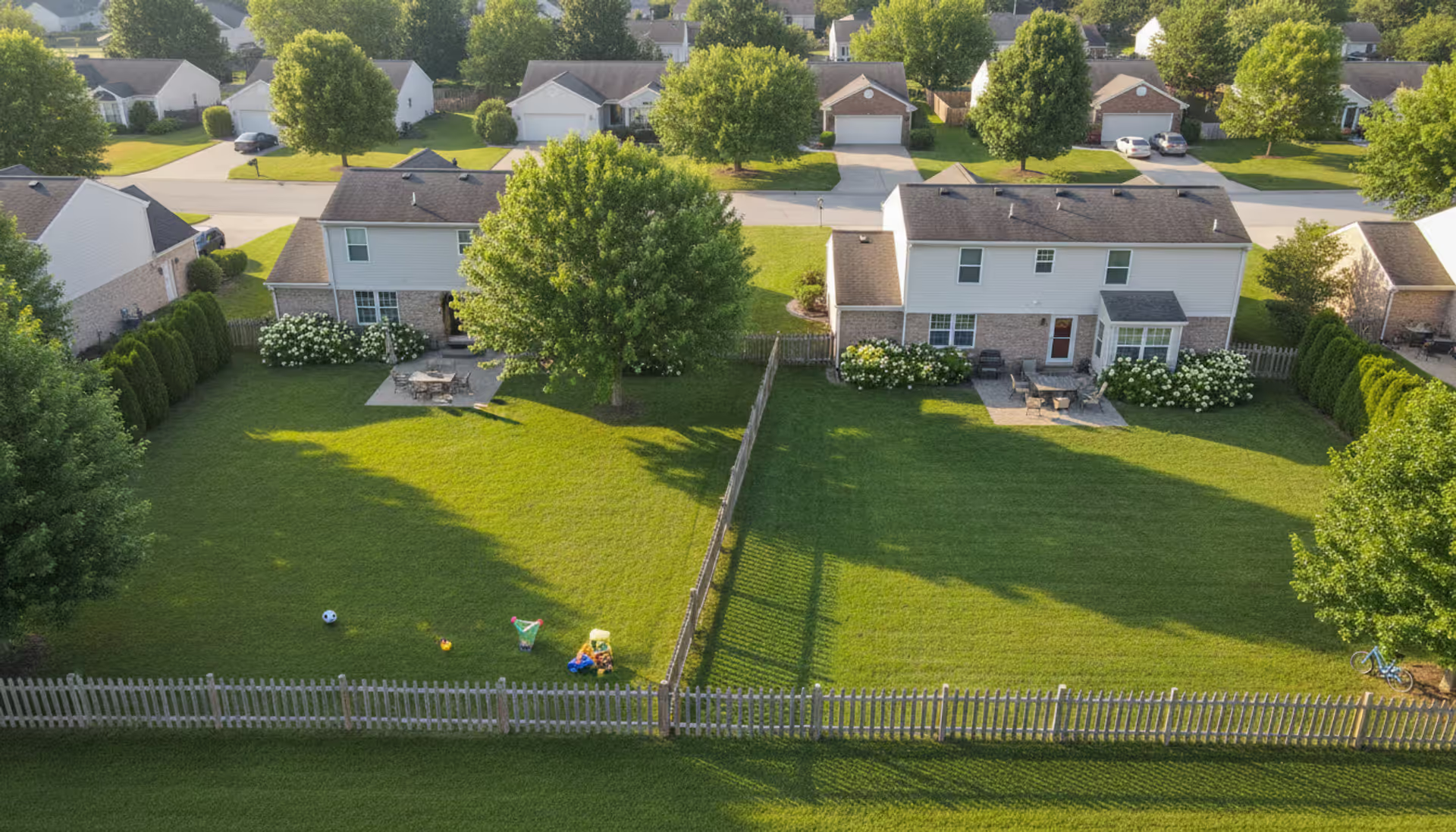
Your neighbor just built a fence. Looks great—except it's sitting three feet inside your yard. Or maybe that new garage they're so proud of? Half of it occupies land you actually own. These aren't hypothetical problems. They happen daily across the United States, and they're more complicated than just asking someone to move their stuff. When structures cross boundary lines without permission, you're dealing with a legal issue that can affect your property's value, your ability to sell, and your peace of mind. That's where specialized legal help comes in.
What Is Property Encroachment?
Here's the simple version: someone has built something, planted something, or placed something on land that belongs to you, not them. They didn't ask first. They might not even realize they've done it.
The examples are everywhere once you start looking. A neighbor puts up a shed, and it turns out eight inches of that shed sits on your side of the property line. Someone paves their driveway in a curve that cuts across your lot. A house gets built with roof eaves that hang three feet over the boundary. There's a fence from the 1980s that everyone assumed was correctly placed—until a new survey reveals it's five feet onto your property. All of these situations share one thing: unauthorized use of land belonging to someone else.
You'll see encroachments divided into two types. Permanent structures make up the first category—things like buildings, concrete foundations, decks, paved driveways, retaining walls, and utility lines buried underground. The second category covers non-permanent features: landscaping that spreads across the line, bushes and trees with branches extending over, storage items left on your property, or vehicles someone regularly parks past the boundary.
Why does this happen? Sometimes the survey used during construction was outdated or wrong. Sometimes boundaries weren't clearly marked, and a contractor made an honest mistake reading the plans. Sometimes a homeowner just assumed they knew where the line was—maybe a previous owner told them something incorrect. And yes, sometimes it's deliberate. Someone figures they'll use a few extra feet and hope you won't notice or won't care enough to do anything about it. In neighborhoods with old, unclear property records, these disputes can go back generations.
A rosebush growing six inches over the line creates a different problem than a two-car garage sitting halfway on your land. Permanence matters. Impact matters.
Author: Daniel Crosswell;
Source: redmonpestmgt.com
When You Need an Encroachment Attorney
Look, you can handle some boundary issues with a conversation over coffee. But certain situations need legal expertise immediately, not eventually.
Get an attorney when your neighbor has seen the survey evidence and doesn't care. You've shown them the documentation. They've dismissed it, argued with it, or ignored it. That's your signal. Also, if someone starts claiming they've been using that land for so long it's legally theirs now—that's an adverse possession argument—you need professional help today, not next month.
Some situations can't wait at all. Construction happening right now on your property? Call an attorney before the foundation gets poured. Encroachment preventing you from selling your house or refinancing? Your closing can't proceed until this gets resolved. Title insurance company flagging a boundary problem? That flag won't disappear on its own. Safety hazards created by someone's structure on your land? That's potential liability you can't afford to ignore. If a neighbor's deck blocks your only driveway access or their addition is compromising your foundation's stability, every day of delay makes things worse.
What exactly will an attorney do for you? They'll examine your surveys and title documents to nail down the exact legal boundaries. They'll dig through property records, historical deeds, and ownership transfers to understand how this happened. They'll handle communications with the other side—or their lawyer if they've hired one—to work toward solutions. They draft formal demand letters that carry actual legal weight, not just frustration. They represent you in mediation, arbitration, or court. And critically, they'll figure out whether you're dealing with simple encroachment, an easement claim, or adverse possession, because those three things require completely different legal approaches.
Encroachment vs Easement and Adverse Possession
Key Differences Between Encroachment and Easement
Both situations involve someone using your property, but the legal reality couldn't be more different. Think of encroachment as someone taking something without asking. There's no permission, no legal right, just someone occupying space that isn't theirs. An easement, though? That's an actual legal right—usually written down, often recorded with the property deed—that allows specific use of your land for a specific purpose.
Utility companies hold easements all the time. That's why they can access power lines or sewer systems running through your yard. If someone's property is landlocked—no road access without crossing another parcel—they might have an easement to cross a neighbor's land to reach the street. These arrangements get documented and they transfer automatically when properties change hands.
With encroachment, there's no documentation because there's no legal basis. The person has no right to be there. You can demand they remove whatever's crossed the line. But with an easement? That's a protected legal right you generally can't eliminate without the easement holder's agreement.
How Adverse Possession Differs from Encroachment
This is where encroachment can transform into something much more serious. Adverse possession is basically a legal mechanism that can turn long-term, open use of someone else's land into actual ownership. Every state sets specific requirements—usually you're looking at somewhere between seven and twenty years of continuous use, depending on where you live.
The person claiming adverse possession must meet strict criteria. They have to use the land openly (not hidden or secret), continuously (no big gaps in time), exclusively (not sharing control with the actual owner), and adversely (meaning without permission). Some states add another requirement: paying property taxes on that disputed area.
An encroachment becomes an adverse possession claim when the encroaching party argues they've met all those requirements and now legally own that piece of your land. This isn't just "please remove your fence anymore." This is "I'm claiming ownership of part of your property." That escalation demands immediate legal response to protect your title.
The stakes are completely different. Simple encroachment? You're seeking removal or compensation. Successful adverse possession? That person actually owns that land now. Your property just got smaller, permanently. Easements create usage rights—which is significant—but they don't transfer ownership, even though they do run with the land indefinitely.
Aspect
Encroachment
Easement
Adverse Possession
Definition
Unauthorized physical intrusion by structure or object across property boundaries
Documented legal right permitting specific use of another person's land for defined purposes
Legal claim to ownership based on long-term, open, and continuous use without permission
How It Occurs
Mistakes during construction, outdated surveys, deliberate expansion, or unclear boundaries
Created through written agreements, court orders, necessity, or long-term prescriptive use
Meeting statutory requirements over state-mandated timeframes (typically 7-20 years)
Legal Rights
None; the encroaching party has no legal basis to occupy that space
Limited rights to specific uses; ownership remains with original property holder
Can result in complete ownership transfer if all statutory elements are proven
Resolution Options
Removal, monetary compensation, negotiated land purchase, or court-ordered relief
Generally cannot be eliminated without easement holder consent; must be honored by subsequent owners
Challenged through litigation; owner must prove one or more requirements weren't satisfied
Time Factors
Property owner can demand removal at any time (until adverse possession ripens)
Becomes permanent once properly established; automatically transfers with property sales
State-specific statutory periods; owner's action acknowledging the use can interrupt the clock
How to Handle and Remove Neighbor Encroachment
Before you spend money on legal fees, do some homework. Track down your property deed and any surveys you have from when you bought the place. Take photographs showing the encroachment from different angles, and make sure they're dated. Measure how far the intrusion extends. Pull out your title insurance policy and check if it covers boundary disputes—you might have coverage you forgot about. Look into local building permits to see whether your neighbor got official approval for whatever they built.
This groundwork saves money and strengthens your position. Attorneys work faster and more efficiently when you hand them organized evidence instead of scattered information.
Encroachment Survey Requirements
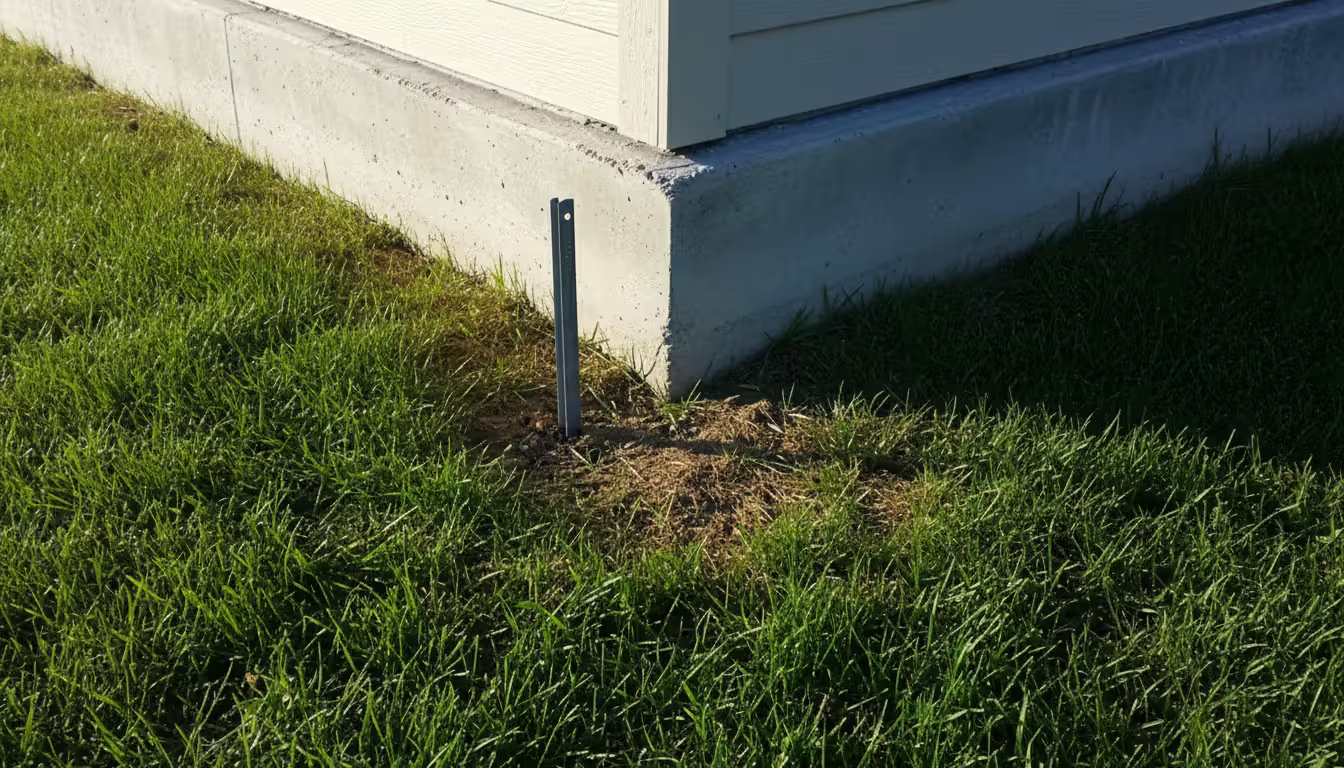
You'll need to hire a licensed land surveyor to establish precisely where your boundaries actually fall. This professional locates property corners using your deed description, historical records, physical markers, and measurement technology. What you get is a survey document showing exact measurements and identifying any encroachments with specificity—not guesses, not estimates, but documented facts.
Expect to pay anywhere from $400 to $2,000 depending on how large your property is, how difficult the terrain makes the work, and what surveyors charge in your area. A small urban lot with clear records costs less than rural acreage where the surveyor needs to conduct extensive research. Ask specifically for a boundary survey that notes encroachments. This differs from the basic mortgage survey that just shows where buildings sit without analyzing boundary issues.
The surveyor should place visible stakes or markers at your property corners. Request several copies of the final survey. You'll need them for negotiations, possible legal proceedings, and future reference.
Author: Daniel Crosswell;
Source: redmonpestmgt.com
Writing an Encroachment Letter to Your Neighbor
A formal letter accomplishes two things: it documents the problem officially, and it demonstrates you tried resolving this reasonably before escalating. Courts and mediators notice good-faith efforts.
Keep your tone professional and stick to facts. Try something like: "A boundary survey completed on [date] by [Surveyor Name], who is licensed in [State], shows your fence extends 2.3 feet onto our property along the eastern boundary." Attach a survey copy.
Explain the actual impact without getting emotional about it. "This encroachment prevents the addition we're planning and creates title complications that could affect our ability to sell the property." Request specific action with a deadline that's reasonable: "We're requesting removal of the fence from our property within 60 days."
Leave room for conversation: "We're happy to meet and discuss options that might work for both of us." Use certified mail with return receipt for sending. Keep copies of everything.
Don't accuse anyone of bad intentions, don't make threats, and don't let frustration creep into the language. You're creating a legal record while keeping the door open for cooperation.
Legal Removal Options
When friendly approaches fail, you've got several legal paths forward. Negotiation might mean direct discussions or having your attorneys talk to find voluntary solutions. Maybe the encroaching party agrees to remove the structure. Maybe they offer to buy the affected land. Maybe they propose giving you equivalent property elsewhere on their lot.
Mediation brings in someone neutral to help both sides reach agreement. Each party presents their position, and the mediator facilitates finding solutions everyone can accept. It costs less than going to court and does less damage to neighbor relationships than courtroom battles. Success rates for property disputes in mediation run around 70-80%.
Arbitration resembles a private trial. An arbitrator hears evidence and makes a binding decision. It's faster than court, but you're giving up your right to appeal. Some homeowners association agreements or property contracts actually require arbitration before you can file a lawsuit.
Litigation means filing a lawsuit asking a court to order removal or award damages. This option costs the most—often $10,000 to $50,000, sometimes more—and takes months to years. But sometimes it's necessary when the encroaching party refuses reasonable solutions or when adverse possession claims threaten your ownership.
Your attorney might seek a preliminary injunction to stop construction while the case proceeds. Final judgments typically order the encroachment removed at the encroaching party's expense, plus your legal fees if state law permits fee recovery.
Author: Daniel Crosswell;
Source: redmonpestmgt.com
Fence Encroachment Rules and Building Encroachment on Property Line
Fence disputes top the list of common encroachment types. Most states let property owners build fences directly on boundary lines if both neighbors agree to it. Without that agreement, fences must sit entirely on the builder's property—often with setback requirements of six to twelve inches from the actual line.
Spite fences—built just to annoy the neighbors—face legal restrictions in many jurisdictions. Height limits usually range from four feet for front yards to six or eight feet for backyards, though local zoning ordinances control the specifics.
Building encroachment on property lines triggers much stricter scrutiny because structures are permanent and valuable. Most municipalities require setbacks of five to twenty-five feet from property lines depending on zoning classifications. A building encroaching even a few inches onto a neighbor's land violates both property rights and probably building codes too.
Courts rarely permit permanent buildings to stay on someone else's property. Removal costs can hit tens of thousands of dollars for foundations, garages, or additions. Some states allow the encroaching party to purchase the land at fair market value if removal would be extraordinarily expensive and the encroachment happened innocently, but this requires court approval and isn't guaranteed.
State-specific rules matter tremendously. California, Texas, Florida, and New York each have distinct legal precedents governing encroachment remedies, adverse possession timeframes, and property rights. An attorney licensed in your state understands these nuances.
Author: Daniel Crosswell;
Source: redmonpestmgt.com
Encroachment Dispute Resolution Process
The best resolution protects your legal property rights while avoiding years of litigation and permanent neighbor hostility. That balance matters.
Start negotiation by understanding what you'll actually accept. Can you live with the encroachment if you're compensated fairly? Would you sell that strip of land at market value plus some premium for the hassle? Could the neighbor feasibly move the structure back? Figure out your priorities before discussions begin.
Present facts instead of demands. "The survey shows your deck extends four feet onto our property" works better than "You're stealing our land." Focus on potential solutions: "We could agree to sell you that section for $X, or you could rebuild the deck within your boundary, or maybe there's another option we haven't thought of yet."
Trade-offs often work. You might accept payment for the encroached area in exchange for a quit claim deed that formalizes the new boundary. The neighbor might remove part of the encroachment while you agree not to pursue damages for the temporary intrusion.
Mediation sessions usually last two to four hours and cost $200 to $500 per hour, split between parties. The mediator doesn't decide who wins—they help both sides find middle ground. Come prepared with your survey, photographs, contractor estimates for removal costs, and property appraisals showing value impact.
Settlement terms commonly include: removal within a specified timeframe, payment for the encroached land, land swaps that even things out, creation of a formal easement with compensation, or installation of permanent boundary markers to prevent future disputes.
When litigation becomes unavoidable, expect a timeline of six months to three years depending on how backed up the courts are and how complex your case gets. Initial filing costs run $200 to $500. Attorney fees for full litigation range from $10,000 to $100,000 for particularly complex cases. Discovery means exchanging documents, conducting depositions, and getting expert testimony from surveyors or property appraisers.
Most cases still settle before trial—about 85%. Settlement often happens during mandatory settlement conferences that judges require. Trials last one to five days for straightforward encroachment disputes. Judges issue rulings ordering removal, awarding damages, or occasionally (though rarely) allowing the encroachment to remain with compensation to you.
The clients who get the best outcomes in encroachment disputes are the ones who document everything from day one and make genuine attempts at negotiation before filing suit. Courts reward reasonableness. If you can demonstrate you tried to resolve this amicably and the other party refused, you're in a much stronger position for fee recovery and favorable rulings
— Sarah Chen
Frequently Asked Questions
What happens if my neighbor refuses to remove an encroachment?
When your neighbor won't remove something after seeing survey evidence and receiving formal requests, you've got legal remedies available. Start with a demand letter sent through an attorney—this often motivates action when personal requests got ignored. If they still won't budge, file a lawsuit seeking injunctive relief and removal. Courts have authority to order encroachment removal and can hold refusing parties in contempt. The encroaching neighbor typically covers removal costs plus your legal fees if you win. Occasionally, where removal would be extraordinarily expensive and the encroachment happened through innocent mistake, courts might let it remain with compensation to you, but this requires proving specific hardship elements and it's not common.
How much does an encroachment attorney cost?
Most encroachment attorneys charge $200 to $500 hourly depending on where you're located and how experienced they are. Initial consultations often run $150 to $300, though some offer free consultations. For straightforward cases resolved through negotiation or a demand letter, total fees might be $1,500 to $5,000. Mediation representation runs $2,000 to $7,500. Full litigation costs $10,000 to $50,000 or more for complex disputes. Some attorneys offer flat fees for specific services—survey review might cost $500 to $1,000, or demand letter drafting $750 to $1,500. For cases involving significant damages, many work on contingency, taking 25-40% of any recovery. Always get a written fee agreement that spells out hourly rates, retainer amounts, and billing practices before engagement.
Can I be forced to remove a structure on my own property?
Yes, absolutely—if that structure encroaches onto someone else's property. Owning the structure doesn't matter. What matters is where it sits. Your garage might extend two feet over the boundary line, which means those two feet occupy land you don't own, and the rightful owner can demand you remove it. Courts routinely order removal of encroaching structures regardless of what removal costs or when the structure was built. The "I didn't know" defense provides zero protection once you've been informed about the encroachment. Your options are negotiating to purchase the encroached land, moving the structure back within your boundaries, or facing a court order requiring removal at your expense.
How long does an encroachment dispute take to resolve?
Resolution timelines vary wildly based on which approach you take. Direct negotiation might wrap up in two to six weeks if both parties act reasonably. Mediation typically gets scheduled within one to three months and often concludes in a single session, though complex cases might need multiple meetings. Arbitration takes three to eight months from filing to final decision. Litigation stretches six months to three years depending on how busy the courts are, how complex your case is, and whether anyone appeals. Simple cases with clear survey evidence and cooperative parties settle fastest. Disputes involving adverse possession claims, unclear boundaries, or hostile parties drag on the longest. About 85% of cases settle before trial—usually during discovery or settlement conferences.
Do I need a survey before contacting an attorney?
A current survey significantly strengthens your position, but it's not mandatory before an initial consultation. Attorneys can review your situation and advise whether getting a survey makes sense. For obvious encroachments—like a building that's clearly sitting on your land—the attorney might recommend proceeding with a demand letter while simultaneously ordering a survey. For subtle boundary disputes, get the survey first. It provides the factual foundation for any legal action. Surveys conducted within the past five years often suffice unless significant property changes occurred since then. Expect attorneys to require a professional survey before filing litigation, because courts demand precise evidence of boundary locations and encroachment extent.
What is the difference between trespass and encroachment?
Trespass involves a person physically entering your property without permission—someone walking across your yard, parking in your driveway, or dumping trash on your land. It's usually temporary and involves people rather than structures. Encroachment involves a physical object or structure permanently occupying your property—a fence, building, or driveway that crosses the boundary line. Trespass cases often seek restraining orders or damages for specific incidents. Encroachment cases seek permanent removal of the offending structure. Trespass can sometimes be criminal; encroachment is purely civil. Both violate your property rights, but encroachment's permanence makes it more serious for property values and ownership rights.
Encroachments threaten ownership rights, property values, and peaceful neighbor relations. Minor boundary issues sometimes get resolved through conversation, but significant encroachments need professional legal guidance. An encroachment attorney protects your interests by establishing clear boundaries, negotiating fair resolutions, and pursuing litigation when necessary becomes unavoidable.
Document encroachments thoroughly using professional surveys and photographs. Try good-faith communication before escalating to legal action. Understand the differences between encroachment, easement, and adverse possession—they need different legal strategies. Explore negotiation and mediation before committing to expensive litigation.
Act promptly when you discover encroachments. Waiting can strengthen adverse possession claims or suggest you've accepted the situation. Property rights don't enforce themselves. Protecting your land requires vigilance and appropriate legal action when neighbors cross the line.
Zoning regulations determine what you can build and where across the United States. This guide explains zoning law basics, classification types, how to find zoning information, navigate variances and permits, and address alternative structures like shipping containers
The Uniform Partition of Heirs Property Act prevents forced sales of inherited family land at below-market prices through mandatory appraisals, buyout rights, and partition in kind preferences. Twenty-nine states have adopted this reform legislation as of 2026
Trespassing represents one of the most common property violations in the US. Learn the legal definitions, differences between criminal and civil trespass, penalties, proper signage requirements, and how property owners can legally protect their land from unauthorized entry
Real estate fraud costs Americans hundreds of millions annually through wire transfer scams, forged deeds, and foreclosure rescue schemes. This comprehensive guide explains common fraud types, warning signs to watch for, and practical prevention steps to protect your property and finances during transactions
The content on this website is provided for general informational and educational purposes only. It is intended to explain concepts related to real estate law, property rights, leases, liens, zoning, landlord-tenant disputes, and litigation.
All information on this website, including articles, guides, and examples, is presented for general educational purposes. Legal outcomes may vary depending on jurisdiction, property type, and individual circumstances.
This website does not provide legal advice, and the information presented should not be used as a substitute for consultation with qualified attorneys or real estate professionals.
The website and its authors are not responsible for any errors or omissions, or for any outcomes resulting from decisions made based on the information provided on this website.