Installing a fence between you and your neighbor seems straightforward—until it isn't. You'll discover quickly that boundary fences involve more legal complexity than most homeowners anticipate. Building without understanding your local regulations? That's how you end up in small claims court or, worse, tearing down a $6,000 fence because it violates a setback rule you didn't know existed.
Here's a sobering statistic: The American Bar Association's 2025 survey revealed that boundary and fence conflicts made up 22% of all neighbor-related lawsuits in small claims courts. That's more than one in five cases. The tragic part? Simple research and neighborly communication could have prevented most of them.
Understanding Property Boundary Fence Laws
Fence regulations in America don't follow a single playbook. Instead, you're dealing with layers of rules—each one potentially contradicting the others. Three main sources create this legal maze: English common law traditions that date back centuries, statutes your state legislature passed, and the zoning ordinances your city council adopted last year.
The old common law principle is simple: you don't have to build a fence unless a specific law requires it. This standard still applies throughout most of the country. But head out to Western states with "open range" traditions, and you'll find the opposite rule. If you don't want your neighbor's cattle wandering onto your land, you're the one who needs to build a fence to keep them out.
Your state legislature sets the big-picture rules. California's Civil Code sections 841-842 spell out detailed requirements for who pays for boundary fences. Texas? The legislature left fence details to individual cities and counties. That's why your brother in Houston might live under completely different fence rules than you do in Dallas, even though you're in the same state.
Now we get to local zoning codes—the regulations that actually control what you can build. Your city or county decides how tall your fence can be, how far it must sit from the sidewalk, what materials you can use, and whether you need a permit. A fence that's perfectly legal under state law might violate your municipal code by three inches.
Don't forget homeowners associations. If you bought into a neighborhood with an HOA, you've got another rulebook to follow. These private organizations can (and do) impose stricter standards than government regulations. They'll specify approved paint colors, ban certain materials entirely, and reject your fence design even after the city approved it. Those covenants are legally enforceable contracts, so ignoring them invites lawsuits.
Who Is Responsible for a Fence Between Neighbors
Here's where things get messy. Looking at a fence won't tell you who owns it. The person who paid for installation typically owns it, but what about a fence that's been there for thirty years? Nobody remembers who built it.
Some states follow "equal responsibility" for boundary fences. Under this approach, when a fence sits directly on the property line, both neighbors own it together and split maintenance costs. California's Civil Code section 841 creates this presumption automatically unless you and your neighbor write out a different agreement.
Other states use "sole ownership" rules. Whoever built the fence owns it completely, even when it's positioned right on the boundary. In these places, you can't force your neighbor to chip in for construction or repairs without a specific law that says otherwise.
Author: Samantha Holloway;
Source: redmonpestmgt.com
Fence on Property Line Rules
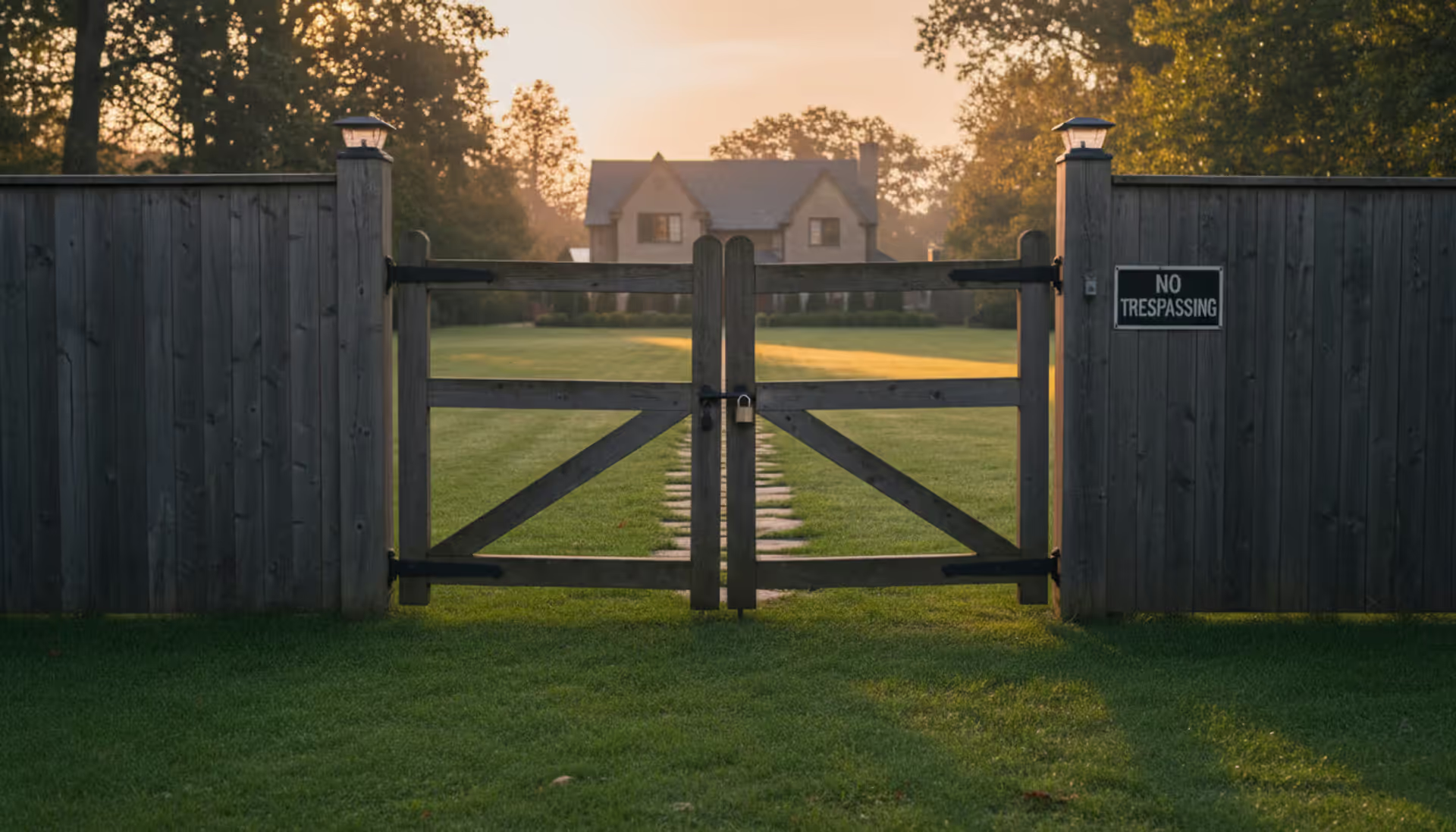
Building directly on the property line creates unique problems. Most places require both property owners to consent before anyone constructs on the boundary. Build without permission and you've committed trespass. Your neighbor can demand you remove the entire fence.
When both parties agree to a boundary fence, you become co-owners with equal rights. Neither of you can tear it down, modify it significantly, or replace it without the other's approval. Let's say you want to swap out the existing chain-link for a nice wood privacy fence. Your neighbor needs to agree and split costs, or you'll need to build a completely separate fence inside your own property line.
The "finished side" debate causes endless arguments. Many cities have ordinances requiring the attractive side—the one without exposed posts and rails—to face your neighbor's property. Some municipalities split the difference, requiring alternating sections so both sides get equal portions of the finished appearance.
Author: Samantha Holloway;
Source: redmonpestmgt.com
How to Determine Boundary Fence Ownership
Start by hiring a licensed surveyor. Those property descriptions in your deed? They're often based on measurements from decades ago or reference landmarks that disappeared long before you moved in. A surveyor uses official plat records and precise instruments to establish the actual boundary, marking corners with iron pins or wooden stakes.
Dig through your title documents for recorded fence agreements. Maybe the previous owners signed a contract spelling out ownership and maintenance responsibilities. These agreements typically transfer to new owners when the property sells.
Look at how the fence was built. Construction tradition puts posts on the owner's side of the fence line, with rails and pickets extending toward the neighbor. This isn't a legal requirement, just standard practice—but it can indicate ownership when you don't have better evidence.
Property tax records and building permits provide another clue. Whoever pulled the permit and paid for construction probably owns the fence. Most cities maintain searchable databases of issued permits organized by street address.
Without clear evidence, your state's default rules kick in. Adverse possession doctrines might apply if one neighbor has exclusively maintained the fence for your state's statutory period—anywhere from 10 to 20 years depending on location—while the other neighbor never objected.
Fence Height Restrictions and Setback Requirements
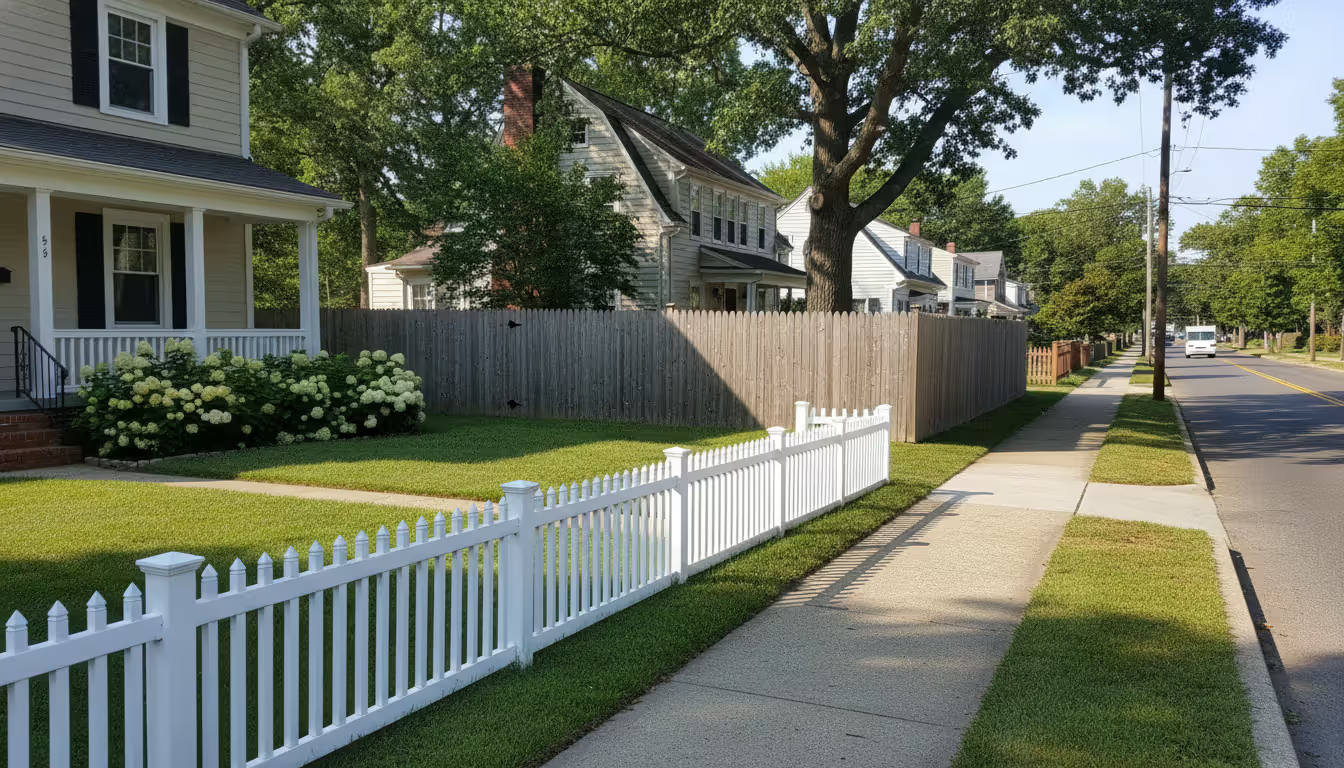
Every city in America regulates fence heights through zoning codes, though the specific numbers vary wildly. The most typical pattern: four feet maximum in front yards, six feet in back. Measurements run from ground level to the top of the fence, including those decorative lattice toppers you're considering.
Why restrict front yard heights? Safety and aesthetics. Lower fences preserve sight lines at intersections. Drivers need to see approaching vehicles and pedestrians. City planners also want to prevent fortress-like appearances that make neighborhoods feel unwelcoming. Defining "front yard" gets complicated on corner lots with two street-facing sides—check your local code for specifics.
Backyards get more flexibility because privacy matters more than visibility here. Six feet is standard, though some cities allow eight-foot fences with special approval. Swimming pools trigger different rules entirely. State safety codes typically require five-foot minimum enclosures for pools, and these safety regulations override local ordinances.
Setback requirements force distance between your fence and property lines, sidewalks, or streets. A typical code might require fences to sit two feet inside your property line when adjacent to public right-of-way. These setbacks prevent you from encroaching on city property and maintain clearance for utility workers accessing underground lines.
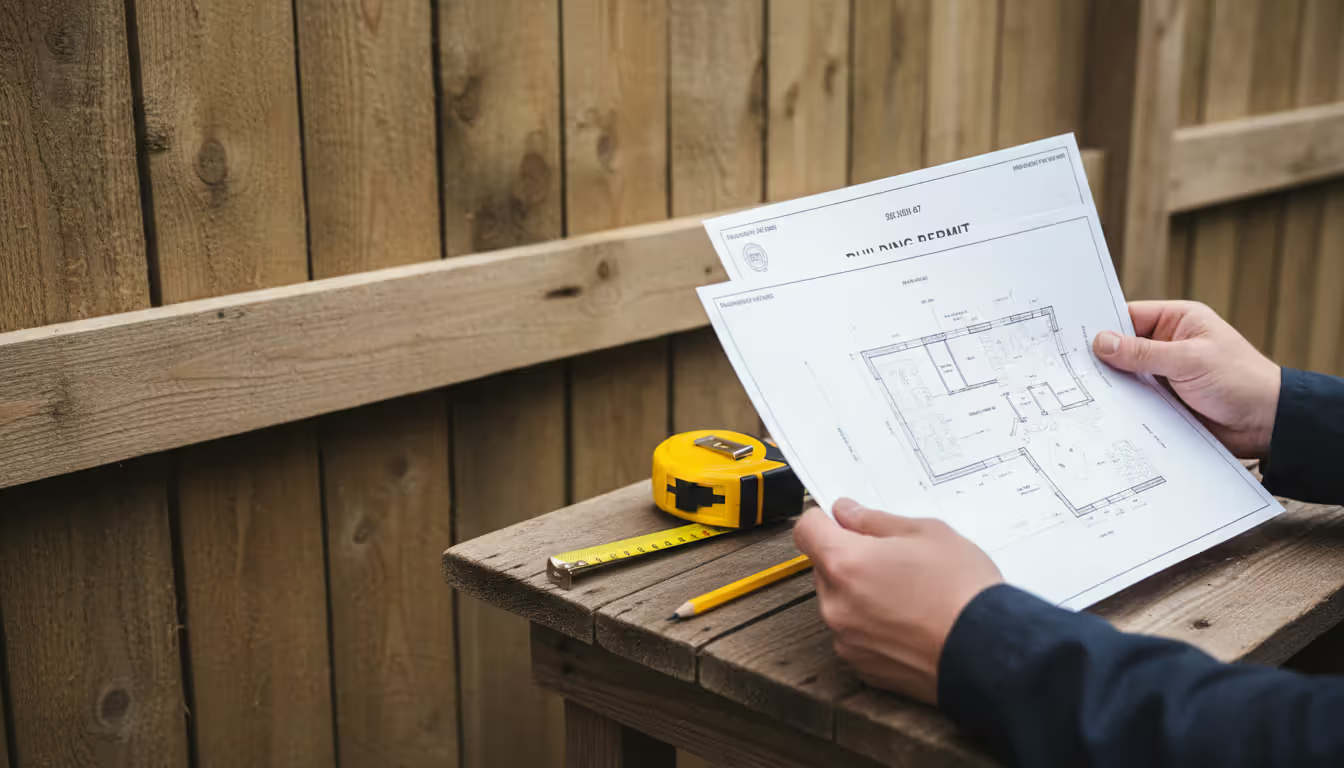
Permits depend on your jurisdiction and fence specifications. Many cities require permits for anything exceeding six feet or any fence in a front yard. The process usually involves submitting a plot plan showing fence location, paying fees between $50 and $300, and scheduling an inspection after you finish building.
HOA architectural review committees layer additional requirements on top of municipal codes. Associations might limit you to wood or vinyl, ban chain-link completely, or mandate specific paint colors matching other homes. You must satisfy both government regulations and HOA rules. Getting city permit approval but skipping HOA approval? That's how you end up tearing down a brand-new fence and paying association fines.
Good Neighbor Fence Laws and Shared Maintenance
The Good Neighbor Fence Act—adopted in various forms across multiple states—creates cost-sharing obligations for boundary fences. California's version, found in Civil Code sections 841-842, automatically presumes that neighbors split reasonable costs equally for constructing and maintaining boundary fences.
These statutes work like this: You want to build or replace a boundary fence. You must provide written notice to your neighbor, typically 30 days before starting construction. Your notice needs to describe the proposed fence, estimate costs, and request cost-sharing. If your neighbor agrees, you split expenses down the middle. If they refuse or ignore you, you can build anyway and later sue for their half in small claims court.
"Reasonable costs" becomes the battleground in most fence cases. Courts interpret this as the expense of a standard fence appropriate for your neighborhood—usually a six-foot wood or vinyl privacy fence in residential areas. You can't unilaterally decide to install an $8,000 decorative iron fence and demand your neighbor pay $4,000. If you want an upgrade beyond the reasonable standard, you're paying the difference yourself.
Maintenance responsibilities mirror construction obligations in states with shared-fence laws. Both owners contribute to repairs needed to keep the fence functional and reasonably attractive. This includes replacing broken boards, repainting or staining every few years, and fixing posts that lean. Purely cosmetic improvements? Those don't create cost-sharing obligations.
State-specific rules create dramatic differences in how fence law actually works:
State
Cost-Sharing Rule
Notice Requirement
Dispute Resolution
Maintenance Obligation
California
Automatic equal sharing for boundary fences
30-day written notice including cost estimate
Small claims court with statutory cost recovery
Equal sharing for reasonable repairs
Texas
No statewide rule; each municipality decides
Depends on city ordinances
Mediation encouraged; no state framework
Owner bears responsibility alone
Florida
Voluntary only; no presumed sharing
State law doesn't require notice
Civil court with no expedited process
Owner's responsibility exclusively
Nevada
Equal sharing when fence sits on property line
30-day written notice
Arbitration or small claims options
Shared for boundary fences
Oregon
Shared when both properties benefit from fence
Reasonable notice required
Mediation required before filing lawsuit
Proportional to benefit each owner receives
Washington
Equal sharing for boundary fences
Written notice with negotiation opportunity
Small claims or superior court
Equal sharing
Arizona
No statewide sharing requirement
Not mandated by state law
Standard civil litigation procedures
Owner bears full responsibility
Colorado
Voluntary sharing; no automatic presumption
Not required by state law
Mediation available but not mandatory
Based on ownership agreement
The "benefit" analysis matters in some states. When a fence primarily benefits one property—say, enclosing a pool or blocking an ugly view—courts might allocate costs proportionally instead of equally. Your neighbor who receives minimal benefit from your fence may successfully argue for reduced contribution or no contribution at all.
Fence Dispute Resolution Between Neighbors
Most fence fights start because someone assumed they knew the law or skipped basic communication. Before you file anything in court, talk to your neighbor. Pick a calm moment—not right after you discovered they built on your property—and frame the conversation as solving a shared problem rather than winning an argument.
Put everything in writing. After talking in person, send a quick email or letter summarizing what you discussed and any agreements you reached. If your neighbor won't communicate or you can't agree, send a formal written notice describing the problem, citing the applicable law, and proposing your solution. Mail this through certified mail with return receipt so you can prove they received it.
Mediation saves money compared to litigation. Many communities offer free or low-cost mediation through local dispute resolution centers. A trained mediator facilitates communication and helps both parties reach mutually acceptable solutions. Mediation typically costs $100-$300 per session. Compare that to the thousands you'll spend on attorney fees for litigation.
Small claims court handles fence disputes involving amounts below your state's jurisdictional limit—typically $5,000 to $10,000. You can represent yourself without hiring an attorney, file for a modest fee around $50-$100, and get a hearing date within a few months. Bring photographs, surveys, receipts, written communications, and any relevant ordinances or statutes supporting your position.
Superior or district court becomes necessary for disputes exceeding small claims limits or when you need injunctive relief—a court order forcing your neighbor to remove an encroaching fence or stop interfering with a shared boundary fence. These cases generally require attorney representation, with costs starting around $3,000-$5,000 for straightforward matters and escalating rapidly if the case proceeds to trial.
Spite Fence Laws and Remedies
Spite fences—structures built mainly to annoy a neighbor rather than serve any legitimate purpose—are illegal in most states. A classic spite fence does nothing useful for the person who built it but blocks the neighbor's view, sunlight, or air circulation out of pure malice.
Proving spite means demonstrating malicious intent, which creates evidentiary challenges. Courts examine several factors: the fence's height and design, whether it serves any practical purpose for the builder, statements the builder made about their motivation, and whether construction timing correlates with disputes between neighbors.
California Civil Code section 841.4 specifically addresses spite fences, defining them as fences "unnecessarily exceeding 10 feet in height" that were "maliciously erected or maintained" to annoy the neighbor. Other states achieve similar results through common law nuisance principles without needing specific spite fence statutes.
Author: Samantha Holloway;
Source: redmonpestmgt.com
Remedies for spite fences include mandatory removal and monetary damages. Courts can order the fence torn down and award the affected neighbor compensation for diminished property value, lost use and enjoyment, and attorney fees. Some jurisdictions impose punitive damages when malicious intent is obvious.
What to Do When a Tree or Fence Encroaches on Your Property
Tree encroachment creates complicated legal issues that intersect with fence law. When your neighbor's tree branches extend over your fence onto your property, you generally have the right to trim branches back to the property line. You can't enter your neighbor's property to do this, and you can't cut beyond the boundary line. Most states require that trimming doesn't kill or seriously damage the tree—you can cut branches but not in ways that destroy the tree's health.
Tree roots present trickier problems. If roots from a neighbor's tree damage your fence, most jurisdictions let you cut the roots at the property line. However, if cutting those roots would likely kill the tree, some states require you to notify the neighbor first and provide an opportunity to address the problem differently.
Fence encroachment—when a neighbor builds a fence crossing onto your property—demands immediate action. Allowing an encroaching fence to remain for the statutory adverse possession period (typically 10-20 years depending on your state) can result in permanently losing that strip of your property. The moment you discover encroachment, send written notice demanding removal. If the neighbor refuses, file a quiet title action or ejectment suit to establish your boundary and force removal.
Before filing anything, obtain a professional survey confirming the encroachment. Property owners constantly dispute boundary locations based on old fences, assumptions, or inaccurate deed descriptions. A licensed surveyor's report provides essential evidence for any legal action.
Common Fence Law Mistakes to Avoid
Building without a current survey ranks as the most expensive mistake property owners make. Relying on old fences, visible markers, or assumptions about boundary lines leads to encroachment problems costing far more to fix after construction than prevention would have cost. A survey typically runs $400-$800 for a standard residential lot—cheap insurance compared to rebuilding a misplaced fence.
Author: Samantha Holloway;
Source: redmonpestmgt.com
Ignoring local building codes and permit requirements creates legal liability and practical headaches. Unpermitted fences may need removal or modification to achieve compliance, and code violations can delay property sales. Future buyers' title insurance companies often require proof that structures comply with applicable regulations. Some municipalities impose daily fines for unpermitted structures until you obtain retroactive approval or remove the violation.
Failing to notify neighbors before construction damages relationships and may violate legal requirements. Even when no statute mandates notice, informing your neighbor about upcoming fence construction demonstrates basic respect and provides an opportunity to address concerns before they escalate into disputes. A simple conversation or brief written notice describing your plans, timeline, and willingness to discuss concerns prevents countless conflicts.
Assuming responsibility for existing fences without verification can obligate you to maintenance and repair costs you didn't anticipate. When purchasing property, determine fence ownership through surveys, title documents, and seller disclosures. If a fence sits on the boundary line, clarify cost-sharing arrangements in writing before closing.
Choosing inappropriate materials or designs for your location wastes money and creates maintenance nightmares. A wood fence in humid coastal climates requires extensive maintenance and frequent replacement compared to vinyl or composite materials. Chain-link fences might be prohibited by HOA covenants even though your municipal code permits them. Research appropriate options before purchasing materials.
Neglecting maintenance accelerates deterioration and can affect legal rights. In shared-fence jurisdictions, failing to maintain your portion of a boundary fence may allow your neighbor to make repairs and seek cost recovery from you. Deferred maintenance also strengthens spite fence claims if your poorly maintained fence annoys neighbors.
Property owners consistently underestimate the complexity of fence law and overestimate their rights.The most critical step is understanding that fence law is intensely local. State statutes provide a framework, but your city's zoning code and your HOA's covenants—if applicable—control the practical details. I've seen homeowners spend $15,000 building a beautiful fence that violates a setback requirement by six inches, then spend another $18,000 in legal fees fighting the city's removal order. A $500 consultation with a local attorney before construction would have identified the problem and saved $32,500
— Jennifer Martinez
Frequently Asked Questions
Can I force my neighbor to pay for half of a fence?
It depends entirely on where you live and where the fence sits. States with Good Neighbor Fence Acts like California and Nevada let you require cost-sharing for boundary fences by providing proper written notice and building a reasonably-priced fence. If your neighbor refuses payment after receiving notice, you build the fence anyway and recover their share through small claims court. In states without cost-sharing statutes, you can't force contribution unless you have a written agreement or the fence benefits your neighbor in a way creating a legal obligation. Building a fence entirely on your property—even if your neighbor benefits—generally creates no payment obligation.
How tall can I build my residential fence?
Height limits vary dramatically based on your location and which part of your yard you're fencing. Most municipalities cap front yard fences at 3-4 feet and backyard fences at 6 feet, measuring from ground level to the top including decorative elements. Corner lots often face special restrictions because they have two street-facing sides. Some jurisdictions permit taller fences with special permits or variances. HOA covenants may impose lower limits than municipal codes. Always verify both your city's zoning ordinance and your HOA rules before planning fence height. Pool enclosures typically require minimum heights around 5 feet under state safety codes.
What qualifies as a spite fence?
A spite fence serves no legitimate purpose except annoying or harming a neighbor. Courts examine evidence of malicious intent, considering factors like excessive height, lack of practical function, statements by the builder revealing hostile motivation, and timing correlating with neighbor disputes. Most spite fence laws require unnecessarily tall fences—often exceeding 10 feet—erected or maintained with malicious purpose. A standard six-foot privacy fence built for legitimate privacy and security doesn't qualify as a spite fence even if it incidentally blocks a neighbor's view. Proving spite demands clear evidence of improper motivation, making these cases difficult to win without documented statements or obviously useless fence designs.
Do I need a permit to build a fence on my property line?
Permit requirements depend on your local building code. Many municipalities require permits for fences exceeding certain heights (often 6 feet) or any fence in a front yard. Some jurisdictions require permits for all fences regardless of height or location. The permit process typically involves submitting a plot plan showing fence location relative to property lines, paying a fee, and scheduling an inspection after installation. Building on the exact property line—as opposed to a few inches inside your property—may require additional documentation proving boundary location through a survey. Even when permits aren't legally required, obtaining one provides proof of compliance helping with future property sales. Verify requirements with your municipal building department before starting construction.
Can my neighbor attach things to my fence?
If you own the fence—meaning it sits entirely on your property or you built and paid for it—your neighbor can't attach anything without your permission. Attaching items to someone else's fence constitutes trespass and property damage. Common violations include hanging planters, attaching trellises, or mounting lights or decorations. For fences both neighbors co-own because they sit on the boundary line, both parties have equal rights to use the fence, which may include attaching reasonable items that don't damage the structure or interfere with the other owner's use. If your neighbor attaches items to your fence without permission, deliver written notice demanding removal. If they refuse, you can remove the items yourself or seek a court order and damages.
What should I do if my neighbor's tree damages my fence?
Document the damage with photographs and obtain repair estimates from contractors. In most states, property owners are responsible for damage their trees cause to neighbors' property, but only if the tree owner knew or should have known about the hazard. If a healthy tree drops branches during a storm, the tree owner typically isn't liable—it's considered an "act of God." However, if you previously notified your neighbor that the tree had dead branches overhanging your fence and they failed to address the hazard, they're likely liable for resulting damage. Deliver written notice to your neighbor describing the damage and requesting compensation for repairs. If they refuse, you can sue in small claims court for repair costs. You also have the right to trim branches extending over the property line, which prevents future damage, but you can't trespass onto your neighbor's property to do so and must avoid cutting in ways that kill the tree.
Fence law combines state statutes, local ordinances, common law principles, and private covenants into a complex regulatory framework varying significantly by location. Property owners who invest time understanding their local rules, communicate clearly with neighbors, and document agreements in writing avoid most fence-related disputes.
Before building any fence, obtain a current survey verifying boundary lines, review municipal zoning codes for height and setback restrictions, examine HOA covenants if applicable, and provide notice to adjoining property owners. These preventive steps cost far less than correcting violations or litigating disputes after construction.
When conflicts arise, attempt direct communication first, followed by written notice, mediation, and small claims court before escalating to expensive litigation. Most fence disputes involve relatively small amounts of money—typically under $5,000—making formal legal action economically impractical unless the issue affects property rights or requires injunctive relief.
Understanding your rights and obligations regarding boundary fences, cost-sharing, maintenance, and dispute resolution empowers you to make informed decisions protecting your property interests while maintaining positive neighbor relationships. The legal framework exists to balance competing interests fairly; applying it correctly requires attention to the specific statutes and ordinances governing your property's location.
Zoning regulations determine what you can build and where across the United States. This guide explains zoning law basics, classification types, how to find zoning information, navigate variances and permits, and address alternative structures like shipping containers
The Uniform Partition of Heirs Property Act prevents forced sales of inherited family land at below-market prices through mandatory appraisals, buyout rights, and partition in kind preferences. Twenty-nine states have adopted this reform legislation as of 2026
Trespassing represents one of the most common property violations in the US. Learn the legal definitions, differences between criminal and civil trespass, penalties, proper signage requirements, and how property owners can legally protect their land from unauthorized entry
Real estate fraud costs Americans hundreds of millions annually through wire transfer scams, forged deeds, and foreclosure rescue schemes. This comprehensive guide explains common fraud types, warning signs to watch for, and practical prevention steps to protect your property and finances during transactions
The content on this website is provided for general informational and educational purposes only. It is intended to explain concepts related to real estate law, property rights, leases, liens, zoning, landlord-tenant disputes, and litigation.
All information on this website, including articles, guides, and examples, is presented for general educational purposes. Legal outcomes may vary depending on jurisdiction, property type, and individual circumstances.
This website does not provide legal advice, and the information presented should not be used as a substitute for consultation with qualified attorneys or real estate professionals.
The website and its authors are not responsible for any errors or omissions, or for any outcomes resulting from decisions made based on the information provided on this website.