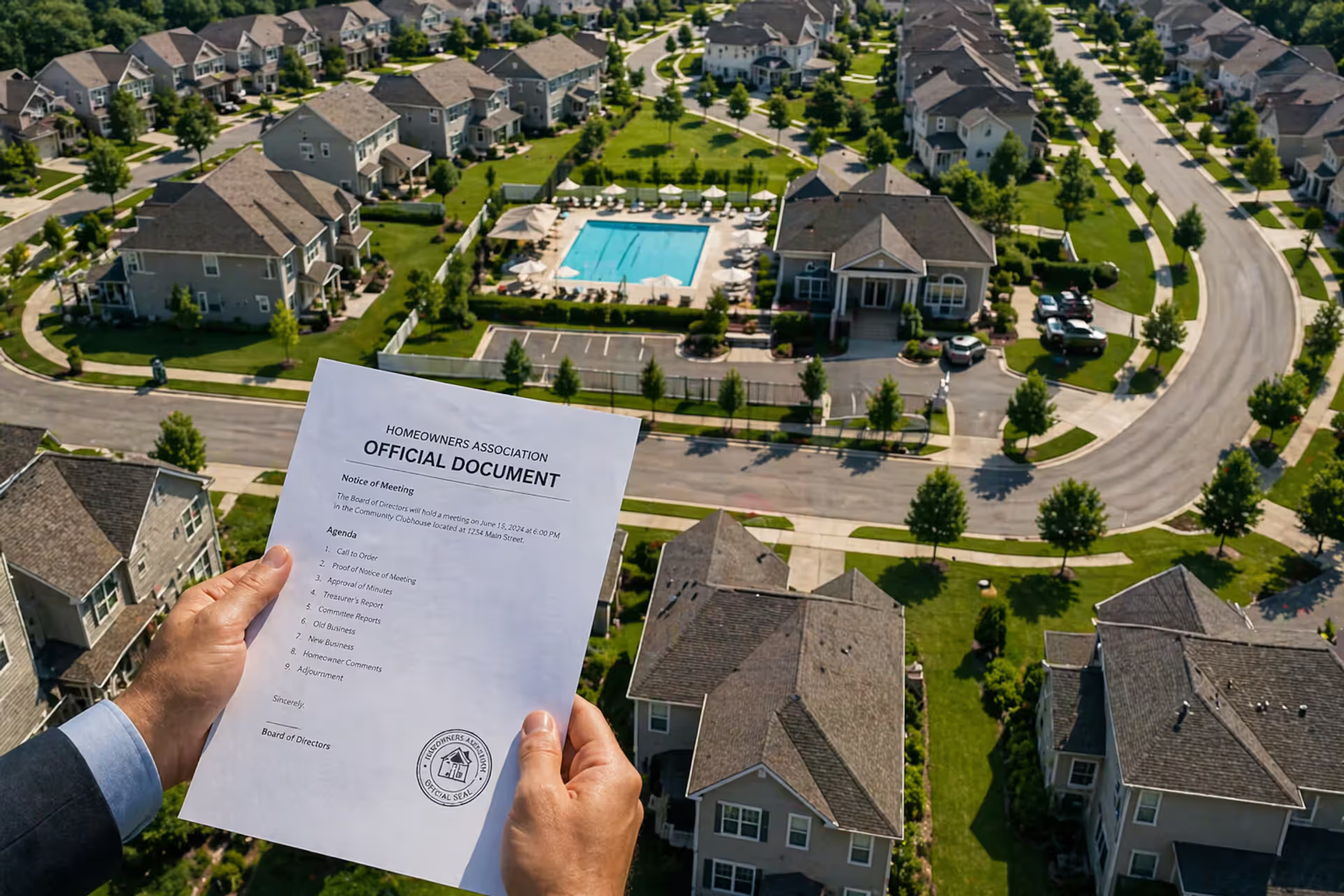
Aerial view of a well-maintained suburban HOA neighborhood with uniform houses, manicured lawns, a community pool, and a person holding an official document
Homeowners associations wield significant power over the properties within their jurisdiction, but that authority isn't unlimited. Understanding the legal framework governing HOAs helps you protect your rights while maintaining compliance with legitimate community standards. The relationship between homeowners and their associations operates under a complex web of state statutes, federal protections, and governing documents that define what an HOA can—and cannot—demand from residents.
What Can an HOA Legally Do Under State and Federal Law
HOAs derive their authority primarily from a community's Covenants, Conditions, and Restrictions (CC&Rs), which are legally binding documents recorded with the property deed. When you purchase a home in an HOA community, you automatically agree to these terms. This contractual relationship gives the association substantial enforcement powers.
Architectural control represents one of the most visible HOA powers. Associations can require pre-approval for exterior modifications, from paint colors to landscaping choices. They typically maintain design standards to preserve property values and neighborhood aesthetics. A homeowner who installs a fence, adds a deck, or changes roofing materials without approval may face violation notices and fines.
Common area management falls squarely within HOA authority. The association maintains shared spaces like pools, clubhouses, parks, and entrance features. They establish rules governing the use of these amenities, set operating hours, and restrict certain activities. Assessments collected from homeowners fund these maintenance obligations.
Financial powers include collecting regular assessments, levying special assessments for major repairs or improvements, and imposing late fees on delinquent accounts. HOAs can place liens on properties for unpaid dues and, in many states, initiate foreclosure proceedings. This collection authority makes HOA debts particularly serious—ignoring them creates legal consequences that can result in losing your home.
Enforcement of community standards extends to behavioral rules. HOAs regulate noise levels, parking locations, trash container visibility, and guest policies. They can establish quiet hours, prohibit commercial vehicles in driveways, and require garage doors to remain closed.
Author: Marcus Delane;
Source: redmonpestmgt.com
Federal laws create important exceptions to HOA authority. The Fair Housing Act prohibits discrimination based on race, color, religion, sex, national origin, familial status, or disability. This means an HOA cannot enforce rules that disproportionately impact protected classes or deny reasonable accommodations for disabilities. The Freedom to Display the American Flag Act protects homeowners' rights to display the U.S. flag, though HOAs can impose reasonable time, place, and manner restrictions. The Over-the-Air Reception Devices Rule prevents associations from banning satellite dishes and antennas in certain locations.
HOA Authority Limits and What They Cannot Enforce
Despite broad powers, HOAs face clear legal boundaries. Understanding these limitations helps homeowners recognize when an association oversteps its authority.
HOAs cannot enforce rules that violate state or federal law, even if those rules appear in the CC&Rs. A restriction prohibiting children from living in the community violates the Fair Housing Act's protections for familial status. Similarly, blanket bans on religious displays conflict with constitutional protections and fair housing requirements.
Retroactive rule enforcement creates another limitation. While HOAs can adopt new rules, they generally cannot punish homeowners for actions taken before a rule's effective date. If you installed a shed before the association prohibited outbuildings, the HOA typically cannot force removal or impose fines, though this varies by state and the specific language in governing documents.
Unreasonable or arbitrary fines exceed HOA authority. Most states require fines to be proportional to violations and established through proper procedures. An association cannot impose a $5,000 fine for leaving a trash can visible for two hours past the designated time. Fine schedules should be published, consistently applied, and reasonable in amount.
Common Examples of Overreach
HOAs sometimes attempt to enforce rules beyond their legal scope. Prohibiting political signs during election seasons violates many state laws that protect political speech. Some states allow temporary political displays within specific timeframes before elections, regardless of HOA restrictions.
Requiring homeowners to use association-selected vendors for repairs or maintenance often constitutes overreach. While HOAs can set quality standards and require licensed contractors, they cannot mandate specific companies, especially if board members have financial interests in those businesses.
Author: Marcus Delane;
Source: redmonpestmgt.com
Restricting solar panel installation conflicts with solar access laws in numerous states. California, Arizona, Florida, and many other jurisdictions prohibit HOAs from banning solar energy devices, though associations may impose reasonable placement and appearance requirements.
Attempting to regulate activity inside homes crosses legal boundaries. HOAs govern common areas and exterior property appearance but cannot dictate what happens within the four walls of your residence, provided those activities don't create nuisances affecting neighbors.
Federal Laws That Override HOA Rules
The Fair Housing Act's reasonable accommodation requirements frequently override HOA rules. Homeowners with disabilities can request modifications to policies or physical spaces when necessary for equal enjoyment of their property. An association must grant a request for a reserved parking space near the entrance for a resident with mobility limitations, even if the community operates on first-come parking.
The Telecommunications Act prevents HOAs from unreasonably restricting antenna placement. Homeowners can install devices to receive video programming signals, including satellite dishes up to one meter in diameter, in exclusive-use areas like balconies or patios.
The Servicemembers Civil Relief Act protects active-duty military members from certain HOA actions, including foreclosure proceedings and interest rate increases during deployment. Military personnel also receive protections regarding assessment obligations in some circumstances.
How HOA Fines and Violation Enforcement Work
HOA enforcement typically follows a structured process, though specific procedures vary by state law and association bylaws. Understanding this process helps homeowners respond appropriately when violations occur.
Most enforcement begins with a notice of violation. The association sends written notification describing the specific rule violation, citing the relevant section of governing documents, and providing a deadline for correction. This initial notice may not include a fine—many associations offer a cure period allowing homeowners to remedy the situation without financial penalty.
If the violation continues past the cure period, the HOA may issue a fine. Fine schedules are usually established in the association's rules and regulations, with amounts increasing for repeat violations. A first offense might carry a $50 fine, while subsequent violations of the same rule could escalate to $100, $200, or more. Some states cap daily or total fine amounts.
Proper notice requirements protect homeowner rights. Most states mandate written notice delivered through specific methods—certified mail, personal delivery, or posting on the property. The notice must include violation details, the proposed fine amount, and information about hearing rights or appeal procedures.
Escalation procedures kick in when homeowners ignore violations or refuse to pay fines. The association may suspend access to common amenities, though they cannot cut off essential services. Unpaid fines become assessments against the property, and the HOA can file a lien. In states allowing it, the association may eventually foreclose on that lien.
Can an HOA Fine You Without Warning?
Whether an HOA can fine without warning depends on state law and the association's governing documents. Some states require at least one warning notice before imposing fines, while others allow immediate penalties for certain violations.
Safety violations often permit immediate fines without warnings. If your actions create hazardous conditions—leaving a hole uncovered in your yard, blocking fire lanes, or creating structural dangers—the association can impose fines immediately to encourage rapid correction.
Ongoing or repeat violations of rules you've previously been warned about typically don't require additional warnings. If the HOA notified you three months ago about prohibited window coverings and you corrected the issue but then reinstalled them, the association can fine you without starting the notice process from scratch.
First-time minor violations usually require warning notices before fines. Leaving your trash can out past collection day, parking in a guest spot, or having lawn furniture visible from the street typically triggers a courtesy notice allowing correction before financial penalties apply.
Check your state's HOA statutes and your association's enforcement policy. Many associations adopt graduated enforcement procedures that provide warnings for initial violations, reserving immediate fines for serious or repeated infractions.
What Happens If You Don't Pay HOA Fines
Ignoring HOA fines creates escalating consequences that can seriously impact your finances and property ownership.
The unpaid fine becomes part of your account balance, added to regular assessment obligations. The association will send collection notices, and late fees or interest charges may accrue on the unpaid amount. Your account falls into delinquency, which can trigger additional penalties outlined in governing documents.
The HOA can suspend your privileges to use common amenities. You might lose access to the pool, gym, clubhouse, or other facilities until you bring your account current. However, the association cannot suspend your voting rights or access to essential services.
A lien against your property represents the next escalation. Once your account reaches a certain delinquency threshold (often 30-90 days, depending on state law), the HOA can record a lien. This legal claim against your property appears in public records and must be satisfied before you can sell or refinance.
Foreclosure becomes possible in many states if the debt remains unpaid. Some states allow HOAs to initiate foreclosure for relatively small amounts, though others require substantial delinquency or limit foreclosure to assessment debts rather than fines. The association must follow specific legal procedures, but homeowners have lost properties over unpaid HOA debts totaling just a few thousand dollars.
Credit reporting may occur if the HOA sends your debt to collections. While HOAs don't always report to credit bureaus directly, collection agencies handling HOA debts typically do, damaging your credit score.
Lawsuits represent another collection method. The HOA can sue for the debt, obtaining a judgment that allows wage garnishment or bank account levies in some jurisdictions.
Homeowners often underestimate HOA collection powers. Unlike credit card debt, HOA assessments and fines are secured by your property through lien rights. Ignoring these obligations can result in losing your home, even if you're current on your mortgage. The best approach is addressing disputes early through proper channels rather than simply refusing to pay
— Jennifer Martinez
Your Rights to Dispute HOA Violations and Fines
Homeowners possess specific rights when challenging HOA actions. State laws and association bylaws establish dispute resolution procedures that protect against arbitrary enforcement.
Internal dispute resolution starts with requesting a hearing before the board or a designated committee. Most states require HOAs to provide this opportunity before imposing fines. You submit a written request for a hearing within the timeframe specified in the violation notice—typically 10-30 days.
At the hearing, you present your case. Bring documentation supporting your position: photographs showing compliance, receipts for repairs, correspondence with the association, or evidence that the rule doesn't apply to your situation. The board reviews the evidence and issues a written decision.
Appeal processes vary by association. Some allow appeals to the full board if a committee made the initial decision. Others require members to exhaust internal procedures before pursuing external remedies.
Documentation requirements work both ways. Just as the HOA must document violations, homeowners should maintain records of all communications, photographs of the alleged violation, copies of relevant rules, and evidence of compliance efforts. This documentation becomes critical if disputes escalate to mediation or litigation.
Mediation and arbitration offer alternatives to court proceedings. Many states require or encourage alternative dispute resolution for HOA conflicts. Mediation involves a neutral third party helping both sides reach agreement, while arbitration results in a binding decision from an arbitrator. These processes cost less than litigation and resolve disputes faster.
Attorney involvement becomes necessary when disputes involve significant money, potential foreclosure, or complex legal questions. Lawyers specializing in HOA law understand the nuances of governing documents and state statutes. They can identify procedural violations by the association, negotiate settlements, or represent you in court.
State agencies sometimes handle HOA complaints. A few states maintain ombudsman offices or regulatory bodies that investigate HOA disputes, though most states leave enforcement to civil courts.
Author: Marcus Delane;
Source: redmonpestmgt.com
HOA Pet Rules and Restrictions Explained
Pet policies rank among the most common sources of HOA conflict. Associations establish these rules to minimize noise, protect common areas, and address residents' concerns about safety and cleanliness.
Common pet policies include breed restrictions, size limits, and quantity caps. Many associations prohibit breeds deemed aggressive—pit bulls, Rottweilers, German Shepherds, or Dobermans—though the specific lists vary. Size restrictions might limit dogs to 25 or 50 pounds. Quantity rules typically allow one or two pets per household.
Leash requirements, waste disposal rules, and noise restrictions apply in virtually all communities with pets. Owners must keep dogs leashed in common areas, immediately clean up waste, and prevent excessive barking. Violations of these behavioral rules can result in fines or demands to remove the pet.
Registration requirements are standard. HOAs often require residents to register pets, provide vaccination records, and sometimes pay pet deposits or monthly pet fees. These fees fund additional cleaning and maintenance of common areas.
Emotional support animals (ESAs) and service animals receive federal protections that override HOA pet restrictions. Under the Fair Housing Act, associations must provide reasonable accommodations for assistance animals, even in communities with no-pet policies or breed restrictions.
Service animals—dogs (and sometimes miniature horses) specifically trained to perform tasks for people with disabilities—receive the strongest protections. HOAs cannot ban service animals, charge pet fees, or impose breed or size restrictions on them.
ESAs provide therapeutic benefits through companionship but don't require specialized training. To qualify for ESA protections, you need documentation from a healthcare provider establishing that you have a disability and the animal provides necessary support. The HOA can request this documentation but cannot demand detailed medical records or require the animal to demonstrate specific tasks.
Author: Marcus Delane;
Source: redmonpestmgt.com
Challenging unreasonable pet rules requires demonstrating that restrictions are arbitrary, discriminatory, or conflict with governing documents. If the CC&Rs allow pets but the board later banned them without proper amendment procedures, homeowners can challenge that prohibition. Similarly, if the association enforces pet rules inconsistently—allowing some breeds while prohibiting others without clear justification—you might successfully contest the policy.
How to Challenge Unreasonable HOA Restrictions
Disputing HOA restrictions requires a strategic approach combining documentation, communication, and knowledge of legal procedures.
Review governing documents first. Obtain copies of the CC&Rs, bylaws, and rules and regulations. Verify that the restriction you're challenging actually appears in these documents and was properly adopted. Sometimes boards enforce "rules" that were never formally approved or that conflict with higher-level governing documents.
Gather evidence supporting your position. If you're challenging a violation notice, collect photographs proving compliance, measurements showing your improvement meets specifications, or expert opinions about the work's quality. For policy challenges, research comparable communities' rules, property value impacts, or state laws that might override the restriction.
Communicate with the board in writing. Send a formal letter explaining your position, citing specific sections of governing documents or state law, and requesting reconsideration. Keep the tone professional and fact-based. Emotional appeals rarely succeed, but clear legal arguments sometimes convince boards to reverse decisions.
Attend board meetings to raise concerns publicly. Most states require HOAs to allow homeowner comments during meetings. Use this opportunity to present your case to the full board and other residents who might support your position.
Propose rule amendments if you're challenging a policy rather than a specific violation. Gather support from neighbors, draft proposed language revising the rule, and follow the amendment procedures in your bylaws. Many restrictions require a membership vote to change, so building community support is essential.
Request variance or exception. Even if a rule is valid, the board might grant individual exceptions for hardship or unique circumstances. If a health condition requires modifications the rules prohibit, request a reasonable accommodation under fair housing laws.
File a formal complaint if your association has an ombudsman or architectural review committee. Some communities maintain internal bodies specifically designed to handle disputes.
Pursue alternative dispute resolution when internal procedures fail. Mediation costs a few hundred to a few thousand dollars—far less than litigation—and often produces acceptable compromises.
Consider litigation as a last resort. Lawsuits are expensive, time-consuming, and unpredictable. However, when HOAs act illegally, exceed their authority, or cause significant damages, court action might be necessary. Potential legal claims include breach of contract, breach of fiduciary duty, selective enforcement, or violations of state HOA statutes.
Small claims court handles disputes under the jurisdictional limit (typically $5,000-$10,000, depending on state). This option works for challenging individual fines or small assessment disputes without hiring an attorney.
Violation Category
Typical Fine Range
Notice Requirements
Escalation Consequences
Architectural (unapproved modifications)
$50-$500 initial; $25-$100 daily
Written notice; 10-30 day cure period
Forced removal at owner's expense; lien for costs
Behavioral (noise, parking, pets)
$25-$250 per occurrence
Warning for first offense; immediate fine for repeat
Amenity suspension; potential lease restrictions
Financial (late assessments)
10-15% late fee plus interest
Statement showing amount due; 15-30 days before lien
Pet removal demand; legal action for non-compliance
Frequently Asked Questions
Are HOA rules legally binding?
Yes, HOA rules are legally enforceable contracts. When you purchase property in an HOA community, you agree to abide by the CC&Rs, bylaws, and rules. Courts treat these as binding agreements, allowing HOAs to impose fines and liens for violations. However, rules must comply with state and federal law—illegal or discriminatory restrictions aren't enforceable even if they appear in governing documents.
Can I be sued for not paying HOA fines?
Absolutely. HOAs can sue homeowners for unpaid fines, assessments, and fees. If the association obtains a judgment, they can pursue collection through liens, foreclosure, wage garnishment, or bank levies depending on state law. Legal fees and collection costs often get added to your debt, substantially increasing what you owe. Most HOA disputes settle before reaching court, but ignoring debts guarantees escalation.
Do I need a lawyer to dispute an HOA violation?
Not always. Many disputes resolve through internal procedures—hearings, appeals, or discussions with the board. For straightforward violations where facts are clear, homeowners often succeed without legal representation. However, attorneys become valuable when disputes involve substantial fines, foreclosure threats, complex legal questions, or situations where the HOA violated proper procedures. Initial consultations with HOA attorneys often cost $200-$400 and help you assess whether legal representation is worthwhile.
Can an HOA ban my emotional support animal?
No. Federal fair housing laws require HOAs to make reasonable accommodations for emotional support animals, even in no-pet communities or when the animal violates breed or size restrictions. You must provide documentation from a healthcare provider confirming you have a disability and the animal provides necessary therapeutic support. The HOA can verify this documentation but cannot charge pet fees, deposits, or refuse the accommodation unless the animal poses direct threats to safety or would require fundamental alteration of community operations.
How long does an HOA have to notify me of a violation?
Notification timeframes vary by state and governing documents, but most HOAs must send violation notices within 30-90 days of discovering the violation. Some states impose specific deadlines, while others require only "reasonable" timeframes. The notice must describe the violation specifically, cite the rule violated, and provide opportunity to cure or request a hearing. If months or years pass between the violation and notice, you might successfully argue the association waived enforcement rights, though this defense isn't guaranteed.
What's the difference between a fine and an assessment?
Assessments are mandatory fees all homeowners pay to fund association operations, maintenance, and reserves. Regular assessments occur monthly or annually, while special assessments fund specific projects. You agree to pay assessments when purchasing in the community. Fines are penalties imposed for rule violations—they're punitive rather than operational. However, unpaid fines typically become assessments against your account, giving the HOA the same collection powers for both. This distinction matters because some states limit HOA foreclosure rights to assessment debts, not fines.
Navigating HOA laws requires understanding both the association's legitimate authority and your rights as a homeowner. While HOAs can enforce reasonable rules protecting property values and community standards, their power isn't unlimited. Federal and state laws provide important protections against discrimination, unreasonable restrictions, and improper enforcement procedures.
When disputes arise, address them promptly through proper channels rather than ignoring notices or refusing to engage. Document everything, understand your governing documents, and know when professional legal advice becomes necessary. The relationship between homeowners and associations works best when both parties respect legal boundaries and communicate clearly about expectations and concerns.
Whether you're facing a violation notice, challenging a restriction, or simply want to understand your obligations, knowledge of HOA laws empowers you to protect your rights while maintaining a positive relationship with your community association.
Zoning regulations determine what you can build and where across the United States. This guide explains zoning law basics, classification types, how to find zoning information, navigate variances and permits, and address alternative structures like shipping containers
The Uniform Partition of Heirs Property Act prevents forced sales of inherited family land at below-market prices through mandatory appraisals, buyout rights, and partition in kind preferences. Twenty-nine states have adopted this reform legislation as of 2026
Trespassing represents one of the most common property violations in the US. Learn the legal definitions, differences between criminal and civil trespass, penalties, proper signage requirements, and how property owners can legally protect their land from unauthorized entry
Real estate fraud costs Americans hundreds of millions annually through wire transfer scams, forged deeds, and foreclosure rescue schemes. This comprehensive guide explains common fraud types, warning signs to watch for, and practical prevention steps to protect your property and finances during transactions
The content on this website is provided for general informational and educational purposes only. It is intended to explain concepts related to real estate law, property rights, leases, liens, zoning, landlord-tenant disputes, and litigation.
All information on this website, including articles, guides, and examples, is presented for general educational purposes. Legal outcomes may vary depending on jurisdiction, property type, and individual circumstances.
This website does not provide legal advice, and the information presented should not be used as a substitute for consultation with qualified attorneys or real estate professionals.
The website and its authors are not responsible for any errors or omissions, or for any outcomes resulting from decisions made based on the information provided on this website.